

SPOKANE, Wash.–Four young credit union professionals who are part of the Northwest CU Association’s Emerging Leaders Program (ELP) have provided an overview of real world projects they are involved in real time at their credit unions.
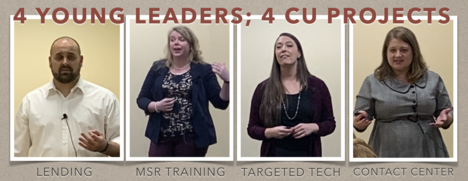
The four areas of internal operations discussed will resonate with all credit unions, and include a rethinking around approaches to lending, vastly improving MSR training, expanding service using ITMs, and reducing contact center turnover and other issues.
The projects are part of ab Emerging Leaders Program that is about building mid-level leaders within CUs and involves four to six months of intensive, rigorous training offered through a NWCUA partnership with DDJ Myers. Prior to the four ELP participants explaining their projects, Tim Tolliver, VP-integrated performance systems with DDJ Myers, said the training includes personal evaluations that involve some psychometric benchmark setting at the very beginning around emotional intelligence, behavioral profile and personal mastery competencies.
Those in the program participate in teleconference learnings, self-study and individual learning, four individual executive coaching sessions, cohort learning, manager/executive conversations, mentoring and a partnership with a learning buddy, among other components.
The program requires two hours a week dedicated to skill development, project development/execution, personal development, and more.

Tim Tolliver
Tolliver summed it up by stating, “If you want to become an exceptional leader, the training has to be exceptionally challenging.”
Here’s a look at the four projects with which program participants are currently involved:
Rethinking Lending
James Gorley, Lending Manager
Fibre FCU, Longview, Wash.
Gorley has tackled two questions for Fibre: should it move to centralized underwriting, and should it adopt risk-based lending.
He noted the $1.1-billion Fibre FCU in a one-month period received 1,761 loan applications, of which 180 were denied due to credit score issues, and another 170 of which required at least three days for a decision.
Gorley said he views those 350 apps as potential missed opportunities for both the credit union and the members, especially the 170 members who had to wait on a decision and who might have gone to another lender. He said he is exploring whether the CU can improve its lending turnaround time by 50% in those cases through centralized lending.
Gorley explained Fibre FCU has 35 lending officers with various levels of approval authority. What that means for members is every time they interact with the CU on a loan there will be one of 35 different experiences, he observed.
“We are also a one-rate-for-all types-of-members institution. That has served our community great for 82 years,” Gorley said, before adding perhaps it needs to consider moving to a risk-based model.
Research & Site Visits
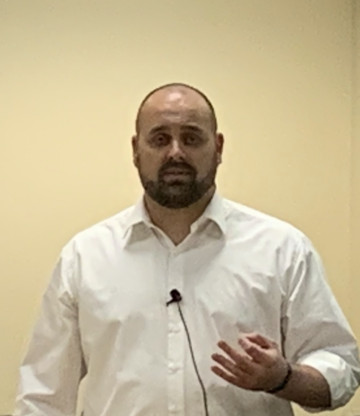
James Gorley
To explore those issues, he said Fibre FCU is conducting research and partnering with other organizations. It is also conducting peer visits, with a goal of visiting five other institutions to look at their staffing models and other practices.
“The last thing we want to do is hire a bunch of staff if we make a change and then have to lay them off. We want to look at others and see if they hired people,” he explained.
The initiative also includes reviewing current facility space and related costs for any changes. He added the centralized loan process will free up loan officers to look at other issues, including additional ways to grow revenue.
“I see this as potential six month project. We don’t want it to impact the member experience or have service suffer,” he said.
Three people, including Gorley, are involved in exploring the two questions related to lending.
In terms of ROI, Gorley said a 10% increase in loan growth would mean $73 million added to the portfolio and $4 million in potential new annual income.
What if those involved in the effort decide the changes won’t work for Fibre FCU?
“That’s OK; it will validate that what we’ve done for 82 years is the right thing,” he said.
Empowered Member Service Reps
Tara Bennion, Operations Supervisor
Old West Credit Union, John Day, Ore.
Bennion said she joined the NWCUA’s Emerging Leaders Program to advance her career and to think more strategically, and one area where she hopes to lead a new strategy at the $171-million Old West CU is in empowering its member service reps to provide improved service.
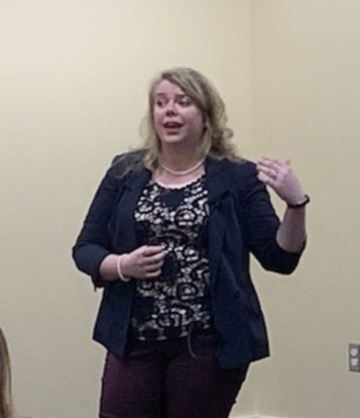
Tara Bennion
“First, I wanted to make sure this was a need for our organization,” said Bennion. “We found we had loan errors, decisioning delays and many members feeling very dissatisfied with us. We were losing accounts. We also investigated to see if we were losing loans, and yes, we were. We potentially lost 500 loans this year. That was eye opening.”
So how to fix it?
Bennion said the solution lies in doing soft skills training with MSRs, including both loan training to understand the process and account training to understand all aspects of Old West’s offerings.
The Ideal Situation
“We want to empower our MSRs to empower our members,” explained Bennion.
Under the initiative, in each branch there will be MSRs knowledgeable about its products that when a member expresses a need, the credit union is able to adequately respond. Ideally, MSRs will be able to ask the right questions during loan applications to ensure the right information goes before decision-makers.
“At this point we want to stop. We don’t just want to provide excellent service, we want to take it to the next level and help them meet their goals,” Bennion explained. “Is there something else we can do to save them money, to help them meet wants and needs? This plants the seed for the next time.”
As part of that, Old West also plans to take a second look at its declined loans. Declines are often the result of credit reports reflecting members who are not financially savvy and made poor decisions, she observed.
“We want to be able say, ‘Unfortunately, we can’t fulfill this request, but we want to turn this ‘not right now’ into maybe a ‘yes’ six months from now,” said Bennion. “We want people to know we’re there because we care.”
The timetable outlined by Bennion includes having all of the training, including for managers, completed by Aug. 31 of 2020, followed by member satisfaction surveys with a goal of seeing a 20% improvement in scores. By year-end 2020, it plans to decrease loan and account errors by 50%.
“Hard work and dedication are critical, but if you don’t have vision you are lacking the key element you need to be successful,” said
Growing Community Through Targeted Technology
Tiffany Paulsen, ITM Supervisor
InRoads Credit Union, St. Helen’s, Ore.
The $230-million Inroads Credit Union has 16,000 members and three branches in Oregon. In recent years it has undergone a name change to go with an expanded FOM to Multnomah and Washington Counties in Oregon, which includes Portland.
As it has sought its niche and to serve its membership, the credit union did research around trends and found strong demand for security and convenience.
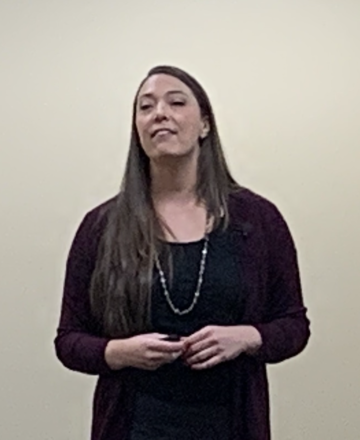
Tiffany Paulsen
Paulsen said InRoads Credit Union’s vision is to strategically use online and video banking technology to optimize member growth potential in its expanded FOM. Its mission is to introduce relevant, secure and personable member service channels, including interactive teller machines (ITMs) and video banking technology, she added.
Challenges
In phase 1 of its vision, the challenges have included vendor selection, construction, hiring the best team and communicating changes to members.
Phase 2 is about placement analysis, property acquisition, marketing, installation, and finalizing staff goals, among other issues, said Paulsen.
The project includes a focus on accountability, she said, including detailed initiatives per Inroads employee.
“This is incredibly helpful for long-term projects. It keeps people on task, keeps people from guessing,” Paulsen said.
How will Inroads know if what it is doing is working? Paulsen said its conditions of success include:
- Reduced drive up lane wait times at each branch
- Prompt response to screen initiation by member (goal is 12 seconds)
- Quick transactions: Accuracy, consistency and security (goal is three minutes to conclude transaction)
- Achieve lending and deposit acquisition goals, per CU’s strategic plan
- Maintaining low staff turnover rates, and 92% member satisfaction in surveys.
- Within 12 months, online applications serve as primary loan channel
The Contact Center & Great Member Experience
Jessica George, Regional Manager
Mid Oregon Credit Union, Bend, Ore.
George is helping lead an initiative aimed at improving a challenge at many credit unions: the contact center. The $346-million Mid Oregon has had to deal with high turnover, and at one point one-third of the calls were being dropped, in part due to extremely high turnover rates.
George noted the employee absenteeism rate for contact center increased to 20.65% in 2019, with the number-one reason cited by employees being stress.
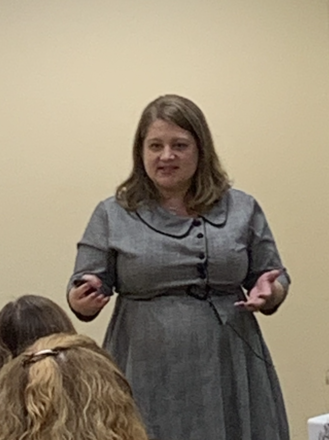
Jessica George
“We talked to our staff. Part of what they were saying was, ‘Hey, we’re on the phone all the time.’ And are people calling to say ‘I love my credit union. You guys are so amazing!’ No. People are calling because they are frustrated or mad. Eight hours a day of that takes a toll,” explained George. “Staff was saying, ‘Can we just have a little extra block of time to let us grow?’”
The CU responded with a simple chart on the wall employees can use to sign up for little blocks of time they may use to get caught up on other issues. And if they didn’t need the time to get caught up, they don’t take it, George told the MAXX meeting.
Other issues the initiative at Mid Oregon has tackled:
Technology
“The reality is the number-one asset we have is our people,” said George. “We want to highlight our people but use technology wisely. We want to make sure when people call we have the right person on the phone. It’s about taking additional time to identify members. We want to use technology smartly.”
Layout
The credit union is redesigning the layout of the call center. George said Mid Oregon looked at other contact centers outside of credit unions and financial institutions. It is now using a pod layout in which there are six MSRs per pod, with one person per pod for support who can help coach in the moment and provide additional training.
Mid Oregon has two pods with a branch manager in the middle for two of the pods for elevated issues.
George said Mid Oregon has set a goal for year-end 2020 of reducing staff turnover and reducing call times to 3.5 minutes. It has also established metrics around one-call resolution.