

SAN DIEGO–How should credit unions be planning for the “shape of things to come?”
By pausing for a moment to reflect on a short 10 years ago and the summer of 2007, which John Lass predicted 50 years from now will be looked back upon as a “really pivotal year” in history. No one would have known that at the time, of course, which is exactly why Lass said it offers such a lesson for credit unions.

Speaking to the NASCUS Summit here, Lass, who after a career leading strategic planning at CUNA Mutual now heads Seattle-based Lass Advisory Services, said 2007 is significant because of three things that took place:
- The Great Recession began.
- The iPhone was born. (“If ever there was a true game-changer, this is one of them.”)
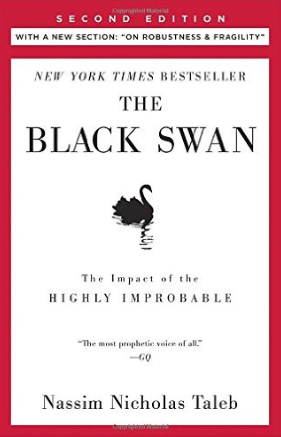
- The Black Swan by Nassim Nicholas Taleb is published."
“The Financial Times considers this one of the most influential books of the last 50 years. I highly recommend it,” said Lass. “No one reads the whole thing, so just skim it. But Taleb argues that if you look at epochal events that changed history, they are the events that are way out on the wings of the bell curve that are highly unpredictable and that no one sees coming that change everything.”
A Black Swan event is defined as “a highly improbable event with three principal characteristics: It is unpredictable; it carries a massive impact, and, after the fact, we concoct an explanation that makes it appear less random and more predictable than it was.”
(“Black Swan” was chosen as the term for such events because black swans were thought to never exist until Europeans discovered Australia, home to black swans.)
“The point here is that I can guarantee you that in the next 10 years we will experience some Black Swan events,” said Lass. “But what I can’t tell you is what they will be.”
'Take This to Heart'
What credit unions and state regulators can do, suggested Lass, is put into practice the observation made by Peter Drucker that “the best way to predict the future is to create it.”
“Take this to heart,” advised Lass. “You are individuals proactively shaping the future of financial services.”
To help shape that future, said Lass, it’s critical to understand that regardless of the business category, the future lies in platforms, such as the iPhone and the apps that it runs. Lass credited PayPal with launching the “Platform Strategy” that links the supply side with the demand side. Uber is another example, and is probably best known. Others include AirBnB, GoFundMe, and Lending Club.
All of that, he said, has led to the “network effect,” or the “phenomenon whereby a product or service gains additional value as more people use it.”
What Does This Have to Do With Credit Unions?
“I think credit unions are a platform. Credit. Union. It’s a platform,” said Lass. “Credit unions match supply and demand. There are things we can learn from them, and them from us, because fundamentally we are doing the same thing. But platform is not the end-game. Once you’ve successfully established a platform, you want to establish a bunch of platforms and have them all integrated as an ecosystem.”
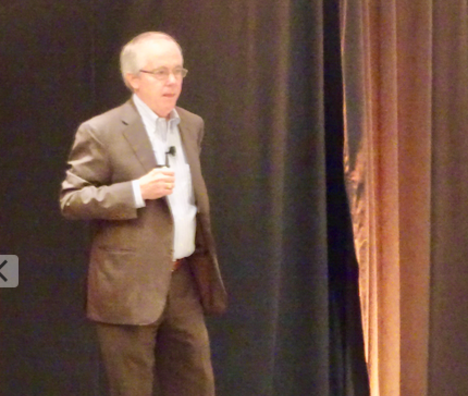
John Lass speaking to NASCUS meeting in San Diego.
The best example of an ecosystem, said Lass, is China-based Alibaba, or in the U.S., Apple.
“You can look at it from the perspective of the customer and all the products and services it makes available to those customers. The thing about an ecosystem is that once you are in it, it gets sticky. Another way to look at the Apple ecosystem is how they have built an incredible system of business partners that enables them to do what they do. Very few pieces of its products are built in Sunnyvale (Calif.). Apple is basically a design studio that has built a system of suppliers that function by and large pretty flawlessly.”
For credit unions to survive, Lass said they must build their own platforms and ecosystems. But he acknowledged it is difficult to do alone, even for Navy FCU, the world’s largest credit union. Instead, it will require the entire credit union community, with regulators playing a key role in making it possible, according to Lass.
The Black Swan in Financial Technology
Lass said credit unions need look no further to the fintech sector for how the macro ecosystem and micro-ecosystems are developing. In 2017, for the first time, fintech companies are to surpass $1 trillion in transactions, a figure projected to double by 2021.
The Black Swan in this case that credit unions need to recognize is that many of these changes are being driven by players outside the United States, said Lass.
“China’s fintech market is bigger than the U.S.,” said Lass. “If you look at core in the cloud, for example, some of the leaders are also in Germany and the U.K.”
Lass noted that during 2016 $20 billion was invested globally in fintechs, of which there are more than 7,000.
Where are fintech products and services being adopted? Again, the fastest adoption is taking place outside the U.S., led by China and India, followed by the UAE, Hong Kong and Spain. The U.S. is in the middle of the pack and even follows the U.K.
“There are other parts of the world that are way ahead of us in terms of adoption of alternative services,’ said Lass. “Think about the role of the regulator in the adoption of these alternative services.”
The Big 3 Trends
Lass pointed to Inc. Magazine’s Big Three Fintech Trends for 2017:
- The snapping up of start-ups. Acquisitions of start-ups by banks is expected to become a “dominant theme,” with lots of failures being filtered out.
- Valuations get grounded. After flying high in 2015, valuations are “settling back to earth.”
- Back to basics. Innovation in core banking systems (e.g. “core in the cloud”) is seen as highly attractive.
“Google has acquired approximately 150 fintechs,” said Lass. “We don’t know what they are going to do with them, but one day you will go to Google and it will say, ‘Welcome to Google Bank’.”
But as much as those 7,000 estimated fintechs potential competitors to credit unions, the real threat, said Lass, still comes down to the big five: Apple, Amazon, Microsoft, Facebook, and Alphabet (parent to Google).
“Each is moving outside technology to focus on autos, health care, retail, transportation, entertainment and finance,” said Lass, adding that all of that will impact credit unions in some ways.
“A few months ago, the buzz on the Internet blogs was that Amazon wants to buy Capital One Bank. Some said that’s crazy. Others say you underestimate (Amazon CEO) Jeff Bezos. Just think about the impact that acquisition would have on Capital One. Look what happened to competitors with (Amazon’s) acquisition of Whole Foods. What could happen in financial services?”
Trending Up and Trending Down
Lass offered this list of trends worth watching and paying less attention to:
Trending Up:
- Artificial Intelligence. “If you are a regulator, AI is going to come into every area you regulate. AI market is projected to grow from $650 million in 23016 to $37 billion by 2025.”
- The Internet of Things. There are now approximately 6.4-billion “things” connected to the Internet. That is estimated to grow to 50 billion by 2020.
- DNA Sequencing. The cost of sequencing a genome has fallen from $100 million in 2001, to $1,000 today.
- P2P Payments. Projected to top $200 billion by 2020, with mobile share increasing rapidly.
- Streaming Music. Music industry revenue is again increasing after 20-year decline, due to streaming.
Trending Down
- Wearables. “The sector has failed to live up to the hype.”
- Major retailers. “Sears is expected to file for bankruptcy within 12 months. Other retailers not far behind. This is a big deal for credit unions, because 16-million Americans work in retail sector. This is much bigger than coal miners or steel workers. It is predicted that within next 10 years, one-third of retail workers to be eliminated. Some point to the jobs Amazon is creating, but for every one job Amazon creates, three jobs are lost in retail. The big implication is also that shopping centers to be hammered. Starbucks is closing 78 stores in malls. Why does this impact credit unions? A lot of credit unions have branches in retail shopping centers, and a lot of commercial lending CUs do is actually in commercial real estate, and a lot of that is strip shopping centers. How much of that is going to be here five years from now?”
- Oil. Is this the last century for fossil fuels?
- Taxi companies. Crushed by Uber and Lyft.
What’s Next?
What’s around the corner? According to Lass:
- Passive Wi-Fi. It consumes 100,000 times less power than traditional Wi-Fi.
- Li-Fi. Uses light to beam information that is 100,000 times faster than Wi-Fi.
- Artificial General Intelligence (AGI). AGI does not need to be taught a specific skill, but learns as a child does.
- Robotics. “This is the real threat to the traditional labor force. It’s evolving at light speed. Lass recommended credit unions watch videos such as this one on robots being used by Amazon.
- Renewable Energy, such as nuclear fusion, artificial photosynthesis, high altitude wind energy, and more.
So, what happens when two of the trends come together, such as AI and robotics. That has happened already, said Lass, pointing to the new field of cognitive robotics, which provides robots with perception, memory and reasoning.
Already in financial services, Lass said cognitive robotics can be seen in:
- Enhanced consumer personalization, such as robo-advisors generating personalized algorithm-based portfolio advice.
- Productivity gains through reduction of backoffice processes
- Fraud detection: AI used to respond to fraud in real time.
A Paradigm Shift All CUs Should Be Watching
One specific paradigm shift lass advised credit unions and regulators to pay attention to is self-driving cars.
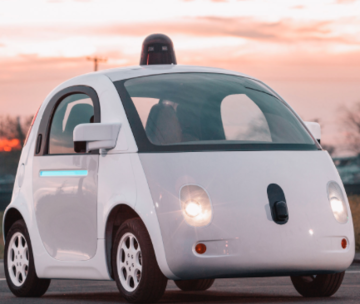
In California alone, there are 32 companies currently licensed to test self-driving vehicles. In San Francisco alone, there are 35,000 Uber and Lyft drivers who are “busy all day.”
“What does that tell you?” asked Lass, before answering, “A lot of people are not driving their own car to work anymore. It’s a transformational shift. This is a big deal. One-third of credit union industry’s balance sheet is in auto loans. You need to be thinking about this as regulators. Your credit unions need to be thinking about this.”
For credit unions, when it comes to disruption of the auto industry and auto lending, Lass said discussion points should include:
- How will these shifts transform society?
- Are these trends a threat to auto lending?
- Will they open up new lending opportunities?
- What is the impact on insurance sales?
- Which job categories will be impacted most?
- How fast will this transformation occur?
- What could impede these trends?
Similarly, Lass said credit unions should be learning from Amazon, which after driving many physical bookstores out of business has returned with its own brick-and-mortar book locations.
Alexa, Does Amazon Offer Lessons to CUs?
What can CUs learn from Amazon? Lass said CUs should ask themselves:
- Do physical branches serve a purpose in a digital world?
- Will Millennials continue to use branches?
- How can digital support physical, and vice versa?
- What does the optimal CU distribution channel mix look like in 10 years?
“Many CUs have years to run on their (facilities) leases. But you’ve got to think about what you want to look like a few years from now,” said Lass.