

By Ray Birch
RALEIGH, N.C.—Chuck Purvis recalls when the very first interactive teller machines (ITMs) used to eat driver’s licenses.
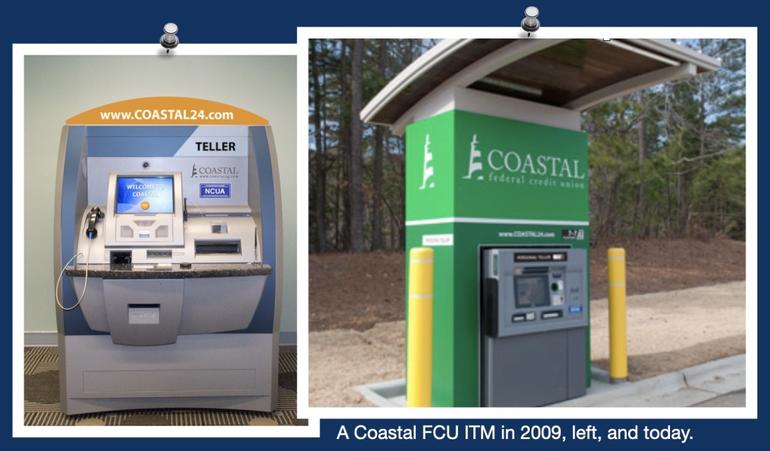
But those tools, as has the now-former CEO of Coastal FCU, have come a long way since the early 2000s, when Purvis helped to design the very first ITM—machines that may have become increasingly ubiquitous across credit unions today but which at the time of introduction were revolutionary.
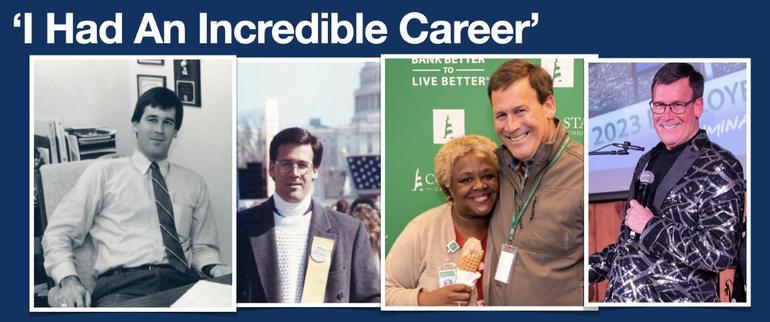
The well-known Purvis, who recently retired from Coastal after a long career in the movement, spoke with CUToday.info about his days at the now $5-billion shop, things that have stood out for him during that time and his thoughts on what lies ahead for the credit union community.
“We were the first financial institution to rely 100% on video tellers,” recalled Purvis about those initial ITM installations that were rudimentary machines compared to today’s kiosks.
Purvis recalled how he and the credit union determined that video tellers were needed.
“I arrived at Coastal in 2001 and the board had just approved a 10-year branch expansion plan, and for several reasons we executed most of that plan in about four years,” said Purvis. “In those new branches we put in what was called Diebold's remote teller system. It was the pneumatic tube tellers with members sending stuff back and forth with staff in the backroom. It could handle two members at one time.”
‘It Was Awful’
But it wasn’t long, Purvis said, before branch staff started sharing some bad reviews of the new offering.
“They said it was awful,” recalled Purvis. “It was loud. It was noisy…So, I started spending a lot of time in branches, and retail consumer banking was somewhat new to me when I got to Coastal. I was trying to learn it and understand. I started asking questions about why we don't have some tools on the member side of things, like a printer. With the tube system, we would print in the back office, send the document to the member, have them sign it, and send it back. So, why don't we just put the printer out there?”
The Pieces & the Parts
Purvis said Coastal began moving more “pieces and parts” to the member side.
“I kept trying to figure out how do we get rid of the tubes. We did some brainstorming and reached the conclusion that it was feasible to get rid of the tube if you digitized everything going back and forth,” he said. “You need check and cash acceptors and dispensers. But the key was it would do-two way audio and video through the platform. And the was if you can do two-way video and the teller can actually make the machine do what the member needs it to do, the teller can be anywhere.”
That led to Coastal taking on the effort itself, backed by the work of Coastal CU Branch Designer Gene Pranger.
“We designed and built our own personal teller machines and teller platform and started uGenius to commercialize the technology. That is the foundation of what is today the NCR ITM platform that is in wide use in credit unions,” Purvis said.
“We built the first generation of these video tellers and placed it in our headquarters office. That was really our prototype branch,” Purvis said. “When we put in the first few machines they tended to eat driver’s licenses. But they have gotten a lot better since.”
Prior to PTMs/ITMs, Coastal’s teller hours were 8:30 a.m.-5:30 p.m.
“That was not convenient for anyone who worked,” recalled Purvis. “When we began converting all of our branches to the new Ugenius PTMs, we got some pushback from members that preferred live tellers. So, we developed the 7x7 strategy to provide a new benefit to members. Effectively we halved our teller staff from 110 to 55 and increased teller service hours from 45 to 84 each week. The efficiencies gained in load balancing tellers across the network enabled that expansion. We’re able to cover weekend hours with four to six tellers, and working weekends have always been a challenge to staff.”
Purvis joined Coastal in 2001 and was named president/CEO in 2012. He previously held executive positions at the former U.S. Central FCU in Kansas and the North Carolina Credit Union League, which is now part of the Carolinas Credit Union League.
As CUToday.info reported here, in 2018 he was recognized with the Herb Wegner Award for Individual Achievement.
Making a ‘Difference’
“Overall, I was in the credit union movement for 41 years, and I had an incredible career,” said Purvis. “I turned 65 last June, and my goal was to be CEO for 10 years and to make a difference in that time. I wanted to leave the organization in better shape than I found it, and we are in great shape today…We have a great team in place and we're doing great financially.”
Coastal Credit Union reported $60.6 million in net income in 2021, $12 million in 2022, and $11 million through March of this year. Net worth is 10.28% and ROAA is 1.03%, according to Call Report data.
During Purvis’ time at the helm, the CU grew to $5 billion in assets from $2 billion and its membership expanded from 192,886 to 300,211.
Putting Employees First
Purvis said he was focused on the company’s culture, in an effort to improve the lives of members and staff.
“I wanted to create a culture that puts employees first,” he said. “I find it amazing how few companies are willing to do that, and they pay the price for it. We’ve won countless best places to work awards, which I am very proud of. And because we take care of our employees they take care of the members—you take care of the basics and the financials take care of themselves. It has been that simple and that works.
“We just paid our tenth consecutive member loyalty bonus,” Purvis added. “Since we started that, we have paid out over $33 million in bonus dividends to our members.”
Investment in Community
Purvis said the credit union’s success allowed it to heavily invest in the communities it serves. With a chief community impact officer in place, Coastal has over the years dedicated a great deal of staff time and money to affordable housing projects, including with Habitat for Humanity, as well as financial literacy efforts and a wide variety of other community efforts.
All of that growth and community involvement has taken place in one of the the most competitive financial markets in the country. North Carolina is home to Bank of America and Truist, and other mega-banks and regional banks have offices throughout the Tarheel State. In addition, the $50.7-billion State Employees’ Credit Union and the $4.3-billion Truliant CU, which has been expanding its branch footprint, also call North Carolina home.
Not Worried About CU Competition
But Purvis said that landscape has never really concerned him.
“Yes, it is a highly competitive market. But Coastal has been stealing people away from banks all the time. And we welcome the challenge, because, as I said, we put the consumer first and focus on the consumer and then let business growth stem from that,” explained Purvis. “These former bank customers tell us they are thrilled they found Coastal and they and they were able to say goodbye to one of those major banks.”
In addition, Purvis emphasized that he and Coastal were never worried about any shadow from State Employees’ CU.
“They have a field of membership that basically says you have to be a state employee or related to a state employee, or a state retiree. We’ve been happy to be there for everybody else,” said Purvis. “We do have some overlapping members, but often members need both credit unions.”
What Lies Ahead
As Purvis now steps into a new stage of his life, he looked ahead to the key issues he believes face the movement.
“I think there’s still too many mergers happening—smaller credit unions saying they are not big enough to compete,” he said. “Well, that means we got to do more collaboration to gain economies of scale. We've got to figure out more ways to share back-office systems. How do we share core systems? Credit unions have got to figure out how we do more collaboration or joint ventures where we don't have to give up our identity. If you can figure out how to do more of that I think that will give smaller credit unions a lot more options.”