

By Ray Birch
TAMPA—It may never be more important to “know your members” than it is during the current health crisis, according to Chuck Fagan, who is warning that doing otherwise could lead to a dwindling member base.
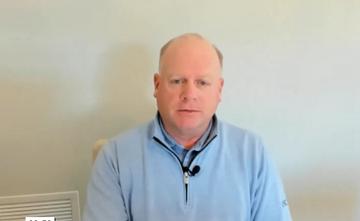
Chuck Fagan
During a recent Trellance CEO Panel—"Priorities and Predictions in 2021”—Fagan joined with three other CU leaders to share thoughts on what lies ahead for credit unions in 2021, a year in which a great deal remains uncertain. Among several topics discussed, the experts addressed the importance of leveraging data and AI now to get closer to members in a time when they need personal service more than ever.
Fagan, president and CEO of PSCU; Tom Davis, president and CEO of Trellance; Todd Clark, president and CEO of CO-OP Financial Services, and Tony Boutelle, president and CEO of Origence, comprised the virtual panel.
With the COVID-19 crisis accelerating consumers’ acceptance and use of digital delivery, Fagan stressed the importance of maintaining close connections with account-holders, which will be remembered when the pandemic someday ends.
“Ultimately, I think members will be unforgiving if you don’t get to know them, make their lives easier and connect with them now,” said Fagan. “We have to cater to their individual needs and create a better path for financial security for them. And that comes down to utilizing data.”
‘Here to Stay’

Tom Davis
And there is simply more data to leverage now, pointed out Davis.
“Knowing your members has become so very important now with all of the new digital platforms being used,” explained Davis. “And they are here to stay. Knowing your members now is a different ballgame…They are not coming into the branch as much. And I don’t know how much data you were gathering when members were coming into the branch (before the pandemic), but the amount of data you can now gather digitally is greater. The amount of data we can gather now is significant and what we can do with it will be big.”
Davis said he can’t recall credit unions ever facing a more “dynamic” year than 2020.
“We have the massive pandemic, the stimulus package and a new administration voted in that is starkly different from the last one,” Davis said.
‘Get Closer’
CO-OP’s Clark agreed there are rich opportunities to be found in data, and in particular, payments data.

Todd Clark
“Don’t take the card portfolio for granted,” he advised. “Leverage payments as a way to get closer to members. One thing that did not happen this past year is that spend on your cards has not gone down. It may have dropped early in the year, around March, but since then spend has either grown or remained consistent. That has built loyalty.
“We have seen during the COVID-19 pandemic a huge shift away from bricks and mortar card shopping to online,” continued Clark, adding the importance of the credit union encouraging members to get their cards in all of the payments platforms. “So, if your card is not on file with the Amazons, the PayPals…you will be losing out on a lot of transactions.”
The Long Haul
Boutelle said in 2020 the credit union movement realized the pandemic was not to be a short-lived phenomenon and came to understand the crisis would be a long haul.
“When this hit we thought it would end in a few months, and then a few months passed, and then a few months passed…” recalled Boutelle.
But a silver lining in the extended health crisis has been mortgage lending, Boutelle noted.
“The good news has been lending…last year was record-breaking for some credit unions,” said Boutelle, who added Origence now has its new lending platform serving the market. “There was some huge mortgage production in 2020.”
Boutelle expects the mortgage momentum will continue through 2021, with first mortgage business picking up some of the slack for refinancing, that could wane.

Tony Boutelle
But Boutelle emphasized the importance of credit unions shortening the period from application to funding for first mortgages, which can be 60 to 75 days for many CUs, he said. Boutelle said Origence and its solutions will be helping credit unions this year shorten that cycle, “getting the days down to 25 to 40.”
Boutelle also said he expects indirect auto lending at credit unions will pick up again this year after falling off somewhat in 2020.
Increased Regulatory Oversight
Turing back to Big Data, Davis cautioned the Biden Administration—and in particular, new SEC Chair Gary Gensler—will be placing greater scrutiny on how financial institutions and other organizations, are using all that data they are collecting, especially as it relates to security of sensitive, personal information. He suggested regulations could emerge to govern how data is used by FIs.
Davis urged credit unions to make their voices heard before final rules are written.
“In 2021, we want to get out in front of this,” said Davis. “We want to be part of any new regulations that come about. This year Trellance will see if there is any interest from credit unions in a CEO panel commission to go to Washington and say, ‘This is the safe way for us to work with and access data.’”
What About Branches?
While much of the discussion was around digital, the four CEOs also addressed a popular topic of debate inside the financial services industry--the future of branches. Boutelle, for example, pointed to several large credit unions that don’t have offices for members to use and are doing well.
“How many more will take this route—the low-cost virtual credit union approach?” asked Boutelle.
Clark urged credit unions to “rethink” how they look at their business.
“Yes, you have branch network,” he said. “But I see coming out of this a pandemic a re-architecting of branches. It will accelerate what was already slowing happing with branches from a generational perspective. I already know multiple credit unions that were thinking about consolidating several branches into one, but they had to stop because they would have had too many people in the building (due to the pandemic).”
About New Members
Fagan reminded that as branch usage changes, so does how membership is driven.
“The industry has been reliant on the branch system to drive membership. But as members enter the credit union now in greater numbers online…the online channel is how we will drive new members and deepen relationships,” Fagan said.
To watch the webinar, click here.