


By Ray Birch
BIRMINGHAM, Ala./TALLAHASSEE, Fla.—The CUNA board meets next week and what comes out of that conclave could impact just how many CUs align with the trade association in 2016, suggests one league president and CUNA director.
Patrick La Pine, president and CEO of the League of Southeastern Credit Unions and Affiliates, spoke with CUToday.info about an issue that quickly emerged in latter 2015: Association “choice.” That is, changing the eight-decade-old policy of automatic membership by a credit union in both CUNA and a state league, providing the option to join one or the other.
The issue has become divisive, with a number of leagues adopting “choice” positions ever since the CUNA board opted in September not to accept recommendations made by a task force it assembled that just such a “choice” be given to credit unions.
The League of Southeastern Credit Unions, the Ohio CU League, the New York CU Association and others are among those where the board has voted in favor of giving their member CUs the option of belonging to either the state or national association.
“Clearly the genie is out of the bottle and we are moving in a direction in which you will see more leagues choose choice,” said La Pine, noting that a number of other leagues, like California/Nevada, say the situation will be up for discussion in 2016.
Board Meeting This Week
But CU decisions on league/CUNA affiliation may be affected by what results from the December CUNA board meeting, as CUNA President and CEO Jim Nussle has stated that the trade association plans to take another look at the matter.
La Pine, a member of the CUNA board, said it is possible that based on what is discussed during the meeting that the board could reverse course.
“But in no way is it a slam dunk that will happen,” said La Pine, saying he has no advance knowledge of decisions CUNA might make or the proposal that Nussle plans to put forward at the meeting.
La Pine, however, contemplated what might occur if CUNA backs away from its position of requiring dual membership.
“Let’s say the board changes course, and then the CUNA bylaws need to be changed. Now it has to go to membership for a vote,” he said. “Maybe CUNA brings that to the GAC, or they do a mail vote.”
If that happened, 2016 would become a year of transition for CUNA-affiliated CUs, said La Pine.
“There would be a number of leagues that would have to change or amend their bylaws,” he said, adding that 2016 would give them the time to do that—to prepare for the CUNA bylaw change that would take effect in 2017.
If CUNA does not make any changes to its position in the coming months, La Pine thinks a number of credit unions in states allowing choice next year could either disaffiliate or not re-affiliate with CUNA. “But we are doing our best to keep all of them affiliated with CUNA and the league,” said La Pine about CUs in Alabama and Florida.
“I definitely think we (the CUNA board) made a mistake in the choice we made in September. I left that meeting feeling much like it would end up creating a real outcry from credit unions, which it did,” said La Pine, who noted that he was immediately in favor of revisiting the decision. “It’s hard to say why the directors voted the way we did in September. But we have the chance to revisit it and correct it, and I am hoping that is the case at the December meeting.”
Process Is The Issue
What La Pine believes upsets CUs most is the process in which CUNA handled its decision to keep things status quo.
“That is the biggest issue, I believe,” said La Pine. “CUNA not only did not listen to what was said in their member survey, but they also did not listen to the recommendations of the independent task force that was hand-picked to keep politics out of the equation.”
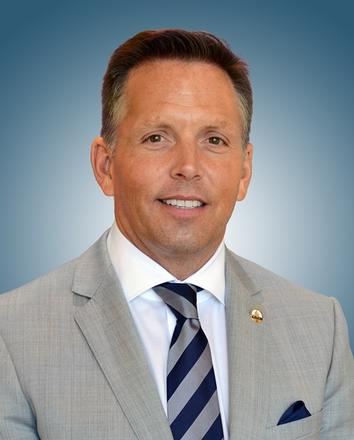
Patrick La Pine, LSCU
What happens next year among credit unions not only will be affected by decisions CUNA makes or does not make, but also by how much work leagues have put into understanding the needs of their members and delivering services accordingly, explained La Pine.
“Certainly how credit unions will react next year will vary from state to state,” said La Pine. “For leagues, what it comes down to is this: Are you a league that has a strong value proposition for your members? I know we do here. I am not fearful that our league will lose a lot of large credit unions that suddenly decide—if CUNA permits CUs to join the trade association and not the league—they will leave LSCU.”
La Pine said that the large CUs need the leagues for state-level advocacy.
“For example, in Florida we have a large congressional delegation—27 members—and one of our jobs at the league is to develop, cultivate and maintain relationships with federal lawmakers. CUNA does not have the network at the state level like the leagues do. CUNA can’t juggle working with 500 or so members of Congress,” he said. “They need the leagues to be the point for that.
“So if a league has strong value proposition it will be fine,” continued La Pine. “But if it does not, or has not been working to address that, starting now might be a little too late.”
Bylaw Changes
La Pine suggested that leagues benefit, as well, from getting out ahead of the CUNA membership issues and addressing their bylaws, noting that LSCU had been paying attention to that for more than two years.
“We started a couple years ago to go through the process of updating our bylaws and we ended up completely rewriting them,” he said. “We contemplated what might happen regarding CUNA, as it did this year, and rewrote our bylaws to allow for choice. Our board was very forward thinking in seeing how the environment with the leagues and CUNA was changing, and with what credit unions were saying they wanted. So we responded accordingly.”
La Pine did not dismiss the option of CUs staying with their leagues and then joining NAFCU, especially with NAFCU now allowing state-chartered, federally insured credit unions as members.
“And NAFCU has an aggressive marketing campaign now. It’s not like CUNA is the only game in town, and we have to be mindful of that.”
La Pine acknowledged that Nussle has stated that CUNA needs to change—with the leader attempting to “right-size” the organization and get it focused to be effective and to have a strong value proposition.
“In the short run CUNA could get hurt by the membership choice issue,” concluded La Pine. “I think they will. But I think CUNA is anticipating that. Like anything else, sometime you have to break something down and then build it back up.”
La Pine expects some CUs will be content with how things currently are, some will give CUNA the opportunity to come to a decision and wait it out for a year or two, while others may go with the league and NAFCU in the interim.
“But I think in the end CUNA is the best alternative at the national level when it comes to representation, and I think the organization will shrink and focus what they are doing, present that value proposition and make it very clear they are the premier national trade association.” La Pine said.