

ORLANDO, Fla.—Financial services and the golf industry have more in common than just league events and fundraisers. Both are also struggling to respond to an enormous and influential millennial generation that isn’t particularly fond of either.
And there aren’t going to be any easy answers for either the financial services or recreational golf industries, according to Mark King, president of adidas North America and chairman of the TaylorMade Golf Co. But there is a path to a more effective response, said King, even if leaders in both fields may not be comfortable making them.
“To me what’s really challenging is this change in consumer behavior,” said King in remarks to BAI’s Retail Delivery Show. “Baby Boomers are moving on, and Millennials are really starting to become the core of our economy. Over the next 20 years that’s going to mean dramatic changes not just to the economy, but to the worker in companies. It puts tremendous stress on organizations, leaders, and workers.”
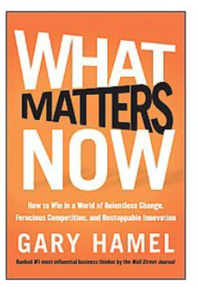
Citing the book “What Matters Now,” by Gary Hamel, King said that “what used to matter in business for many, many years maybe doesn’t matter so much anymore.”
That’s because, as Hamel writes and King reiterated, the marketplace is now undergoing its third revolution of the last two centuries.
“Companies that will succeed in the future are those that drive creativity into the culture of the company,” said King. “If you look at companies being challenged, it’s not challenges from the incumbents, it’s new, creative solutions that are challenging all industries that are slow moving and bureaucratic and don’t have a higher purpose. It’s really a time when we as leaders of organizations have to rethink the way we behave, the way we deliver products and services. This young consumer needs more from a brand or company than just products or services. We are in this world that’s changing so fast, and the construct of every business and industry is based on the way things used to be, not the way things are going to be. So every industry is at a very critical point in transforming how they operate.”
King began as a salesman at TaylorMade, the golf equipment manufacturer, and eventually worked his way up to CEO where he oversaw growth from $300 million in sales to $1.6 billion, even as the golf market itself was shrinking. He said that only happened after the company completely reimagined itself and even the game of golf itself.
Three Elements Needed
“You need to reimagine retail banking and what it could be in the future,” King advised. That will come down to three elements, according to King:
- The culture of companies will ultimately define their success. “Old cultures are going to be very, very hard pressed to attract new people, to have the best talent available.”
- A brand and a company must have a higher purpose.
- The consumer experience has to be unique and special.
When King took over as CEO, TaylorMade was a fringe brand with approximately 10% share in a market dominated by Callaway. Now, the market has been reversed, with TaylorMade’s marketshare more than three times that of Callaway. The growth came after a member of TaylorMade’s team said the company should strive to be the “best performance golf brand in the world.”
“And I said, ‘That’s impossible, Callaway is the best performance golf brand in the world.’ But then we started to talk about creating an inspiring company. We knew we had to try to do something extraordinary. At the time we were not a great company, but leaders of a company should inspire. We said we’re going to create an awesome environment. We decided we would do this, but we had no idea how.”
How did it to that?
“If there is one thing that changed the direction of our company and changed people’s thinking and got them engaged it was having something to believe in that is bigger than their job,” said King. “The thing that matters most for leaders is leading people and inspiring people and creating a bigger cause for their organization. In today’s world, if companies don’t have that, they are really going to struggle. I have two daughters, 19 and 23, and I can tell you they want a lot more from life than just to get a job and work hard and get a paycheck. They want something bigger than just the job. I think when we get to how do we reimagine retail banking, it comes to what kind of aspiration do you have?”
After TaylorMade initially grew its market share by just a half-percentage point, King said it realized it could no longer just do what everyone else was doing.
“We said, ‘we’re never going to catch up if we play by the rules of the industry.’ In every industry, the leader leads, and everyone copies them. So we said ‘We have to reinvent how we do our business,’ and we looked at consumers in a very, very nuanced way, with real intimate connections. We found out one thing, the 80/20 rule was true, but found out the same 20% were buying new products every year. So we started launching products every 12 months. Within two years our market share went from 10% to 21%, and three years later we had 35% and Callaway had 10%.
“So if you want to reimagine retail banking, it’s not going to be a tweak,” said King. “It’s going to be someone who can challenge what you do and how you do it. Can digital really replace human interaction? I’m one who doesn’t think it can. Once everyone is digital, it’s a commodity. But things aren’t evolving, things are transforming. As you think about reimagining retail banking, you need to get there in a hurry.”
Dumping The Old 'Command and Control'
As part of that reimagination, King said that includes dumping the “old command and control, top-down management” organizational charts. Today it’s about getting employee input from the very lowest levels, as well as recognizing what made for a good employee a decade ago no longer applies.
“Ten years ago a good employee was smart, diligent and loyal,” said King. “Today a good employee is someone who is passionate, creative and takes initiative.”
Employees, said King, must be empowered to challenge the status quo, and the leadership team must be comfortable with being challenged and be willing to experiment.
“The world is out there waiting for people to think of new solutions,” King said. “That’s the challenge for every mature industry with huge infrastructure, for everyone who thinks they know everything, for people to tied to the past and not looking to the future--that’s are the challenges to every leader today.”
King said the 18-30 year-old consumer has a different mentality and different expectations. “They want more. They think they deserve more—I’m not sure I agree—they are smarter, they are worldly. We live in a different world. The most overused example is Apple, but it’s overused for a reason. Apple isn’t about hand devices or music, it’s about the consumer, it’s about an ecosystem people live in because it makes them feel better.”
In golf a lower number is a good thing, but not when it’s used in the context of number of rounds played. Golf rounds peaked in 2006, and have declined 20% since then, and among young golfers age 18-35, rounds of golf are down 40%. The 18,000 golf courses in the U.S. average 30% occupancy.
The golf industry initially reacted by telling young people about all the virtues of the game, which King only half-jokingly said meant no fun, tucking in our shirt, a 500-year history, etc.
“That’s what industries do, they turn to what had been successful, and they continue to promote it,” he said. But that hasn’t worked.
Instead, new outlets such as TopGolf, the highly popular indoor golf facilities/bars/restaurants where each ball has a computer chip in it and players can play different games, have boomed as they approached the game differently. And TaylorMade is also backing a new effort, HackGolf.org, that invites open-source innovation, feedback and a reimagining of what golf can be.
“I think the worst thing in the world is the phrase, ‘Thinking outside the box.’ It’s impossible. We don’t know what we don’t know. So you have to get an outside perspective, you have to ask others, people in other industries,” said King.