

By Ray Birch
DES MOINES, Iowa—As two Chicago banks introduce cardless ATMs, which allow cash withdrawals via smartphones, experts are split on whether the technology will catch on.
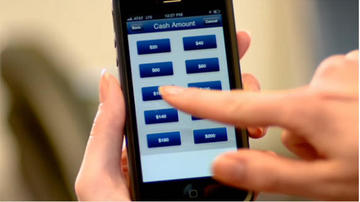
The new ATMs, introduced by BMO Harris Bank and Wintrust Financial, work by letting consumers prepare for a transaction before arriving at an ATM. To do that, consumers log into a mobile-banking app on their smartphones, enter the amount to be withdrawn, walk up to an enabled ATM, and press the mobile cash button. After consumers hover their phone over the QR code displayed on the ATM, the machine dispenses the requested cash.
What is working for the new ATMs—mobility—is also working against them, say analysts. With smartphones being used more for banking and payments, and consumers getting comfortable with the approach, the result has been the removal of usage barriers. However, as more Americans lean on smartphones for transferring money, depositing checks, P2P and mobile payments, the need for cardless ATMs, even just as a cash dispenser, declines, they say.
Fraud Fighter
Experts all agreed that cardless ATMs reduce fraud and also offer a “cool factor” for credit unions looking to court Millennials or appeal to a membership that is highly tech savvy.

Brian Scott, PSCU
“If you consider the majority of ancillary transactions done at an ATM can be done from an app—depositing checks through image capture, making loan payments, transferring funds . . . you understand that the real consumer need for a cardless transaction has already been addressed,” said Brian Scott, vice president of sales at The Members Group.
The value of the cardless ATM boils down to cash access, he said. “And an increasing multitude of ways to pay is likely to decrease the need for cash over the coming years. Therefore, a cardless ATM may be an extra cost that doesn't really drive incremental activity or income at the ATM.”
But Scott agreed there are credit unions that see offering products and services on the technology forefront as being incredibly important from a branding perspective.
“For those cooperatives, cardless ATMs may be an investment that pays off in the long run by wooing their target member with the latest and greatest,” Scott explained. “Still, for cardless ATMs to bring real consumer value, they will have to offer some additional functionality or perk, such as rewards, tied to the transaction.”
Primary Use Fading
Terry Pierce, senior product manager at CO-OP Financial Services in Rancho Cucamonga Calif., sees the primary use for the machines—cash withdrawals—dwindling.

Terry Pierce, CO-OP FS
“Cash will never go away, but we are seeing so many more mobile options now that are making cash less relevant,” explained Pierce. “You also see a lot of cash transactions for small items. But even that is being gobbled up more by cards, as Visa and MasterCard allow merchants—on small-dollar transactions—to waive the signature or PIN.”
Nonetheless, Pierce thinks converging ATMs and mobile is a smart idea. “People now carry their phones more than they do their wallets.”
But the fate of the new ATMs may lie in whether enough FIs invest in enough machines to really drive consumer adoption.
BMO Harris Bank said it has deployed the technology at 750 of its ATMs. Wintrust Financial planned to roll out about 190.
What may help with FI adoption is that to offer the cardless option, ATMs require only a software upgrade, not hardware improvements, said Pierce. “If the machines had relied on NFC, not QR codes, that would have required a hardware upgrade and raised costs.”
Time Needed For Tech
Barney Moore, portfolio consulting services manager at CSCU in Tampa, Fla., thinks cardless ATMs will catch on, but it will take time—due to FIs moving slowly to invest in the machines.
“In five to 10 years these will be mainstream,” said Moore, noting cardless ATMs are just part of the growing shift to mobility. “But the terminals have to be upgraded. How fast that happens will determine how quickly cardless ATMs take off. Once these become available in large numbers, I think consumers will take to them quickly.”
The machines offer greater convenience and security, added Moore. “You are not exposing card details or entering a PIN for fraudsters to capture. The speed of the transaction is improved too, down to 10 to 15 seconds compared with 40 to 45 seconds for card withdrawals.”