

By Ray Birch
LANHAM, Md.— A new national trade association focused exclusively on credit unions under $500 million in assets is set to launch in the coming months, positioning itself as a collaborative, additive voice for small institutions at a time when their numbers continue to decline.
The organization, whose name is still being developed, will be led by President Josh Urbick, CEO of $29-million IBEW 26 FCU here. He said the effort grew out of conversations among small credit union CEOs concerned about the steady erosion of their ranks.
“Small credit unions across the country were frustrated at the trend that shows small credit unions consistently declining,” Urbick said in an interview with CUToday.info. “We’re losing hundreds every year through mergers or acquisitions. We just came together and asked, is there something we can do to slow that down? It’s not just about survival — it’s about thriving.”
Launching In A Post-Merger Era
The group’s formation comes just over two years after CUNA and NAFCU formally merged on Jan. 1, 2024, to create America's Credit Unions, now the nation’s largest credit union trade association. While Urbick acknowledged that some observers may view the timing as significant, he stressed the new group is not a reactionary effort.
“There’s no way we could ever become like America’s Credit Unions,” Urbick said. “They do a great job. They’re extremely large and they have their place and their benefit. I’m a member and I plan on staying that way. There’s still a lot of value there.”
Instead, Urbick described the small CU organization as “entirely separate” and singularly focused on the needs of institutions under $500 million in assets — a threshold he called “the new $250 million” in today’s regulatory and technology environment.
Industry observers note that many small credit unions have voiced concern in recent years about regulatory burden, technology costs and succession challenges — themes explored in recent CUToday.info reporting on whether the movement risks leaving its roots behind as consolidation accelerates. Even so, Urbick repeatedly emphasized that his trade group is meant to complement, not compete with, national and state associations.
“We deeply respect the work of state leagues and national associations,” Urbick said. “Progress is strongest when organizations align around shared priorities. We want to work alongside industry partners in a spirit of mutual respect and common purpose.”
As CUToday.info reported, ACU this year launched the Small Credit Union Advocacy Advisory Panel designed to sharpen and strengthen the voice of small CUs in advocacy discussions.
In a previous CUToday.info report, ACU President and CEO Scott Simpson described the Small Credit Union Advocacy Advisory Panel as an effort to sharpen—not dilute—the association’s advocacy on behalf of small institutions. The panel, he explained, is designed to create a more direct channel between small credit unions and ACU’s advocacy machinery, ensuring their priorities don’t get lost amid louder, more urgent industry debates.
“In lawmaking and politics—and even inside a trade association—not every voice finds its way to the marketplace the same way,” Simpson said. “Sometimes urgent matters overpower the important ones. This is an attempt to make sure we’re carving out time and capacity for direct feedback from this category of credit unions.”
‘Taking That Factor Out Of The Equation’
Urbick said that while most leagues and national groups maintain small credit union committees or advisory panels, their broader membership bases can complicate advocacy.
“The larger associations and leagues really do want to help,” he said. “But they represent both big and small institutions. We wanted to take that factor out of the equation and just focus on small credit unions.”
The group’s mission, he said, is to ensure mergers are “the last possible option on the table,” helping small credit unions modernize, collaborate and access tools that strengthen operations before they feel compelled to combine with larger institutions. In cases where mergers are unavoidable, Urbick said the group hopes to encourage partnerships between like-minded small credit unions that share common missions or fields of membership.
Urbick was equally positive when discussing the Defense Credit Union Council, noting that specialized national organizations serve distinct roles within the broader movement.
“Collaboration and partnership with the larger leagues is going to be paramount,” he added. “We’ll have ears on the ground — feedback and support needs from small credit unions across the country — and we can help package that and partner with the larger associations that already have advocacy teams in place.”
Structure And Strategy
For now, the association will operate as a volunteer-driven organization, with board members still being finalized. Urbick said he expects geographic representation from across the country, with particularly strong early interest from small credit unions in the West.
The organization will be based in the Washington, D.C., metropolitan area, likely in Maryland or Northern Virginia, Urbick said. Dues are expected to remain intentionally low — at least through the end of 2026 or early 2027 — with additional support anticipated from vendor and industry partners.
“We want to make sure small credit unions can find value, and we’re not going to charge a lot,” Urbick said. “This is grassroots. It’s brand new. Everything right now is volunteer and out of pocket.”
Urbick reiterated that his organization is not intended to replace any existing trade group.
“This isn’t competition in the least,” Urbick said. “We prefer a diplomatic approach. The last thing we need is public fighting within the movement. The mission is to help small credit unions succeed. We don’t want anything distracting from that.”
He added that his organization hopes it can someday partner with ACU and its Small Credit Union Advocacy Advisory Panel, the leagues and DCUC—while it is already taking steps to work with the Endangered Small Credit Union Defense, a coalition representing small credit unions headed by Doug Wadsworth.
"I'm not going to lie, I'm very excited about this new, national association exclusively for small CUs,” said Wadsworth, also president of Tri-Cities Community FCU in Kennewick, Wash. “I will partner with them in advocating for our small CU regulatory relief needs, however I can. I am also excited to continue partnering with other great trade associations and leagues, like ACU and DCUC. Together, we can go farthest, for the entire movement."
‘We Can’t Sit By And Say We Didn’t Try’
Ultimately, Urbick framed the new association as an effort rooted in cooperative principles and a belief that small credit unions remain the backbone of many communities.
“If we truly believe in the cooperative mission — why we were founded, to help communities and people of modest means — then why wouldn’t we fight our hardest to help small credit unions be successful?” he said. “Maybe 10 years from now we look back and say it worked. Or maybe it didn’t. But we can’t sit by and say we didn’t try.”

Scott Simpson
Simpson: Small Credit Unions Remain Central To ACU’s Advocacy
Scott Simpson, president and CEO of America’s Credit Unions, commented on the formation of the new small credit union trade group.
“Credit unions are built on the principle of freedom, including the freedom to come together to serve communities through cooperative finance and the constitutional right to assemble around shared priorities,” he said. “At America’s Credit Unions, small credit unions play a central role in shaping our work. Leaders from small institutions serve on our board and committees, guide our advocacy agenda, and help ensure our efforts reflect the real challenges they face every day.”
Simpson emphasized that ACU is well aware that many small credit unions are under tremendous pressure from both market forces and regulatory demands.
“We remain deeply committed to working alongside them, providing the advocacy, tools, and support needed to help them survive and thrive while defending their right to exist as member-owned cooperatives,” he said. “We’re aware of the efforts underway to form a new association and have already had conversations with Josh about his plans. Our focus remains on strengthening the entire credit union movement, and we will work with anyone aligned with the mission of advancing and protecting cooperative finance.
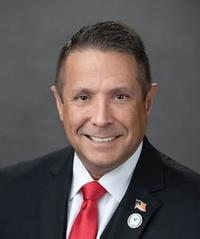
Anthony Hernandez
“In Washington, a unified voice matters, continued Simpson. “Because when our movement speaks with dissonance, it can be worse than silence, and ensuring credit unions of all sizes are empowered and protected will continue to guide our work.”
The Defense Credit Union Council offered another perspective.
"A wise man recently reminded me of an old saying that 'when two people agree all the time, only one of them is thinking.' Our movement cannot afford to overlook any possibilities and opportunities,” said DCUC President and CEO Anthony Hernandez. "Diverse points of view are healthy and beneficial to the movement. DCUC has always been collaborative and willing to listen and find ways to accomplish mutual objectives. That goes for credit unions of all shapes and sizes."