By Ray Birch
RIVERDALE, Utah—One credit union is letting its members tell it how it should design its “branch of the future.”
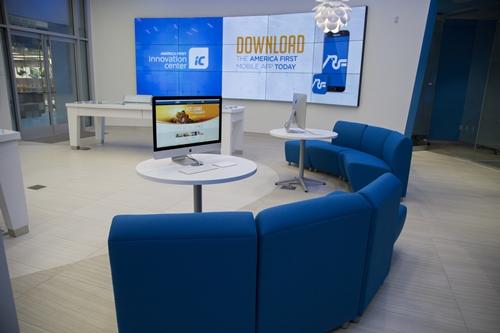
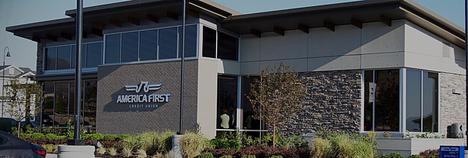
America First Credit Union has just introduced its Innovation Center, located in Downtown Salt Lake City.
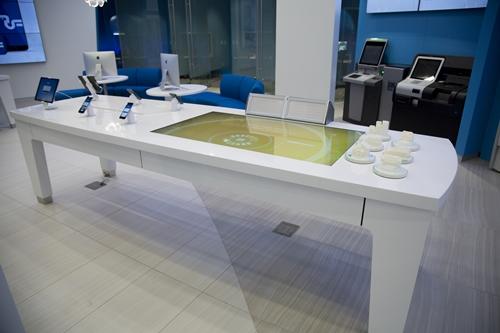
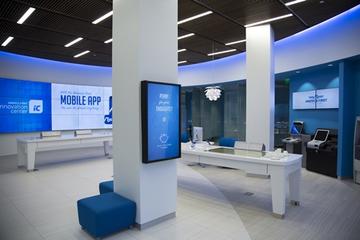
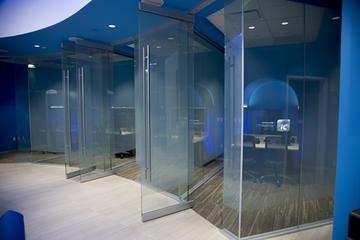
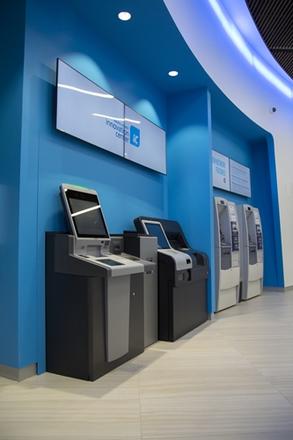
The Innovation Center isn’t a traditional office. Instead, it is a “collaborative hub” to showcase a wide variety of the latest innovative financial services solutions—such as touch screens, video tellers and high-tech ATMs. The office makes members aware of all the branch has to offer, and solicits feedback to learn what services they truly want and find valuable.
“Rather than building a dozen branches with new high-tech devices and then finding out members don’t want that, we will first find out what our members want and then as we build new offices and remodel older ones, we will insert that technology and design,” said EVP Randy Halley.
Halley explained that America First learned that lesson several years ago when it transitioned a number of its offices away from teller lines to locations served by video tellers.
Privacy Concerns Over Video Tellers
“While it might seem logical that our members would have preferred the video tellers, seeing that the experience is much like a drive-up teller station, they told us they did not really like the machines as much as going through a teller line,” said Halley. “They had concerns there was not enough privacy with the video tellers and that the phones used with them at the time were germ factories.”
Halley said that member viewpoint was also evident in the performance of the new high-tech offices when they were built about six to seven years ago.
“The branches with the remote tellers were not performing as well as offices with a standard teller line,” said Halley. “Since then we have been hesitant to say, ‘OK, now we will take this approach with our branches.’ We’d rather ask our members first, to see what they want. That is what this Innovation Center is about.”
The Innovation Center does not have teller stations, and is served by universal associates who greet members, understand what they want to do, and then explain all of the different
options available in the branch.
“So if someone walks in and says they want to deposit a check, we tell them there are a few different ways,” said Halley. “We show them how to deposit a check on their phone and via home banking, and show them to an ATM or a video teller kiosk.”
Two Types Of Video Tellers
The Innovation Center offers two types of video tellers, one in which the member interacts with a staff member via a flat-screen TV, and another that delivers a 3-D experience, with a holographic image of the subject matter expert appearing in front of the member.
In addition to members speaking with staff, Halley said there a number of ways they can get information from self-service tools. The office has touch screens that also deliver marketing information, as well as “tactile tables” where members interact with a video screen that “pops up” information as they touch the table.
Halley said the $7.5-billion America First is very interested in learning the appeal of “distant services,” where the member interacts with an expert located outside the branch. Halley
emphasized that the staff at the Innovation Center, while well-versed in all business areas, won’t be originating loans or opening accounts. He said the team, much like employees at an Apple Store, will be charged with providing top-line answers and getting members “where they need to be.”
“We are interested in the appeal of the distant devices,” said Halley, again saying that the new office offers the 3-D and flat screen experiences. “We want to see how members view working with an expert at a distance. Do they like the holographic approach, which is like face-to-face. Or will they prefer a flat screen?”
Halley said he would not be surprised if members lean toward flat-screen video, since that is similar to what they experience at home on their TVs.
“It is less expensive and might someday evolve into a service that members could see being delivered at their own homes,” he said.
Collecting The Data
America First will collect data from members via surveys sent to those who visit the Innovation Center and through direct feedback to universal associates.
“Most people don’t answer surveys so we will have detailed conversations with them when they are at the Innovation Center,” explained Halley. “We’ll ask them, ‘Would you use this? Do you like this? Would you do this at home?’ We’ll also ask staff to tell us which demographics are choosing certain services.”
Halley said the credit union refers to the office as a “store” when speaking with members.
“We want them to get the sense that this is not a traditional branch, and that is it a place to come in and see what America First has to offer,” Halley said. “But we will still measure the branch like we do our others—how many new members did it bring in last month, how many loans etc. But we will also dig into the data to see how many people walked in the door, how long they stayed, and how they utilized the office.”