NASHVILLE, Tenn.–One of the most overlooked areas critical to success in organizations is employee experience (EX), and yet it’s overlooked and even mistreated by many leaders, according to one expert, who says the lack of understanding is what separates growth companies from non-growth companies.
And if you believe you have created ideal processes at your organization, that same expert has a question for you to ask 10 employees.
Tiffani Bova, an expert on growth and innovation, a former executive with Salesforce, a research fellow with Gartner, and the author of two books on the employee/customer experience, told credit unions that it is only in connecting the customer experience (CX) with EX that organizations can gain the greatest leverage.
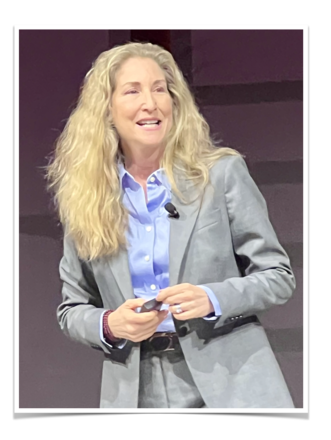
Tiffani Bova speaking to THINK meeting.
Bova’s remarks came during a closing session of Velera’s THINK24 Conference.
Not that most organizations want to hear it, but Bova saidthat in conducting research around the world she has consistently heard the same three things:
- If it's so obvious, why isn't everyone doing it?
- Who owns it?
- What is the return on the investment for both employee and customer in order to drive growth?
Advice from a Monk
To get organizations to embrace how they need to be thinking, Bova said she has turned to the quote from the Zen monk Shunru Suzuki: “In the beginner’s mind there are many possibilities, in the expert’s mind there are few.”
The experts in organizations, Bova observed, will respond to any new thinking by saying, “We tried that one time and it failed. We’re not going to try it again.”
“The biggest threat to the long-term survival of most companies is neither competitors nor economic downturns. Instead, it comes from within in the form of inertia, organizational complexity and bureaucracy,” Bova said.
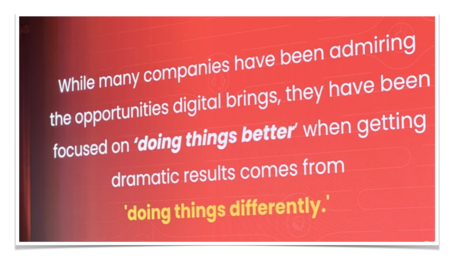
Bova said the mindset of most organizations seeking to grow is to focus on doing things cheaper and faster and, if at all possible, with fewer people.
The real question, she said, is “How can we do it differently.” The answer requires a beginner’s mindset, she stated again.
A Question to Ask
“When I meet with executives across industries, I ask this one question: Is your company customer centric or is it people centric? My question back is is it really and either/or, or is it an and? There is a current mindset that you have to choose. These false-tensions require falsely that you make a decision where there is no winner.”
Bova said surveys of organizations find 58% say providing good EX is a priority, yet 88% of employees are encouraged to focus on the customer above. When push comes to shove and a decision between one or the other must be made, the customer always wins, she said, creating a disconnect.
“Nobody truly owns employee experience, not the way I'm about to describe it,” Bova told the THINK meeting. “This isn't about having a chief people officer even a chief culture officer. This is really what I like to describe as the moment that matters; when an employee in some way touches a customer in some way.”
The Stark Reality
One stark reality discovered in surveys, according to Bova, is that 49% of C-suite executives feel their company excels in acting on employee feedback. But just 31% of employees agree.
One mistake, she said, is that C-suite leaders point to how often they survey their employees as an indicator of their support, but then never act on that feedback. The employees notice and can begin to check out, Bova said.
“The next time it's time for you to answer a survey, are you excited about answering that survey? Do you feel like the last time you spent time, you answered all those questions, you took the time to really say ‘Here's where I think we could use some help,’ and then nothing happens.” Bova said. “You should say to employees ‘we heard you,’ and ‘This is why we're not able to do it.’”
Bova urged every credit union to realize that “Employees carry the torch every day for the values and mission of their companies. They are the facilitators.”
Succeeding Long Term
According to Bova, employees have taken over customers as the number-one priority stakeholder for businesses to ensure long-term success
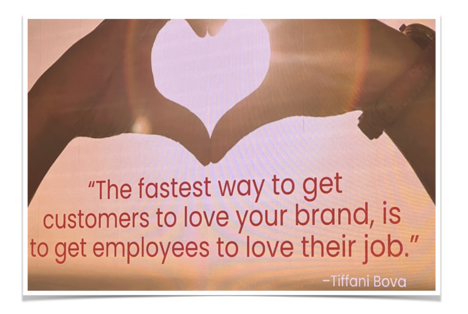
The fastest way to get customers to love a brand or company is to get employees to love their job, she said. When employees love a job customers can feel it, and they become brand ambassadors and referrals.
The Top Challenges
To illustrate the different views of the C-suite and employees, Bova shared the results of how each views top challenges.
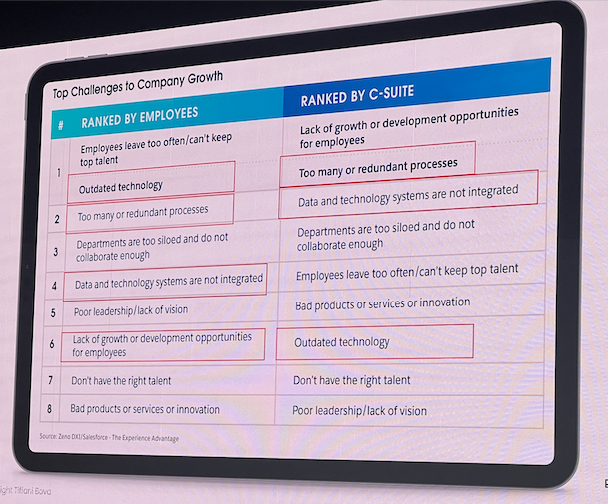
“The one I love the most in these top challenges to company growth is the one that is ranked last by the C-suite: poor leadership. It couldn't possibly be leadership,” Bova said, drawing laughs from her audience. “You have an opportunity here to understand that as leaders we may not actually know what our employees think, and it’s holding us back from growth.”
Balanced Philosophy
Bova called for a new, more balanced operating philosophy, and to the standard model of people, process and technology, she added another piece, culture.
“Before you bring about change in any one of the four components you should evaluate the impact to the other three,” Bova advised. “Often just one happens in isolation. To implement change successfully you need to find the right balance between all of them. It doesn’t have to be 25, 25, 25, 25, it just means you have to consider the other three when you make a change in the fourth.”
Here's how Bova looks at each:
People
Bova said the research shows 87% of customer-facing employees want to provide customers with superior experiences.
“But more than half do not believe their company or management is setting them up to be successful in customer interactions,” she said. “A majority say that unnecessary effort in their day-to-day prevents them from delivering a higher-quality experience for customers.”
Process
Bova offered this advice to CU leaders headed back to work.
“If you think you have great processes at work, on Monday go talk to 10 people and ask them ‘What is your number-one work around for the processes we have put in place?’” Bova recommended. “IT doesn’t have line of site into everything going on in the business. Alternative processes are hindering the organization. If there is one thing that kills workflow, agility and employee satisfaction, it is the breakdown of processes and resulting wasted time.”
Bova noted all employees, as they are also consumers, have become accustomed to opening one tab to shop, order and pay for goods online. They expect the same at work.
“If you can remove those unnecessary steps for your employees, they are 20% more likely to say they are highly motivated to provide a strong XC, and 56% more likely to be engaged in their day-to-day jobs,” Bova said.
Technology
While working at the consultancy Gartner, where she was a research fellow, Bova said she found the average employee experienced 10 planned enterprise changes in 2022, up from two in 2016.
“The deficit here is employees saying, ‘I have no more capacity, no more room, I can’t take any more,” Bova said.
The “transformation deficit” has led to a decline in employees’ willingness to support transformation initiatives, according to Bova.
In another disconnect found in surveys, Bova noted 52% of C-suite leaders believe the technology the company provides works effectively (meaning 48% don’t), but only 32% of employees agree the tech helps.
Culture
According to Bova, “culture” refers to the beliefs and behaviors that determine how employees and management interact both internally and externally with other stakeholders.
The four pieces above are fundamental to driving growth, Bova said.
Other top issues of EX that drive CX and revenue growth, she said, include:
- Trust
- C-Suite accountability
- Alignment between employees and values of organization
- Recognition for work
- Seamless technology.
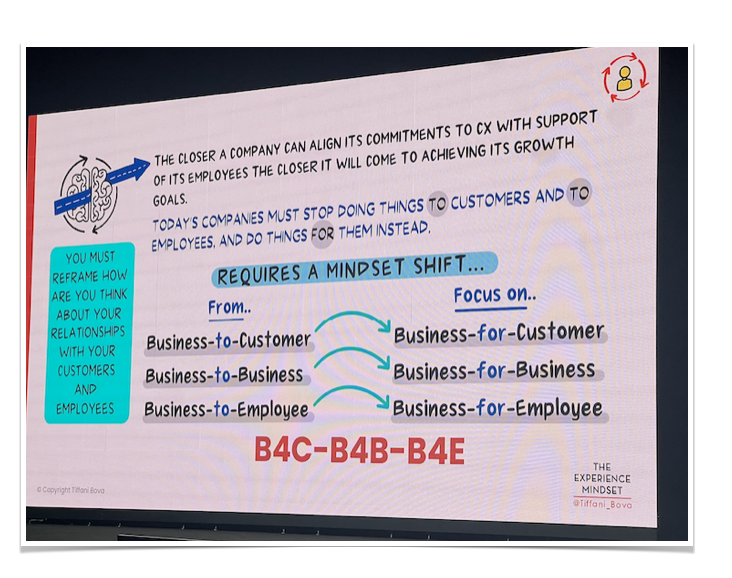
“The closer a company can align its commitments to CX with support of its employees, the closer it will come to achieving its growth goals,” Bova said.
The Value of Getting This Right
Bova repeated for her credit union audience that there is a direct causal link between good EX, CX and growth.
“But it must start with EX,” she said.
So, where does a credit union start when it comes to the beginner’s mind?
Bova offered these five steps:
- Align. Agree on definition and metrics of a good EX
- Understand which EX elements have the greatest impact on CX. Have your marketing department journey map both the employee and customer
- Reassess. Reassess tech investments for both EX and CX
- Collaborate. Stand up cross-functional advisory boards. Break down silos.
- Feedback. Establish continuous and actionable loop. Manage by wandering around. Make yourself accessible. Get feedback/