By Ray Birch
RALEIGH, N.C.—The path to Maurice Smith’s credit union career began in the middle of a North Carolina potato field when he was 12—and facing a difficult life question from his father.
“It was 1969, I'm working on our small family farm and my dad turns to me in the field and asks me, ‘What are you going to do with the rest of your life,’” Smith recalled. “If you knew my dad you knew he did not waste questions. He had a purpose for them.”
Smith said he did what most 12-year-olds would do under that kind of pressure.
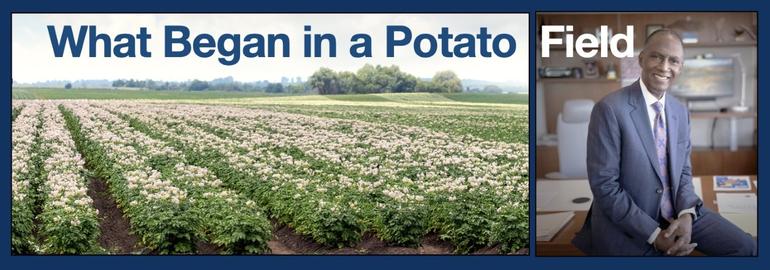
“I looked at him, shrugged my shoulders, and said, ‘I don't know’,” recalled Smith, who retired in January from Local Government FCU after leading the organization since 1999. Smith, while he was LGFCU CEO, also led Civic FCU here.
His father told Smith he wanted him to choose a career right then, in the middle of that farm field, or he would choose one for his son.
“I asked if I could have 24 hours to think about it,” Smith said. “And my father insisted that by the same time tomorrow he wanted a decision. He said it did not matter to him what I chose to do in life as long as it was legal and I could take care of a family. He said I did not have the luxury of going through life aimlessly, I had to have a purpose. You pick a direction today and if you change it tomorrow, that's OK, he said.”
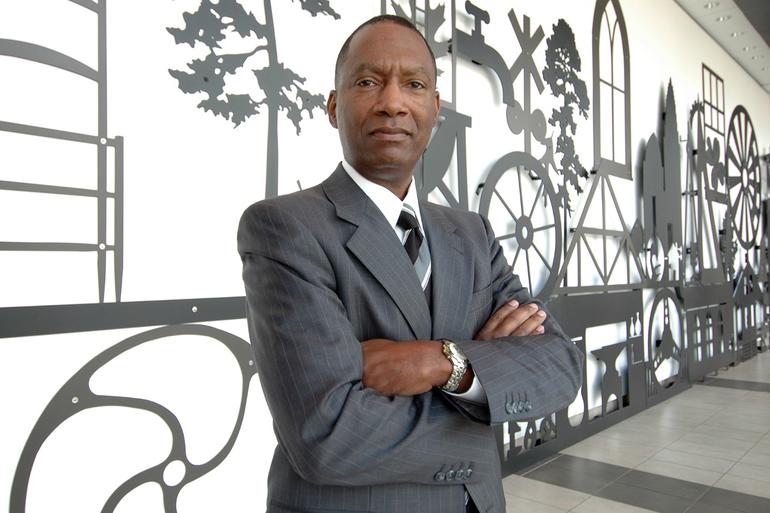
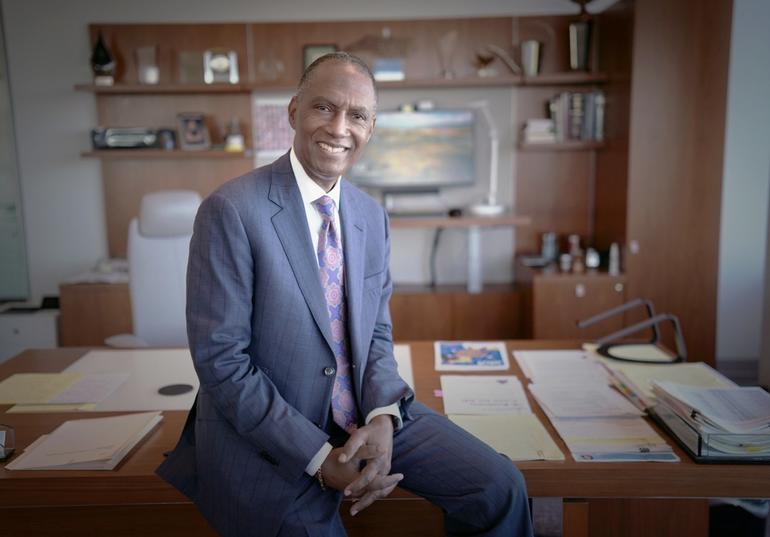
Maurice Smith
Wanting the Corner Office
The next day Smith and his father took some receipts to the local bank.
“I see this man sitting in a corner office with a starched white shirt and a stack of papers on his desk and certificates on his wall,” recalled Smith. “I asked my dad who that man was and he said it was the bank president. I told him right then, that is what I wanted to be, a bank president.”
Smith had not yet been exposed to credit unions et, as there were no CUs in his small town.
“In 1969, I'm an African American in a small community in North Carolina and I had yet to see an African American in a position, such as bank president. My dad turned to me and said, ‘You want to be the bank president?’ And I said, ‘Yes I do,” Smith recalled. “The next three sentences out of my father’s mouth changed my life. He said if that is what I wanted to become I had to go to college and major in business. He said he would help me. But from that point forward my conversations with my father changed. We didn't talk about sports. We didn't talk about what was going on in the community. He drilled me on Keynesian economics, supply and demand, the rule of 72, how money is made, disintermediation of financial services…Those are the kinds of conversations that he drilled me on and expected that I would know the answers.”
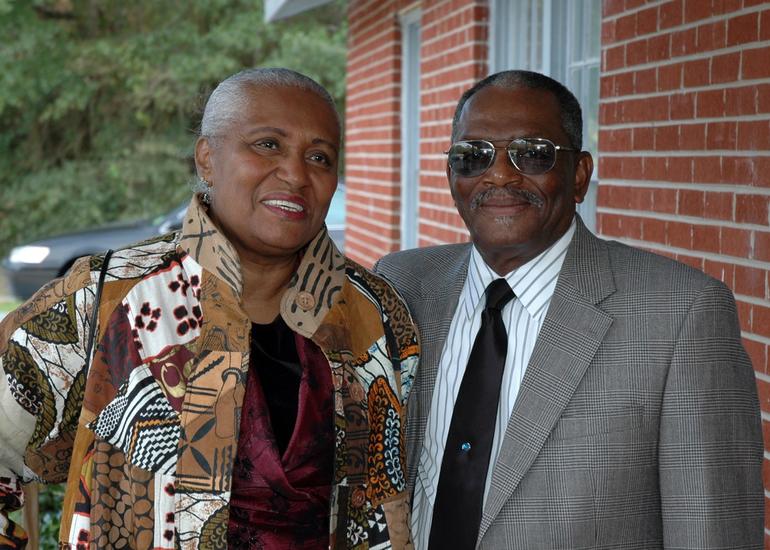
Maurice Smith's parents, Rebecca and James Smith.
First Stop, SECU
That tough question, and the conversations that followed, led Smith down the path that eventually took him to the leadership position at Local Government FCU. But his first stop, after graduating from the University of North Carolina at Wilmington in 1979 with a business administration degree, and then from law school, was North Carolina State Employees Credit Union, where he advanced from loan officer to vice president of marketing. Smith added he preferred opportunities at cooperatives over banks, once he learned more about CUs. Smith would eventually leave SECU in 1999 to take the helm at LGFCU, where he led its growth to $3.2 billion in assets, making it the fourth-largest CU in the state.
As CUToday.info recently reported, LGFCU created a partnership with SECU, one of the most unique partnerships in credit unions, which is now coming to an end.
In working in credit unions for almost 44 years, what stands out for Smith—who among many roles also served as chairman of CUNA—is the resilience of the movement’s business model in serving members.
‘World Has Changed a Lot’
“The world has changed in a lot in the 43-and-a-half years I've been in the business. I've seen a lot in economy,” he reflected. “I've seen five recessions, and depending on where we are today, it might be six. I've seen thriving credit union environments. I've seen declining rate environments. I've seen rising-rate environments. I've seen trade imbalances, inverted yields curves. And I've seen one pandemic. The only thing I have not seen is in a depression, and I have not seen negative rates in this country. So, with all the challenges and all of the variations that the economy has thrown our way in our communities, our movement has remained resilient and focused on our mission of serving our members. And for that, I am deeply proud of the work that we have done.”
Had credit unions not been resilient, Smith said it could have led to the movement straying from its purpose.
“If we had lost our souls, and what I mean by that is if you think about what the purpose of a credit union is, it’s a cooperative owned by its members. The highest authority in the credit union is the membership,” explained Smith, who reminded that structure is the opposite of a typical for-profit corporation. “The guiding leadership of the organization is the masses. In all that we do there must be a line of sight to what's good for the membership. Had we lost that soul and believed that we owe our allegiance to Wall Street or some select, elitist group of our stakeholders, I think we would have lost our way.”
The Law & Some Travel
Smith, who got his law degree at the age of 42 from North Carolina Central University Law School, said he will continue to practice nonprofit law.
“This is what I do now on weekends and at night, I help nonprofits and most of it is pro bono,” Smith said. “I don't make any money from this, but I have a lot of fun trying to make a difference. I'm going to continue some board service. And, finally, my wife tells me I’m going to have fun in retirement whether I like it or not. So, we will travel some and see the world.”