

By Ray Birch
CHAPEL HILL, N.C.—The greater reliance on data in decision-making by credit union leaders is changing the industry’s professional education landscape, not only altering what is being taught, but how that information is passed on—while also changing how certain CU employees are managed.
Sekou Bermiss, associate professor at the University of North Carolina at Chapel Hill’s UNC Kenan-Flagler Business School, who also is a Fellow with Filene Research, told CUToday.info that greater dependence on data analytics today is forcing schools to make adjustments.
As a new academic year approaches, Bermiss’ insights are part of a CUToday.info series themed “Back to School” that highlights credit union professional education programs.
According to Bermiss, it isn’t just the types of subjects being taught that is changing.
“What has changed the most in credit union professional education over the last 10 years? The biggest thing I've noticed is that there is now a move to what I’d call ‘micro-classes’,” said Bermiss.
Bermiss explained that means courses are getting a bit shorter, but are more focused.
“You're getting more specific topics,” he said. “For example, where you might have once had a class on innovation, now this course is on design thinking—a specific type of subcategory of a larger category. These shorter courses are more laser-focused on a given skill.”
Seeking Differentiation
Bermiss said another reason for the change is schools and educational programs are seeking to differentiate themselves, and therefore moving away from programs that have traditionally had more generic focus.
And in offering more specific programs, it’s been data analytics taking the lead in helping to create the need for more granular topics. As CUToday.info has extensively reported, credit unions have a wealth of data on their members and many more cooperatives are leveraging the information to drive not only marketing but overall organization decision-making.
“Topics are starting to get more advanced and innovative,” he said. “I teach a class on ‘people analytics,’ and I've done this with executives. Five years ago there were very few execs who would say they would like to use data, for example, to make decisions about recruiting. That just wasn't a topic then. But as you do research on the topic and read more books, it's coming out now how important this is.”
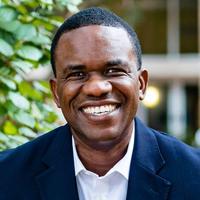
Sekou Bermiss
The New National Pastimes
Bermiss compared what is happening with credit union professional education with how sabermetrics took over Major League Baseball and changed how player performance is evaluated and how on-field decisions are made. Sabermetrics is the mathematical and statistical analysis of baseball records.
“In credit unions, in the past, they often trusted the gut instincts of their leaders,” he said. “But today, we wouldn't just trust one person to make big decisions. We’d say, ‘OK, wait a minute, let’s look at the data.’”
Data management requires signficant specialized skills, and Bermiss noted that credit unions have been hiring more people with data management/analytics skill sets much more than they are training their leaders to become data experts. This new influx of talent, however, is requiring leaders to be better managers of these data experts, and therefore acquire new management skills.
“Leaders have to be trained on how to manage these employees in ways that they haven't managed before,” said Bermiss, explaining that one trait of employees in the data analytics area is they always want to be learning and growing.
“Training and development is something that's important to employees, particularly younger employees. They want to feel like they're being invested in,” said Bermiss. “I was at a conference for chief learning officers a month ago, and a lot of the discussion was around if employees are not learning, they're leaving. So, you need to continually make sure employees feel like they are learning something new. That requires looking at employees and managing in very different ways.”
Hard to Find Good People
Bermiss added that he believes this has become even more important as a result of the Great Resignation.
“I do think that in the current labor market people are really worried about replacing people, because it's hard to hire,” Bermiss said. “It's hard to find good people. I think that has loosened up the purse strings on training.”
More in this series: