

By Ray Birch
SEATAC, Wash.—Will the large credit union leagues and associations just get larger?
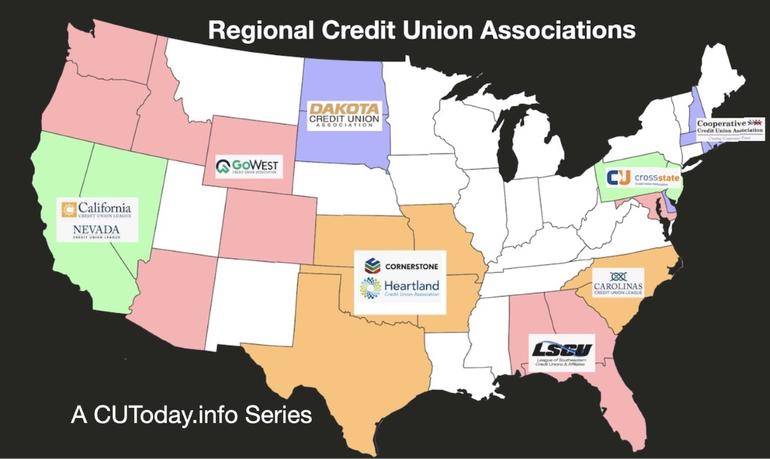
It’s a question that has come to the forefront in the American credit union community. As credit unions themselves have shrunk in number due almost exclusively to mergers, their state-level associations have in many cases followed, as dues income has decreased at the same time demands for certain services has increased. Where there used to be a “league” for every state (in some cases, two), today there are regional associations that stretch across as many as six states.

Case in point: the newly formed Go West Credit Union Association, which was created by the merger of the Mountain West Credit Union Association and the Northwest Credit Union Association on June 30. But those two latter associations were also formed by mergers, with leagues that once served Washington, Oregon and Idaho, respectively, creating the NWCUA, and leagues serving Colorado, Wyoming and Arizona combining to form the MWCUA.
The GoWest association now stretches from the Mexican border to the Canadian border. Could it grow even larger?
Troy Stang, president and CEO of the GoWest CU Association, didn’t say whether the GWCUA has plans to bring in other states, but did say there are benefits to be had in combining, including what he said is a stronger voice at both the state and national levels, as well as resources to better respond to the issues facing credit unions, including regulations.
“Our focus today is not to take our eye off the advocacy ball,” Stang said.
As CUToday.info also reported, the Cornerstone League, which represents credit unions in Texas, Oklahoma and Arkansas, and the Heartland Credit Union Association, which serves CUs in Kansas and Missouri, have also now voted to approve a merger that would create an organization serving 718 credit unions representing 14-million members across the five states.
Other multi-state associations/agreements include the California/Nevada leagues (the California league provides services to the Nevada league under a management contract), the Dakotas Credit Union Association, the League of Southeastern Credit Unions (Alabama, Florida, Georgia), the Carolinas CU League, the CrossState CU Association (New Jersey and Pennsylvania), and the Cooperative Credit Union Association (Massachusetts, New Hampshire, Rhode Island and Delaware).
“We started on this journey in 2008, bringing the Oregon and Washington leagues together,” said Stang. “Now, what is front and center for us are the complexities of all of the issues coming at financial services, specifically at credit unions, and these issues are coming at us at a faster pace.”
What both leagues—MWCUA and NWCUA—strived to do with the consolidation, according to Stang, is create a stronger voice of influence for credit unions.
‘More Muscle’
“In the environment that we’re functioning in and the public policy issues coming at us, as well as the opportunities, it requires more detail, more muscle—more of an influential voice at the state and federal level,” explained Stang. “With that end in mind, as we bring these two associations together neither organization had to merge. But we looked at the opportunity…With the successes we've had both in the Northwest and Mountain West at the state and national levels, and with credit unions growing market share, the combination gives us a bigger influence in Washington and in our states.
“I remember the day when we had one lobbyist who had boots on the ground at our state capitol, running trap on research and on issues that were arising,” recalled Stang. “But as we travel through time, the complexity of this issues facing credit unions is increasing. I don't know how one state lobbyist would be able to run trap on those issues. I recall those days when we all had one state lobbyist who did both the state and federal advocacy. Now, the sheer volume of the issues were facing requires more muscle.”
Economies of Scale
Economies of scale are certainly part of the reasons for consolidations, added Stang.
“Absolutely, there are places in the business operations of our associations where we do duplicate things,” said Stang. “Consolidations promise greater efficiencies.”
Those efficiencies can be in operations and in roles, Stang said.
“For example, when we brought Oregon and Washington together, we added a new position at that time which was solely focused on regulatory advocacy,” said Stang. “And this was pre-Dodd-Frank. Now, there’s almost an encyclopedia filled with regulations we have to address and work through to make sure the credit union voice is heard.”
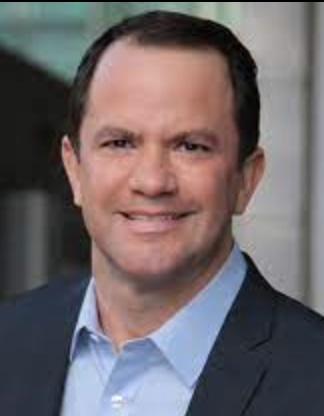
Troy Stang
Making a ‘Difference’ on Main Street
Stang said a stronger voice for credit unions helps legislators understand how the movement is making a difference on Main Street.
“They need to be familiar with our economic reports and our community impact reports,” said Stang, referring to data the former Northwest CU Association would compile on the economic value of credit unions in the three states it represented. “This has become the modern day way of telling the credit union story. None of these resources existed when we were an individual state league. We've taken the economies of scale savings and reinvested them into new tools and ways of moving the needle on advocacy. Today we are able to wrap economic impact numbers in a report from all six states, which is going to help measure the real tangible value that credit unions produce and then deliver to their membership.”
Stang added the association is complementing that state data with community impact data.
“We believe firmly that if credit unions didn't exist in the marketplace there would be this large sucking sound,” Stang said. “Credit unions are so woven into the fabric of their communities that we have a big story to tell, and the facts and data that we can pull together tell that story to legislators today in a much more effective way than the story was told in the past, before the combinations.”
Direct Membership in CUNA?
The mergers that are creating the larger, regional association raises the prospect that at some point credit unions might simply opt to become direct members of CUNA, similar to the model used by NAFCU, which has no state-level organizations given its federal focus.
Stang doesn’t believe that will be the case, stating that as the association has grown in size so has its affiliation rate.
“Our service to our members speaks for itself,” said Stang. “We now have almost a 100% affiliation rate—that is up from 80% before the combinations.”
Stang noted that one of the reasons for combining with Mountain West CU was to leverage one of its particular strengths.
“Their education, training and leadership programs were one of the key selling points,” explained Stang. “Their executive leadership program is very strong and they have been placing a large number of people into CEO roles over the last five years.”