

LAKE BUENA VISTA, Fla.–The most fearsome animal in the jungle? The “humble butterfly.” The worst background experience for credit union leaders? “Western education.”
That’s according to Duncan Wardle, who challenged attendees at NACUSO’s Network meeting to understand that when it comes to thinking about creativity, it’s important to first really understand all that stands in the way and then doing something about it.
Wardle spent 25 years with the Walt Disney Co., most recently as head of innovation and creativity. Today, he heads up the consulting firms iD8 and innov8. During his career he was involved with numerous Disney projects and movies, including working with Pixar.
He shared that when he first began in his role as head of innovation he surveyed 5,000 Disney cast members and asked, “What gets you in the way of being more creative and innovative?”
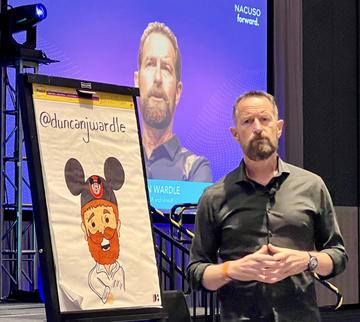
Duncan Wardle speaking to NACUSO meeting.
The Usual Suspects
Among the responses:
- I don’t have time to think.
- We don’t have the resources. (Wardle said by 2070 India lead the world because it has a billion kids who can’t afford to go to school and therefore won’t have their creativity killed. “You don’t have the resources? Who are the most creative people? Kids. How much have they got?”)
- Measurement by quarterly results, and the resulting bureaucracy.
Defining Creativity
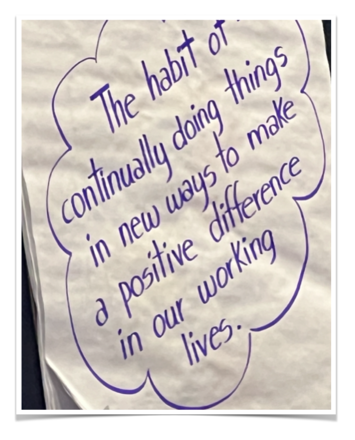
Wardle offered this definition of creativity: “The habit of continually doing things in new ways to make a positive difference in our working lives.”
In a theme he returned to several times, he asked, “What are children better at than you? Play, imagination, and asking ‘why’ again and again. That box your gift came in was your rocket ship, your flying car. And then western education killed that. Western education says stop asking why, there is only one right answer.”
Wardle, who said people don’t visit a Disney attraction due to the company’s capital investments and instead go for “nostalgia,” polled his NACUSO audience for the phrases that kill new ideas. Among the responses:
- It won’t work
- We tried that last year
- That’s the way we’ve always done it here
In response, he ran attendees through practice idea pitches involving two people that first began with one person proposing an idea and the other person always responding, “No, because…’ He then followed up with a separate conversation in which the response began, “Yes, and.” The latter, he said, is a potent path toward making “my idea everyone’s idea.”
“’Yes, and’ doesn’t mean greenlighting a project, it means greenhousing it,” he said.
Playfulness at Work
Wardle encouraged “playfulness” in the workplace and told everyone they should not be the “Eeyore in the workplace.”
“Where do people get their best ideas?” he asked. “Who wrote down, ‘At work?’”
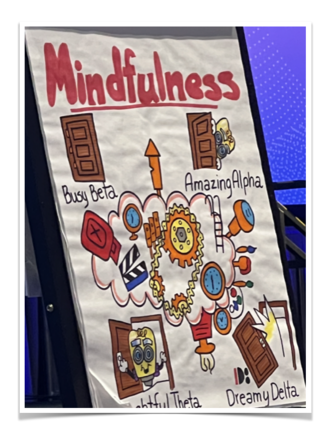
People don’t get their best ideas at work, he said, because they are too busy working. He said research shows that while engaged in work-related tasks, “The door between your conscious and subconscious brain is closed;; 13% of your brain is conscious, and 87% is subconscious.”
“I don’t expect you to be playful every day at work. But I do expect you to be playful when you are developing ideas with your team. If you are not playful, your team will not be playful,” he said.
He noted there are there are three different ways people learn, which means that “two-thirds of your room do not share your learning style. It’s death by Excel. You lose one third of the room when you put an Excel up on the wall.”
Another barrier? Barriers. He said meetings at which creative thinking is needed should remove tables between participants.
“Who has boring meeting rooms where you work?” he asked, eliciting laughter from the audience. “You’ve got an art school somewhere near. What if you asked the art school to turn the meeting room into a greenhouse and you call it ‘the greenhouse?’ This is the one room where you can’t kill an idea. This is the ‘Yes, and’ room.”
A Question to Ask
Wardle urged CU and CUSO leaders to think hard about where they are and how they plan to get to where they want to be in five years.
“Ask anyone between 18 and 24 if they want to work for your company? Gen Z believes in purpose,” he said. “Your children will judge your organization by your carbon footprint in 20 years, not your quarterly profit.”
He shared his experience in consulting with leaders at Black & Decker during which he pitched to them that their brand is really about “people building their dreams.” The company rejected the idea, saying they are about tools.
“With 3-D printers, do you think people are going to use hammers and chisels and tools in 20 years? No. They’re nuts. The tools will be in the Smithsonian.”
Other Observations & Insights
Wardle shared a number of other observations and insights, including:
Breaking the Rules
Innovative leaders break the rules, according to Wardle, who cited Walt Disney as a prime example. He said Disney became upset when movie theaters wouldn’t allow him to do any of the non-traditional things he wanted to try. Disney had a process that consisted of two steps:1) List the Rules and 2) Ask what if? Disney would go on to create Disneyland as a result---and at a time he had no funds, Wardle reminded.
Get a Different View
Wardle shared the story of being in a group of old, white architects during a design meeting for Hong Kong Disneyland. They were all engaged in group think. It was a young, Chinese non-architect who drew dim-sum architecture, which would be used more broadly across the park.
As another example, he said C-Suite executives never hear from Disney guests. So, he spoke to a 78-year-old call center employee who listened to guests all day long. Her insights led to more than $100 million in incremental revenue.
Diversity
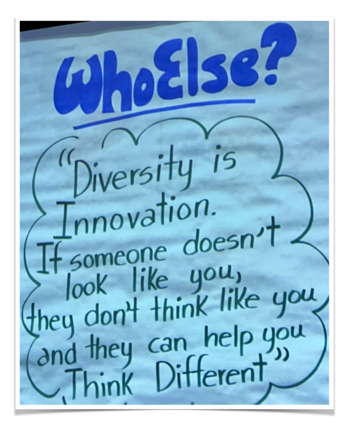
“It’s not rocket science, it’s not design thinking. Diversity is innovation. If someone doesn’t look like you, they don’t think like you and, shockingly enough, they can help you think differently.”
Other Questions
Wardle also noted:
- Most insights for innovation come from “looking outside your industry.”
- “Instead of asking how can we make more money, ask questions from the customers’, the members’ standpoint.”
- “Are you in the credit union business, or are you in the experience business. Are you dream builders? How might asking that change what you do?”
- “What if you took one hour a month as leaders of teams and on a consistent day invited people to come in to talk about something they’ve seen in their business or personal life that they thought was innovative?”
- “The butterfly is the most threatening animal in the jungle. The humble butterfly that just ate your stomach. It’s a sign you’re taking a risk, that you’re innovating.”
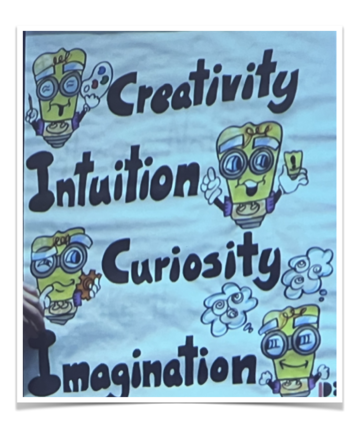
- “The most employable skill sets in next five years will be creativity, intuition, curiosity, and imagination. Those are the most difficult skill sets to program.”
- Instead of the phrase “there’s no time like the present,” a better thought is “there’s no present like time.”