

By Frank J. Diekmann
BROOKLINE, Mass.–Few in credit unions today remember the name Richard Mangone, even though he was once among the “celebrity” names in CUs and eventually the subject of national news. Nearly three decades after causing one of the biggest fraud cases in CU history, after being arrested and going on the run, and after serving 20 years in prison, Richard Mangone has a story he wants others to hear–and learn from.
It’s one of those so-called “cautionary tales” for both individuals working in credit unions and credit unions themselves. It’s a story that is fantastic and unbelievable at times, even though it would become tragically real for many people and a community. It’s a story about powerful insiders and their greed, a story of a CU board that both lacked internal controls and where board members were out of control themselves. It’s a story that’s been told many times—including just this year—of regulators being duped for long periods of time.
And it’s a story of finding a way forward to give back in life, even if in small ways.
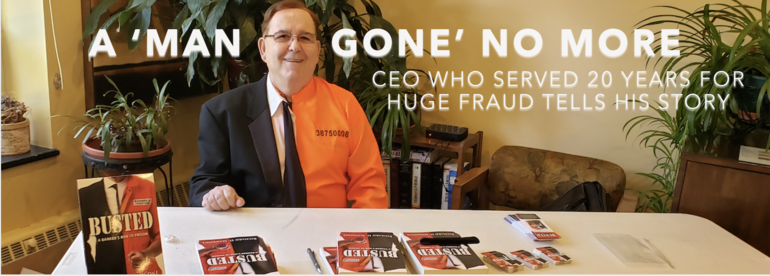
The ‘Credit Union Celebrity’
In the late 1980s, Richard Mangone was on top of more than just the credit union world. He was president of fast-growing Digital Credit Union (DCU) in Massachusetts–he describes himself as a “credit union celebrity” at the time—and he had helped cofound another CU on Cape Cod, Barnstable Community FCU.
Outside of credit unions Mangone had also been very successful, having gotten rich successfully playing the stock market and riding an appreciating real estate market for big gains. Life was good, and should have remained that way.
“DCU was really the perfect job for me, and I blew it,” Mangone says now.
“Blew it” is what they call an understatement. By the time the auditors were done and the rubble sifted through, a dozen people were arrested, the perception of credit unions was soiled, families were wrecked, and the once-respected name of Barnstable Community FCU was viewed on the Cape in the with the same disdain as Enron would engender in the future. The tab for Barnstable Community FCU would hit the National Credit Union Share Insurance Fund (NCUSIF)–and credit unions–for more than $40 million. In the lives of a number of innocent victims, the costs would be higher.
“Greed is a terrible thing,” Mangone says as he looks back.
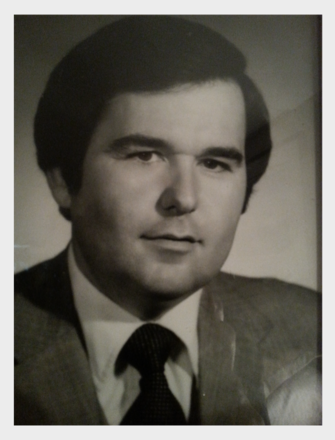
Richard Mangone during his days in credit unions.
The Backstory
To understand where Mangone is now, it’s important to understand where he was. As recounted in a book he has published (more on that below), he was born in East Boston to immigrant parents, the youngest of eight children whose father would die when he was nine. He would grow up poor. After a stint in the Air Force that included a tour in Vietnam, Mangone earned an accounting degree and at age 25 was hired by the then Polaroid Employees FCU, where he eventually rose to manager.
Describing himself as a “new shining star in credit unions,” Mangone said representatives of Digital Equipment Corp. found him when he was speaking at an event hosted by the Credit Union Executives Society. The DCU representatives were looking to start an employee credit union, and eventually asked him to help get it off the ground as its first president. He would do so, and the new credit union grew quickly.
First Bad Decision
“At this point is where I made my first major decision that led to my downfall,” Mangone writes in his book. “Once the credit union had some 20 branches and with its own new corporate headquarters building, I lost interest in the daily routine. I shifted into real estate and the stock market, which kept me very busy throughout the day.”
He begin buying homes on Cape Cod—admitting he was highly leveraged—as rentals. The market in the mid-80s was seeing 30% appreciation, with the 18% mortgage interest rates of the era leaving many with no choice but to rent.
Mangone said from 1980-90 he made “millions in legitimate transactions.”
By 1987 he had also started an import company to bring in high-end automobiles for resale, and he personally owned eight cars worth about a half-million dollars. But it was that same year something else would take place that would eventually lead to those automobiles and home and more being seized by the government–he joined with local power players that included attorneys and developers in the Hyannis area of Cape Cod to help charter Barnstable Community FCU.
No Idea What Was Going On
In his book, “Busted: A Banker’s Run to Prison,” Mangone said the new credit union was never chartered with any intent of defrauding people. But it wasn’t long before the CU’s practices became sketchy. He began approving loans for himself using straw borrowers, in this case the names of members with good credit who had no idea what was going on. In no time some of the local businessmen who had helped start the CU also wanted in on the action, as did other members of the board.
Mangone writes that he was leading three lives: president and CEO of DCU; husband and father to two children, and as the “playboy banker” of Cape Cod. He said he was making more than $25,000 a week in stock market gains, was driving (often drunk) a Porsche, and with others bought a Cessna as a “toy to get around.”
Making all this possible were real estate laws in the Commonwealth of Massachusetts that give real estate trusts the capacity for the trustee not to be the beneficiary of the trust. According to Mangone, the credit union assumed the trustee was the beneficiary. It was a bad assumption. When auditors requested a list of the beneficiaries to be included with loan package, a bogus list was created. Friends and relatives were used as the straw borrowers and then paid back later–at least at first. Mangone’s name never showed up in any of the documents.
‘Greedier and Greedier’
Describing the situation at Barnstable Community as one in which people got “greedier and greedier,” Mangone said it became “so out of control” some board members wouldn’t show up for the weekly board meeting unless they had a “deal in the pipeline.” As the deals got bigger, Mangone said he discovered NCUA allowed for something relatively new known as “participation loans,” and with the DCU board trusting his judgement, that credit union began buying 90% of BCFCU’s loans.
“I duped the DCU board. NCUA loved us. My 15-year track record was flawless. There were poor internal controls,” writes Mangone, adding, “I became such a good liar even I began to believe my own press.”
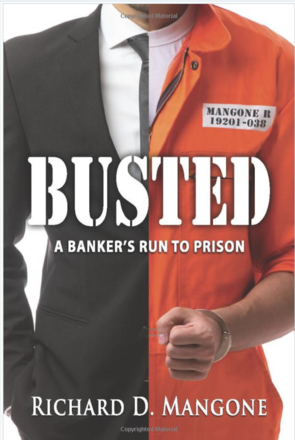
Richard Magone's book.
That press would eventually change, and in a big way.
In the meantime, Barnstable Community kept growing, hitting $70 million in assets in five years, 95% of which were real estate deals.
‘Private Piggy Bank’
“I had a private piggy bank,” said Mangone, who with his partners had more than $20 million out in loans for professional buildings, hotels, and housing developments across multiple states.
And then Ronald Reagan and the Republicans changed everything with the Tax Reform Act of 1986, which lowered income tax rates, but also eliminated numerous tax shelters as well as deductions for things like rental housing. Nationally, the legislation would help contribute to the savings and loan crisis. Locally, in Cape Cod, it created a crisis for Barnstable Community Credit Union.
Mangone said a “snowball became an avalanche,” and he and others began to work hard to conceal fraud with bogus financial statements. With delinquencies hitting 15%, Mangone recalled board members calling family members and friends whose loans were in arrears.
But one local borrower who was also an attorney whose legitimate loan had gone 90 days delinquent opted not to bring his payments up to date—instead, he opted to make a phone call to NCUA.
‘Amazed’ How Long It Went On
“I was amazed that we carried it on for five years before it was discovered,” writes Mangone. “It was too easy to commit the fraud.”
By the time NCUA’s examiners finished going over the books and finally took control of the credit union, 75% of the loans were insider deals. Mangone was fired in January of 1991, and he said the “entire operation had unspooled” by March of the same year.
The Cape Cod Times reported 30 people held 60% of the mortgages held by Barnstable Community FCU at the time of its failure.
“In addition to builders, the borrowers were past or present officers, the officers’ relatives, friends or business associates,” the Times reported in 1988. “Together they borrowed $77.7 million – 87% of the credit union’s mortgage (loans). It was all legal, if questionable.”
The failure of the credit union and names of all the people implicated were daily news from Hyannis to Provincetown, with the story becoming big enough to also capture the attention of the national media. Eventually, four people would be sentenced to prison: Attorney Robert Cohen got 10 years; Cape Cod real estate developer James Smith was sentenced to 15 years, and real estate investor Ambrose Devaney was given a three-year sentence.

Coverage of the failed credit union and the insiders behind it would dominate local news coverage in Cape Cod.
Richard Mangone was sentenced to 24 years, at the time the longest-sentence ever given for a white collar crime in Massachusetts. Mangone’s attorney told him he’d be in federal prison until he was 73. But his client chose another option—he cut off the ankle monitor that had restricted him to his 9,000-square-foot mansion, originally built in 1690, and went on the lamb with hundreds of thousands of dollars in cash he kept in a house safe. He had earlier lost $1.6 million in his stock portfolio by gambling.
The Most Wanted List
Without telling his wife, Mary, who would die while he was in prison—his son Douglas would also die in a tragic car accident before he was sentenced—Richard Mangone would embark on a near 18-month odyssey of life on the run. Instead of showing up at court on Feb. 15, 1994 for sentencing, and with his passport having been taken, Mangone used court-permitted travel to avoid raising initial suspicions and headed to Logan Airport, where he bought a ticket to Nashville, flying in the pre-TSA days with cash taped around his body. The name Richard Mangone was soon on the U.S. Marshals’ Most Wanted list.
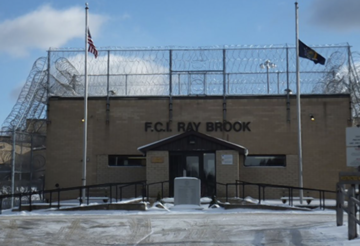
FCI Ray Brook, where Richard Mangone spent 20 years.
In Tennessee, Mangone said he lived comfortably at first, but the money began to run out as his stock market investments crashed. Finally, alone in a motel room one night, the once high-flying and respected credit union CEO concluded all that was left to do was to kill himself by drinking a bottle of wine and piping carbon monoxide exhaust gas into his sealed vehicle.
A Change in Plans
But on the night before he planned to commit suicide, Mangone said he came across an evangelist on TV preaching about Jesus on the cross. Soon, Mangone said, he had his hands on the TV set in the motel room and he was down on his knees repeating the preacher’s prayer. He abandoned the plan to end his life, and instead found a Christian bookstore and bought a Bible and teaching tapes. He would study the Scriptures and listen to the tapes for the next few months, before on July 4, 1995, he confessed he was a fugitive to a Catholic priest in Bowling Green, Ky., who contacted authorities.
The feds arrived, and Mangone was arrested, handcuffed, and sent to Federal Correctional Institution, Ray Brook in North Elba, N.Y., where on Nov. 9, 1995, he began his 24-year sentence without parole by sharing a 100-square-foot cell. Barnstable Community FCU would disappear, although the now $9-billion DCU would go on to prosper; others would go to jail, and one of the biggest stories in the history of Cape Cod would slowly but eventually fade away for most people, including inside credit unions.
But Mangone says his story didn’t end there.
A Redemption Story
“I want to tell my story. It’s a redemption story really,” Mangone says today from his home in Massachusetts.
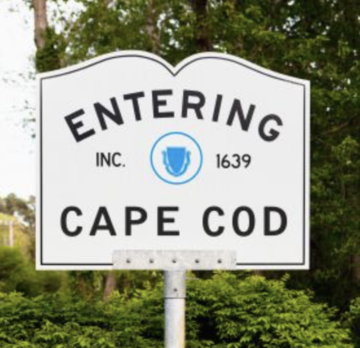
Mangone now works in the Christian ministry in which he became active while in prison, and volunteers with the U.S. Probation and Pretrial Services System, where he counsels young inmates on what to expect in prison to help them assimilate, and talks to other inmates about what to expect when they get out. He also runs an organization called Bezalel Prison Ministry, named for the chief artisan of the Tabernacle who in Exodus it is said was responsible for building the Ark of the Covenant.
Beyond that, “I have been preaching in four churches, and have three or four more lined up. My story is about evil choices and idols. I got caught up in the greed and money. We can get into a lot of trouble if we’re not careful.”
Speak to Mangone today and he doesn’t shy away from what he did, or of the role Christianity now plays in his life.
When Mangone is told it seems so many of those who are found guilty of wrongdoing also seem to “find God” and that it can come across as insincere, he responds, “In a lot of cases, that’s probably true. But remember, I found God before I went to prison. I was prepared to commit suicide. But through the acceptance by God and the invitation from God I was able to get the strength to turn myself in.”
Causing Pain
That doesn’t mean all is good now, or that he expects others to forgive him for what he did.
“What people don’t think about is the pain you cause your family. They suffer great pain, and it’s not just the loss of income, it’s the embarrassment. I let thousands of people down,” he said. “I was a pariah. It’s the reason I was getting ready to take my life. I was blinded by greed. It’s no different than being a drug dealer. Greed is a terrible thing. I had problems with it. There was a lot of rubble I left behind.”
And while his downfall may be nearly three decades old, that doesn’t mean everyone has forgotten about the rubble. Mangone said after getting out of prison he participated in an online forum for DCU employees where he identified himself. The responses, he said, were “disturbing” and “negative.”
“That hurt, but it was understandable,” he said.
Never Expected to Go to Prison
Looking back on his time in credit unions in the lead-up to his arrest, Mangone blames much of his downfall on “arrogance,” including a belief everyone involved was perhaps skirting the rules, but it wasn’t that serious.
“We never thought we were doing anything so heinous that we would go to prison,” he said. “It was all out in loans and it was foolish thinking. We did not have evil in our hearts when we started.”
As proof of that, suggests Mangone, he never looked to grab big money and make a run for it while he was still with DCU. “I had enough juice that I could wire $300 million to Europe and get on a flight,” he said.
The First Domino
Mangone never departed on an airline flight for points abroad. Instead, it was an arrival that changed everything: the 1986 Tax Reform Act. =
“That’s what caused it all to come falling down,” he said. “That caused so much damage. No one thought it was a Ponzi Scheme; we all slept well at night. It seems like an excuse, but it’s not.”
In all, a dozen people including Mangone would eventually be arrested. “No one ever thought they would go to prison. These were all high-powered and well-educated people.”
Still, there is little doubt those involved knew what they were doing was wrong. There were numerous fake loans involved on fake properties on Cape Cod and in Rhode Island, and many of those whose names were used as straw buyers soon encountered problems that were much more than straw. According to media reports at the time, at least 100 first-time homebuyers were left with clouded titles and bad mortgages.
Sending a Signal
Mangone said he received such a long sentence because he had been high profile and popular and the judge wanted to send a message. In addition to his record-setting sentence, the court also ordered him to pay $41.8 million in restitution to NCUA. That same judge declined to allow Mangone to attend the funerals of his wife and mother.
When Mangone decided to not report for prison and instead make a run for it, his name was back in the national news. Literally. While his last name is pronounced “man-goney,” in no time the headlines were full of “man gone” references.
“My choices cascaded from poor to bad to sometimes outright nefarious as the months passed,” Mangone writes in his book.
Today, he told CUToday.info, “It was terrible. I was running away from myself. It was selfish. I did not think of my wife and daughter.”
And yet he adds, “I had to do it to find myself. It’s amazing. I’m now helping to save others who could have taken their lives. I spent 10 years as part of the suicide ministry (in prison),” where he counseled those considered to be at risk of suicide.
One of the things he says now that he learned: “If you’re of sound mind, it takes a lot of courage to commit suicide.”
Life on the Outside
Once out of prison Mangone reported to a halfway house in Boston and said he went through the same difficult transition so many do when they see how the world outside changed while they were inside.
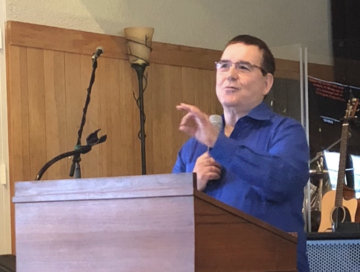
Richard Mangone sharing his message in church.
“My first wife said you are going to have sticker shock about the prices, and she was right. And I couldn’t believe the varieties of ketchup. I spent three hours in the supermarket,” said Mangone.
Then there was the device that was mostly attached to a wall when he went into prison in 1995 and which had lost its cord by the time he was paroled in 2013.
“The thing I noticed most was the phone and the power now in your hand. I am in awe of technology,” said Mangone, recalling that one sign he was at the top of his career while at DCU was he had a “suitcase phone back in the day.”
A Homebody
Today, Mangone says he has rebuilt his life and made “wonderful connections through the church.” He has remarried a “Christian woman,” Rosana, who has children and who still works, and has rebuilt a relationship with his daughter, Jessica. Calling himself a “homebody,” Mangone said he lives on Social Security, 10% of which goes toward paying restitution on the $40 million in losses.
Insider Fraud at Credit Unions
When informed that there continues to be numerous cases of embezzlements by senior executives at credit unions—indeed, the former CEO of C B S Employees CU, Edward Rostohar, was sentenced to 14 years in prison during the same week Mangone spoke with CUToday.info for ironically causing about $40 million in losses himself––Mangone admitted he is “surprised” to see the insider theft still taking place.
“There was a captain in the prison who had a sign, ‘When in doubt, challenge.’ Supervisory committee members and board members don’t challenge enough. No one questioned me and I began to feel invincible,” said Mangone. “Others start to feel the same way. There is too much trust. Credit unions must be more diligent in watching the CEO. If they have an expensive car, really nice clothes, that’s a signal something is awry. My board of directors trusted me too much. I was really good at hiding things.”
‘Life Goes On’
When told that he sounds remarkably positive for a man who had much and lost everything and who spent a third of his life in prison, Mangone responds, “Why wouldn’t I be? I can’t change the past but I can make the future better for myself, my family and others going forward. I paid my debt. I’ll be 75 in two weeks. My health is good. Life goes on. I enjoy doing what I’m doing. I’m helping others to get their lives right. I would help anybody trying to get their life right. Some very positive things have come out of this. If people still want to be upset with me, they have that option. And if they want to learn from me, they can do that, too.”
Mangone says his book has really “resonated” with the Christian community.
“As much as we go awry in in our life choices, there is a life afterward,” he said. “The feedback has been positive. I have seen some fruit. It’s been encouraging.”
Mangone said he even wishes he could work with credit unions again, but is banned for life.
“Once you lose trust, you lose trust. It’s hard,” he said.
A video of Mangone and his message after prison can be found here.