

COLORADO SPRINGS, Colo.—The creator of one company with a “completely stupid name” that has seen extraordinary success, and another company that is not just “ridiculously awesome” but also fixing a big problem in many schools, told credit unions they have “more opportunity than anyone else on the planet.”
After all, he said, credit unions share some common traits with his companies, including a “kick-ass product” and an “awesome cause.”
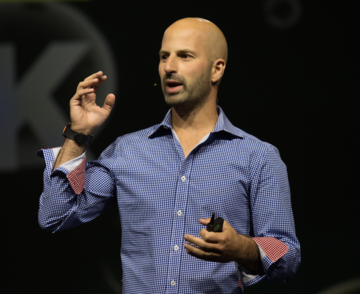
Ido Leffler of Yes To, Inc. talks to THINK Conference.
Ido Leffler, who was born in Israel, moved to Australia as a child, then to Jakarta and Mumbai in his early 20s, before returning to Tel Aviv at 26 and, finally, to California six years ago, found himself on a different quest a number of years ago, a quest that was coming up empty. Newly married and living what he called a hedonistic lifestyle, he and his wife were in search of natural beauty products, but neither he nor his wife found anything that appealed to them.
“There were lots of products there, but none of it appealed to me. None were the IBMs of the natural beauty world. None were exciting, none emotionally connected to me. None spoke to me like Virgin or Apple,” Leffler told CO-OP Financial Services’ THINK Conference. “So we said, ‘Why don’t we create a natural beauty product based on one premise, the word ‘Yes.’ All the other products were about ‘no.; We are now the second-largest natural beauty product company in America.”
“We” is Yes To, Inc., a shortened version of the original name “Yes To Carrots;” among the job titles Leffler uses is Chief Carrot Lover.
“It’s a completely stupid name, but it made people smile. It encouraged them to look at this,” he said.
'Shampoo While Singing'
The company takes its mission, but not itself, seriously. Instructions on its shampoo products, for instance, include instructions such as “Shampoo daily on wet hair while singing.” What it did was create a connection between us—we make body butter and hand soaps and at the end of the day anybody can make that—and the consumer and relationships.”
Yes To has grown from six products in 16 stores to a presence in Walgreen’s more than 5,500 stores. But that only came after a meeting with a Walgreen’s buyer—thanks to a connection who had a connection—whom Leffler knew didn’t want to meet with him. When the buyer approached, he pushed away her handshake, gave her a hug and a kiss on each cheek, and with reps from companies such as Unilver, Johnson & Johnson, Proctor and Gamble and others waiting in the lobby, Leffler ended up creating such a connection the meeting ran long.”
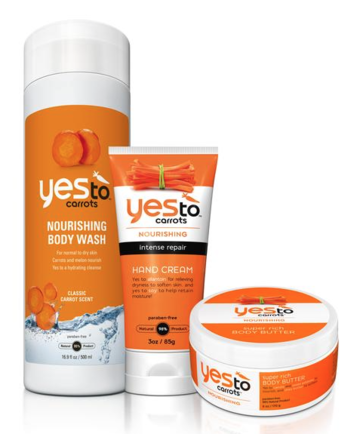
Some of Yes To's products.
Leffler told credit unions he believes strongly that credit unions have the very same opportunity. “
“We built this relationship. You guys have this opportunity more than any other FIs on the planet,” he said. “We are more than just a product. We were more than just a hand lotion. We were people. And every decision she would make from that moment on would affect not just a company, but the people in that company, and the vision that we had for it.”
Yes To’s products are now in more than 30,000 locations around the world. And the success left Leffler on a quest to do more.
“What I decided was we had built a pretty cool model, and I wanted to see if we could duplicate it,” he said. “Yes To has an incredible management team that runs it every day. But myself and my cofounder developed this model on three principles I think you can apply to your business.”
Those three principles: Incredible people; kick-ass product, and awesome cause.
'Why the Hell Not'
“Incredible people means every single person in my organization needs to reflect the values of the organization, and be a part of its evolution,” explained Leffler. “Kick-ass product means we live in a compromise-free generation. If they don’t like it, they tell everyone they know. And if they do, they tell everyone they know. This is word of mouth, and social media has only amplified this. Awesome cause, because why the hell not? With every company we build the cause is built into the business model. Our companies are profitable, with cash-flow positive returns.”
The company Leffler has now founded has a cause built into it that is close to many people, and it certainly struck a chord with credit unions at the THINK meeting. The company is Yoobi, Inc., described as a “ridiculously awesome school supplies company that engages kids through bright colors, cool designs and, most importantly, cause…For every Yoobi item purchased Yoobi distributes a classroom in need in the USA.”
Yoobi is distributed exclusively through Target, although it is preparing to open its first retail store in a Los Angeles mall. Leffler told credit unions that if there was a CU near that location he would bring the company’s business to it.
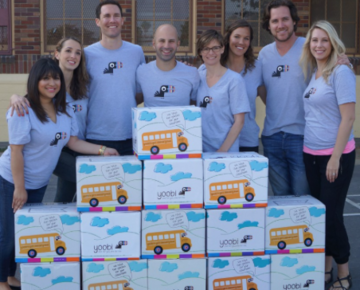
Yoobi staff with supplies for local schools.
The idea for Yoobi came from watching his own kids “ignore” the school supply aisle, with Leffler observing, “For some reason innovation in school supplies ended in 1986.” But the real “cause piece,” said Leffler, came from visiting school’s that were within an hour of his company’s California offices that “felt like Haiti.” Teachers, he noted, were spending upwards of $400 annually out of their own pockets for school supplies for their classrooms.
“These products do not cost more than other brands,” he said. “Our goal is not just to make a dent in the problem, but to eradicate the problem. It’s a tool that the studies show will change their learning exponentially.”
With the new Yoobi store opening within the next 30 days, it will carry an inventory of more than 450 items. A year from now the goal is to have 20 such Yoobi stores up and running. Every time a donation is made with a store, supplies will be provided to a school within 10 miles of that location.
'How do I Become a Yoobi'
Speaking to credit unions, Leffler continued, “If I’m you, I asking myself how do I become a Yoobi? Yoobi has fewer than 20 people. Yes To has fewer than 50. What we are and what you are is speedboats. It’s why we can do things quicker than others. I think at times you might forget you are a speedboat. It’s one of the things that gives you an advantage over any other kind of financial institution, and together you make a squadron of jets. I would be creating formations left, right and center to find out out to attack each of the issues you face. Today, those decisions are not that hard.”
“If you don’t’ have somebody who’s job is to knock on doors and ask the community what you can do for them, hire them this afternoon,” Leffler continued. “We live in a world today where retailers and institutions are trying to find ways to make the space they have viable. If you have a retail footprint, figure out how you can loan that space to your community to have them come to you. How do you make your credit union an experiencial place to visit, with one key question: how can we help you? If you can show them you care, it will not matter if you’re 18, 45, or 75, people will respond. Where you will fail in this approach is if you don’t respond to their needs fast enough. I will bet your decision tree is 100 times shorter than other financial organizations. There are 101-million people who give a damn because they own you. How many of them feel they can shape you. How many feel differently about you than a shareholder of a bank. Sometimes when you do something tiny and small, it can have a massive impact.”