

By Ray Birch
ALEXANDRIA, Va.—Debbie Matz recalls sitting on the edge of her seat at NCUA in October of 2010, nervously awaiting the outcome of the first public offering of the NCUA Guaranteed Notes (NGNs).

As chairman of the agency, Matz was in her office with a number of staff from her leadership team, and recalls no one in the room was saying a word as they waited for a report on the NGN sale from brokers in New York.
“We were on pins and needles for months,” said Matz, about executing the agency’s plan to securitize the cash flow from the so-called Legacy Assets, the weakest of the mortgage-backed securities NCUA had come to own as a result of the conservatorship of five corporate credit unions. “All this really came to a head when the first NGN security was offered and we just literally held our breath and huddled in my office. We had no idea if the offerings were going to be received well or rejected by the market.”
Matz said the plan to securitize the NGN cash flow was driven by Director of Examination and Insurance Larry Fazio and his team, which closely worked with the Treasury and Barclays.
A Year in Development
“It took almost a year to come up with this plan, because something like this had never been done before,” said Matz. “We were as nervous as could be. We didn’t know if we would have to go to the foreign markets—which we did not want to do—and most significantly, we did not have a Plan B if this did not work. This was such a huge undertaking and such a unique situation that having a Plan B was impossible.”
But the first note sold, and then afterward 10 more NGN offerings were bought by the markets, as well.
It would be another seven years before credit unions insured by the National Credit Union Share Insurance Fund would begin to see some of the proceeds from those sales following the closure of the Temporary Corporate Credit Union Stabilization Fund, the creation of which sparked a great deal of controversy and angst among natural-person credit unions.
Matz’s observations are being shared as part of a series in CUToday.info looking back on the corporate credit union crisis a decade after it took place. The series is exploring the views, opinions and analysis of some of the prominent figures who experienced the challenges of those difficult days.
“That first offering sold immediately as did the 10 others that followed,” said Matz. “And I believe all were oversubscribed. We literally broke out a bottle of champagne to celebrate .”
That moment, said Matz, assured the agency the plan to shore up the corporate credit unions would work—quickly putting in the past a “dire” plan the agency had in its “back pocket” to conserve the entire corporate system.
A Quick Education
Matz explained when she joined the transition team for the new administration of President Barack Obama in November 2008, she did not have a deep understanding of the significant problem facing the corporate credit union system. Five corporates held large portfolios of mortgage-backed securities at a time the home mortgage market was crashing. It wasn’t long, Matz said before she found herself quickly educated on the scope of the system’s troubles when she learned NCUA staff had assembled a plan indicative of just how deeply worried many were.
“It turns out there was a plan to conserve all of the corporates,” said Matz, who had been selected by President Obama to chair NCUA after having previously served on the NCUA board from 2002 to 2005. “When I learned about that plan I realized that something potentially devastating was happening within the credit union system.”
Matz became chairman in August of 2009 and held the seat until April 2016 when she stepped down, creating a vacancy on the board that has yet to be filled. She emphasized the plan to conserve all of the corporates, when it was developed and when she became chairman, was always viewed as a tactic of last resort.
What also shocked her, Matz recalled, were the attitudes of several of the leaders of the corporates. She said she questioned whether the CEOs of some corporates had fully embraced the reality of the situation after she met with them in 2008 as part of the transition.
What many may forget is that Matz was not chairman of NCUA when the first corporates were placed into conservatorship. In March of 2009, U.S. Central CU in Lenexa, Kan. and Western Corporate (WesCorp) in San Dimas, Calif. were seized while Michael Fryzel was chairman.
A ‘Disconnect’
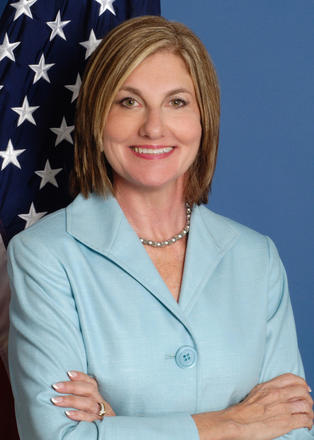
Debbie Matz
In September 2010, with Matz now chairing the board, the agency seized three more corporates: $10-billion Members United in Naperville, Ill., $7.5-billion Southwest Corporate in Plano, Texas, and $1.3-billion Constitution Corporate in Wallingford, Conn. Eventually, all were shuttered or merged following the formation of so-called “bridge corporates” in some cases. The conservatorship of WesCorp and U.S. Central represented $ 61.3 billion in combined assets.
“There really was a disconnect, and that’s when I really started to get a sense of how bad things were,” she said. “When the transition team met with the CEOs of the troubled corporates, they made it seem like everything was just fine. So then we knew we had a huge problem. Either they were not willing to discuss the dire situation or they had their heads in the sand.”
Matz said NCUA conducted a thorough assessment of where each corporate stood.
“Of course, not all of the corporates were in the same situation,” said Matz. “We felt it was very important to step back, break out the data for each the corporates and determine which ones were teetering on the brink of failure and which ones could survive. We used a scalpel rather than an axe, and were very deliberate in how we approached dealing with the corporates.”
The Worst of Times
Matz said when she came on board at NCUA she realized she might be overseeing the system in perhaps the worst of times.
“It was a particularly difficult time,” recalled Matz. “Yes, we were dealing with the massive problems within the corporate system, which everyone knew about. But what was not widely known is that the retail side of the house, natural-person credit unions, were facing a very serious situation, as well.”
Matz said the agency was concerned the failure of some large credit unions was a possibility and that such an event might bring the entire credit union system down.
“So, we quietly dealt with the natural-person credit union problems—specifically fourteen credit unions that each held over a billion dollars in assets, and were rated CAMEL 4,” she explained. “We felt they were in imminent danger of failing. Together they had more than $14 billion in assets—more than we had in the Share Insurance Fund.”
Working Quietly
Matz said NCUA—quietly and away from any media or CU industry attention—dealt with those natural-person CUs one-by-one.
“We figured out what the problems were at each of the credit unions and came up with individual solutions,” she said. “It was very labor intensive. For example, at one credit union that was in trouble the CEO was retiring and we knew the person the credit union intended to hire was clearly inexperienced for the job, especially at the time. So in a very unusual move, NCUA convinced the credit union not to hire this person and go with a candidate we knew could do the job. It was difficult to convince this credit union to listen to us, but they did and things turned out well.”
Matz noted that anytime a credit union is downgraded to CAMEL 4 the agency offers input into who the credit union hires.
Matz said in another case NCUA encouraged a CAMEL 4 credit union to employ the services of a consultant the agency was confident could lead it back to solid ground.
“In this case we pretty much put a figurative gun to their head and said you are going to hire this person as a consultant and he will be the liaison between the credit union and NCUA,” recalled Matz. “And the credit union won’t do anything without this person’s approval first. So, it was really exercising a lot of muscle and making some very tough decisions on an individual credit union basis.”
A Bigger Issue
Beyond the individual credit union issues, Matz said there was a larger macro-issue that needed to be dealt with at the time, especially as it announced assessments would be levied to shore up the corporate credit unions and the insurance fund.
“Part of our problem at the time was a credibility gap,” Matz acknowledged. “The credit union system had a lack of trust in NCUA as a regulator. There was a great deal of concern we were blowing the corporate system’s problems out of proportion, that things were not as bad as we said, and there was no need for assessments. There was also the complaint, which we heard a lot, that credit unions that were not members of the corporates should not be assessed–and I fully understood that argument. But, sharing in the assessments is part of being in a cooperative system. That was a hard pill for some credit unions to swallow.”
Seeking to Reduce Burden
Matz said the agency worked hard to develop a bailout plan for the corporates that was as minimally burdensome as possible for natural-person CUs.
“I also felt we needed to communicate to credit unions as much as we could and as often as possible,” Matz said. “In September of 2009 we began holding town hall meetings, which at first were pretty hostile. Some people really thought that we were exaggerating the extent of the problem and that we were insensitive to what they were going through. Those were difficult town hall meetings. But I felt strongly we needed to continue doing them—we needed the credit union system to understand the situation. And the NCUA staff did a tremendous job presenting the information at a dozen meetings. They were so well-versed and could respond with both simple and sophisticated answers to questions. And there were many people who asked some really sophisticated questions. There were about a half dozen of us who went to every meeting and stayed until every question was answered. We felt this was the best way for credit union leaders to understand what we were doing.”
But understanding doesn’t mean accepting, Matz reminded.

“It was amazing to me that some people at these meetings actually thought we were working against the credit union system,” recalled Matz. “At the same time that we were leveling assessments against credit unions, we were tightening our supervision and strengthening our regulations. For some, this seemed liked over-reach. But, our goals were to immediately stabilize the system and then to prevent the system from being so vulnerable to a downturn in the future.”
Matz said as she looks back on that difficult period for credit unions she is very satisfied with the decisions NCUA made.
“The results exceeded our expectations,” she said. “The Legacy Assets ended up performing extremely well. And the agency was able to make payouts to credit unions several years before we had originally planned. Things turned out remarkably well.”
Will Never Forget
But Matz, who is now on the board of Mutual of Omaha Bank, said she’ll never forget the time of that initial NGN offering and the reservations the agency had about the future of the corporate system and credit unions.
“Again, it was really daunting because there was no Plan B,” said Matz, who credited the efforts of the entire NCUA staff over those difficult years. “So if this did not work … But then the first NGN offering sold quickly and we were ecstatic and so relieved because we then knew we’d get credit unions through this crisis.”