

By Ray Birch
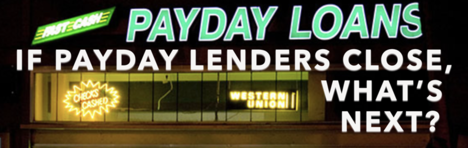
WASHINGTON—The CFPB’s new payday rule will likely force a number of payday lenders to close their doors, sending more consumers to credit unions, analysts say.
But those sources also insist these new members will likely be those who are struggling financially and who frequently bounce checks, which will force credit unions to carefully evaluate the new business as well as their overdraft programs.
In this, the first of a two-part series, CUToday.info examines the potential fallout from the CFPB’s new rule on members, non-members and credit unions.
The Bureau’s rule issued earlier this month is an opportunity for credit unions to carefully add new business and a chance for more consumers to turn around their financial lives, experts told CUToday.info, noting the rule leaves credit union payday programs largely unharmed. Sources also believe that credit unions should step up their marketing of small-dollar loans, as many consumers are not aware of the offerings.
'Generally' Good Rule For CUs
NAFCU Senior Regulatory Affairs Counsel Michael Emancipator said the new 1,690-page payday rule is “generally good for the credit union industry” and shows that the CFPB listened to credit unions. NAFCU, CUNA, NCUA and a large number of credit unions had voiced their opinions to the CFPB that the initial payday proposal did not provide a substantial enough exception for NCUA’s Payday Alternative Loan (PAL) program and that changes needed to be made in a final rule.
“I think that CFPB listened to the concerns NAFCU raised with them in letters and in meetings with CFPB staff and with Director (Richard) Corday, and credit unions also spent a considerable amount of time speaking directly to CFPB staff and Director Cordray as well. Sometimes I think that is the best way to get results.”
Emancipator said “thankfully” the Bureau recognized the payday alternative products–including NCUA’s Payday Alternative Loans (PAL)–offered by credit unions are good for consumers and that the CFPB should “not hinder these products.”

Michael Emancipator
The CFPB’s final rule exempts all loans issued by credit unions in conformance with NCUA parameters for PALs. It also explicitly sanctions a federal credit union's statutory right of offset to collect against an outstanding balance on a covered loan. The final rule impacts short-term loans with terms of up to 45 days, with the goal of stopping "debt traps" by putting strong protections in place to ensure a borrower's ability to repay (ATR) the loan. It requires lenders to conduct a "full-payment test" upfront for any loan that requires a consumer to pay all or most of the debt at once, or to provide a more gradual payoff schedule option, Emancipator explained.
Loans that meet the NCUA's PAL obligations are exempted from the rule's "full-payment test" or "principal-payoff option" requirements, as are other "accommodation loans" offered by credit unions and smaller community banks. Longer-term, balloon-payment loans and covered longer-term loans are subject to the rule's requirements regarding withdrawal practices, related disclosures and recordkeeping, though covered longer-term loans are not subject to ATR assessments, he said.
CU Impact
Vehicle purchase loans, home mortgages, credit cards, student loans, overdraft services and wage advance programs are not covered by the Bureau's final rule.
“For the most part most credit unions should not have their programs effected,” said Emancipator. “There will be a few credit unions that will have their programs effected, if they offer an alternative to an NCUA PAL. Some of those credit unions may have to make slight adjustments, especially ones that have loan terms that mature in 45 days or less. They might have to extend it 46 days or more.”
The more complex a credit union’s PAL alternative, the more it will have to examine the CFPB’s rule and make changes, Emancipator added.
Emancipator said he can’t predict the impact of the CFPB’s new rule on the future of payday lenders and how many might go out of business. He does, however, see the new rules driving up payday lenders’ costs.
The final rule includes a cap of 36% on payday loans, far below what many payday lenders charge. Under the new rule, the payday lending industry’s revenue will plummet by two-thirds, the CFPB estimated. The $6-billion payday loan industry has expressed concern over the rule, and also threatened lawsuits against the legislation.
“If you are a payday lender, I think it will be difficult for you to continue operations as is,” said Emancipator. “That said, I think I can see a lot of payday lenders altering their products so they don’t run afoul of the rules.”
Could this bring a lot of new members to credit unions?
Emancipator and other experts see that as a strong possibility. But in the way, Emancipator said, is the lack of knowledge among many consumers that credit unions offer alternatives to payday loans.
“Traditionally credit unions are on the fringe of this small-dollar loan business. If anything, this new rule may change market awareness that credit unions offer small-
dollar loans. There are 12 million consumers that use payday loans now,” said Emancipator.
Time To Market?
Now might be a good time for credit unions to market that they offer payday alternatives, said Emancipator, who noted that CU marketing dollars for small-dollar loans has typically been limited because the product has a very small margin.
But Emancipator believes that credit unions can have an even greater impact on the financial future of consumers by stepping up now and marketing their small-dollar products, bringing in more members, providing financial counseling and turning these new account holders into profitable members down the road.
“Credit unions can get a successful member out of this. Help them in the short term with their small-dollar needs and then migrate them on to more traditional products that carry better rates when their financial picture improves,” said Emancipator.
CUToday.info will publish part II in this series tomorrow.