

By Ray Birch
BIRMINGHAM, Ala./TALLAHASSEE, Fla.—With CUNA’s revised bylaws now in place, expect league consolidation to pick up in the coming years as leagues seek ways to cut costs and partner in new ways.
That is just one prediction from trade association executives who spoke to CUToday.info about the many wheels that have been set in motion since CUNA’s affiliated credit unions voted overwhelmingly in favor of a new membership model that provides the option of belonging to the traditional CUNA/league model, or individually to either CUNA or their respective league.
The so-called “choice” issue is the first significant change to the membership rules in CUNA’s bylaws since the group was created in 1934. CUNA reported that approximately 2,200 CUs cast votes (43% of its membership), with more than 90% voting in favor.
“The vote was a ringing endorsement for membership choice,” said Patrick La Pine, president and CEO of the League of Southeastern Credit Unions & Affiliates, which last year was among the first leagues to openly choose membership choice. “There had been rumblings along the way that there would be pockets of credit unions voting the new bylaws down. But the percentage of those in favor of the new governance structure versus the original bylaws was not even close. The answer from credit unions was very definitive.”
57% Did Not Vote
Bill Hampel, CUNA’s chief policy officer, acknowledging that 57% of CUNA’s affiliated credit unions did not vote, said the number of those weighing in is significant.
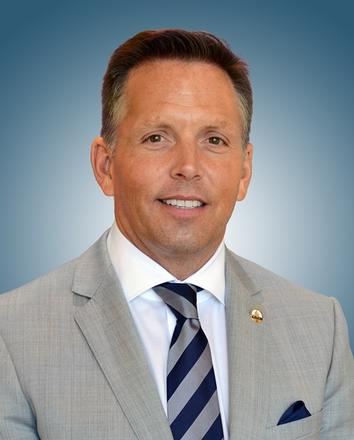
Patrick La Pine, LSCU
“Forty-three percent response is very good and much higher than we normally get when we reach out to our members on other matters, like surveys,” said Hampel. “The fact that 90% of those who responded voted in favor of the new bylaws is a strong vote of confidence in CUNA’s leadership and our CEO. It also says that the credit union system approves of the direction in which we are heading.”
With the new bylaws approved, CUNA is now operating under the new rules. Hampel said next steps are for the board to set a number of policies that will “fill in the details” in the bylaws. “That is what we will work on for much of this year.”
Hampel said that as CUNA’s bylaws were first created in the mid-1930s, each time CUNA made alterations in the subsequent decades it is was “cut and paste, striking and removing, and adding. So they were getting more complicated and specific. The most significant change, in a technical sense, is that instead of the bylaws being prescriptive about how things have to happen, the new bylaws set out general statements about how things should happen, and the details are worked out in board policies. The old bylaws used to be right on the ground getting into detailed information, now they have gone back up to the 5,000- to 10,000-foot level.”
Time To Adjust
With CUNA now working out bylaw policies, Hampel said that gives leagues time to adjust their own bylaws to be consistent with CUNA’s new membership and governance structure. The trade association has stated that coordination with the state leagues for the 2017 dues cycle is already underway.
“There needs to be a certain consistency, or at least interconnection between CUNA and league bylaws,” said Hampel.
La Pine, from speaking with other league leaders and having reviewed a significant number of other leagues’ bylaws as LSCU rewrote its own rules in 2015, believes the speed with which leagues will move to rewrite their bylaws will significantly vary, with some saying they will make minor adjustments to their rules such as simple word changes, while others may need complete rewrites, as their bylaws have not been addressed in many years. La Pine noted that some leagues, due to their existing rules, may have to hold a live, face-to-face vote with membership to approve any changes, which will take time.
La Pine, a member of the CUNA board, believes many leagues have already taken a resolution supporting membership choice to their boards but have been waiting for the CUNA vote to make sure membership choice was adopted.
Some leagues, too, may stay silent on the issue, added La Pine.
“Some have said we will stay silent on this, and we will deal with the matter of choice on a case-by-case basis,” said La Pine. “They may simply say, ‘If a credit union sends us dues just for the league we will accept that.’”
La Pine does believe, however, that the vast majority of leagues this year will enter the 2017 affiliation cycle under a membership choice environment.
Unified Approach
In Phoenix, the Mountain West Credit Union Association—which in advance of the vote on the CUNA bylaws issued a statement of support for the traditional dual membership structure—still advocates that same position.
“Now that the vote has been tallied, we will need to further discuss it with our board. That will likely take place over the course of the next several months at regular board meetings,” said Scott Earl, Mountain West president and CEO. “As indicated earlier, this change won’t occur until 2017, so we still have time to determine the best course of implementation for our members. We still believe that a unified approach is best for our movement and will encourage credit unions to make that choice any opportunity we have to do so.”
The New Jersey Credit Union League stated it will implement the appropriate changes to its bylaws and membership structure in coordination with the new CUNA structure.

Bill Hampel, CUNA
“…The NJCUL board has charged our governance committee to draft a bylaw change to be voted on by our membership to allow New Jersey credit unions the choice to belong to the league independently of CUNA,” said NJCUL Chairman Linda McFadden. “New Jersey believes in a unified system, but we support what we have heard from our members: that they want that choice.”
Step Up Performance
Several sources, including Hampel and La Pine, stated that the onus is now on CUNA and the leagues to perform and show value to credit unions of all sizes, or memberships will decline.
One leader of a large credit union told CUToday.info that the board of his credit union would have little problem agreeing now to leave their state league to sign on solely with CUNA. The executive also stated that other large CUs may likely make the same decision, leading to greater consolidation of the league system.
Hampel and La Pine countered, saying that league consolidation will continue due to the number of credit unions across the U.S. continuing to fall, and not because of membership choice.
“Consolidation can take many different forms,” said La Pine. “A ‘consolidation’ may be something like LSCU’s partnership with the New York Credit Union Association. Maybe we see hybrids of league arrangements we have seen in the past. But I think leagues will look for ways to get more efficient, effective and execute better. So what we see in the coming years as far as league arrangements could take many forms.”
As CUToday.info previously reported in a roundup of CU CEO opinions, most credit unions support membership choice just to have the option, adding they will remain members of both the state league and CUNA. La Pine said his league has been seeing the same thing, and that its affiliation numbers are strong for 2016. Hampel said the same is true for CUNA membership levels.
“We are 10 days away from closing our 2016 affiliation season—our numbers are solid,” said La Pine. “And from talking with colleagues during the recent league presidents meeting in Denver, I think overall the vast majority of leagues already supporting choice are seeing strong numbers as well. The reality is if a league provides good value for the dues they charge, membership will be there. The same for CUNA.”
Disaffiliation A Concern
Hampel acknowledged that once the CUNA board approved membership choice, disaffiliation from the national trade association had been a concern.
“Going into this we thought that might happen if credit unions were given choice,” said Hampel. “While we don’t have the final dues numbers in yet, so far we have heard little of that (disaffiliation)—both for the leagues and for CUNA.”
A key to keeping CUs affiliated at both the state and national levels, said Hampel, is the leagues and CUNA partnering closely to share the value of dual membership with credit unions. That means CUNA sharing the value of leagues to its members and state associations explaining the benefits of CUNA. Hampel said that it is especially important for leagues to share the CUNA value message with small credit unions, which typically have strong relationships with their state associations.
“In the past we had no real need to explain to the smaller credit unions who CUNA is and what we do for them,” said Hampel. “So without that information small credit unions could decide just to choose their league. But in this new world we are doing more to explain to credit unions of all sizes what CUNA is and the value of belonging, and we are providing that information to the leagues to share on our behalf.”
CUNA Mutual ‘Confusion’
One interesting finding from research conducted by CUNA was that many small credit unions continue to confuse it with CUNA Mutual.
Hampel recognized that the leagues and CUNA won’t know the true impact of membership choice for a few years, saying some credit unions may now be keeping their affiliation the same but taking a wait-and-see attitude.
“So, again, there is more pressure now on the leagues and CUNA to perform and be more accountable for what we are doing and how we are doing it’,” said Hampel. “But what we think will happen in the end with membership choice is that the CUNA system will have a higher affiliation rate than we have had in the past.”
Mixed Emotions
La Pine believes there are mixed emotions today among leagues about the future, saying that while LSCU is optimistic about the road ahead there are others that likely don’t feel the same way. “For us, the issue of membership choice is behind us and it’s about working on moving credit unions forward and preparing or the future.”
Looking back, Hampel said that resolving the issue of membership choice and rewriting CUNA’s bylaws was a “bumpy process,” but that should have been expected given the previous system was in place for many years.
“But I think where we came out at the end was with a solution—that not everyone was on board with at first—that works,” said Hampel. “We will get used to it, it’s different. But I think it will induce the leagues and CUNA to be better, more effective and more responsive than we ever have been.”