

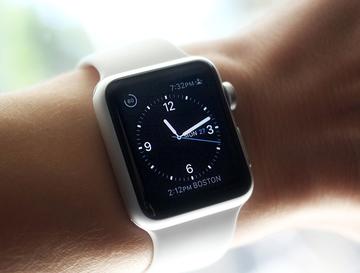
DES MOINES, Iowa—Apple Watch sales have plummeted since the device’s initial launch, but one payments expert is urging credit unions developing wearable apps not to fret, and that smartwatches will eventually catch on, much in the way tablets have been adopted.
In fact, Brian Day, director of digital strategy at The Members Group, compares the early days of the smartwatch—which includes Samsung’s Gear line—to tablets in their infancy. He predicts that financial institutions will eventually cater to smartwatches as they do tablets today, and that early adopters writing wearable apps—those that have taken the plunge due to the makeup of their membership—are not wasting resources.
“When the iPad came out, a lot of people were asking similar questions then as they are today about the smartwatch—‘What is the use case? What is the primary purpose? Isn’t it just a bigger iPhone?” said Day.
Use Cases?
Experts in a previous CUToday.info report shared that the primary use cases for Apple Watch are far from being determined now and that consumers will sort that out in the coming year.
“Despite all those early iPad questions, and early sales that somewhat paralleled those we have seen with Apple Watch, we saw the adoptio

Brian Day, TMG
n of tablets,” said Day. “I recall that the iPad 2 saw significantly more adoption than the initial version of that tablet. Maybe the same thing will happen with the next version of the Apple Watch.”
Day added that over time, and not in the too distant future, more consumers will make the leap and buy a smartwatch, and that there is likely a large segment of consumers who would rather wait after the first watch is launched to look at reviews and talk to friends who have the wearable tech.
“Pretty much everyone has a smartphone,” said Day. “But I don’t think everyone will have smartwatch, much the same as everyone does not have tablet. But smartwatch owners will be a decent segment of the market, and one sizeable enough for financial institutions to cater to.”
Day recalled that with the first iPads, FIs questioned whether it was a worthwhile investment to build a native iPad app, and now many have them.
Jeremiah Lotz, VP of digital experience and payments at PSCU, St. Petersburg, Fla., questions how big payments will ever be with a smartwatch.
“From our perspective we don’t see Apple Watch as driving payments,” Lotz said. “That is a functionality consumers may or may not use.”

Jeremiah Lotz, PSCU
Momentum Will Build
Apple Watch sales dropping off post launch may not be a clear indication of consumer sentiment, said Day, pointing to a new survey by Wristly. In the report that covered 800-plus Apple Watch owners, 97% described themselves as either “very satisfied” or “somewhat satisfied”with the device, which Day said indicates strong interest.
“Yes, smartwatch adoption has been a little slower than expected,” said Day. “But over time momentum will build. I think there is a segment of consumers who are not early adopters and playing wait-and-see, looking at reviews and talking to people who have the technology. Those people may be waiting for version two of the Apple Watch.”
Day added that soon enough the U.S. will begin to see a proliferation of mobile connectivity devices, including putting iOS and Android operating systems into cars. That spread will demand that banks and credit unions take a much broader view of creating supporting apps.
“Financial institutions have to be cognizant of this and it would probably be a good strategy to think holistically about addressing all those different channels and devices,” said Day.