

By Ray Birch
TAMPA—Creating a “sense of normalcy” when things are far from normal is one of the most important—and difficult—things for a credit union to do within the organization right now, according to one CEO.
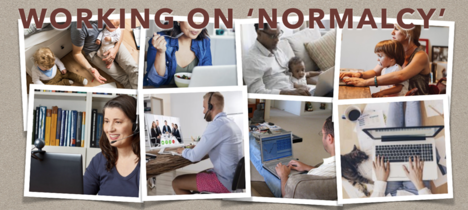
Brian Best, CEO of the $2.2-billion GTE Financial, shared with CUToday.info how his credit union has been managing through the early days of the coronavirus pandemic, including having more than 80% of its 581-member team doing their jobs from their homes.
“Anything you can do to create normalcy in this kind of environment is a good thing,” said Best, noting the credit union went from “ground zero” to having 80% of its workforce at home in just days. “We've had some really robust business continuity plans, and you can test them as much as you want. But something like this, in real life, it’s different. You don't know if it's going to work or not until you deploy your plan.”
Best said GTE is paying significant attention to maintaining the “cadence of the culture” when employees are not all in the office together.
“I think that is very critical to the success in doing something like this,” explained Best. “When you are in the office, you stop by, see someone, have a conversation, and maybe you come back to talk. What is happening in the office is a continuous dialogue among your team.”
Now, that doesn’t easily happen, he said.
“You pick up the phone, and when you hang up that conversation is over. You send an email, and it’s just not the same as being there in person,” he said. “So, we are now trying to make sure chat sessions are continuously going so our people feel ultra-connected during this difficult period.”
What & Where
Using GTE’s intranet, the credit union is asking all departments to clearly communicate what they’re doing, what they’re working on, and where they’re headed.
“I look at it as an exchange system—we have an exchange of dialogue to make sure everybody understands what's happening throughout the business, so that way they still feel connected to each other and feel a sense of normalcy,” said Best. “Maintaining the culture of the organization is critical now and we've been very fortunate that what we are doing has worked so far. We have an amazing team.”
To connect staff with the credit union’s systems, GTE has employed a virtual desktop infrastructure (VDI). VDI is a form of desktop virtualization, as the specific desktop images run within virtual machines (VMs) and are delivered to end-clients over a network. The virtual desktops live within VMs on a centralized server.
“The VDI creates a conduit to our team that manages all bandwidth. That way, no matter what service provider our staff is on, we can manage their bandwidth to ensure the experience is perfect for the membership on the other end,” explained Best.
Close to the Mark
Best said GTE’s plan was about 80% on the mark, with 20% needing some tweaking at the outset.
“Most of the tweaking had to do with balancing the load across our four different Internet service providers and configuring headsets for employees using soft phones. Early on, we had some slowness and screens freezing up, because everyone was going through one data line into our datacenter and it became saturated. So, once we identified the issue, we started balancing out the traffic,” Best said. “All of this is possible in such short order because we have been totally virtual for many years now. Our entire infrastructure—from servers to desktops—have been virtualized using VMware. So the tweaking mainly had to do with getting our employees up to speed with using our dual-factor authentication software, and then working with our IT help desk on configuring their soft phone headsets in order to work with whatever PC or laptop they were using at home.”
Best said the current scenario clearly illustrates the power of virtualization.
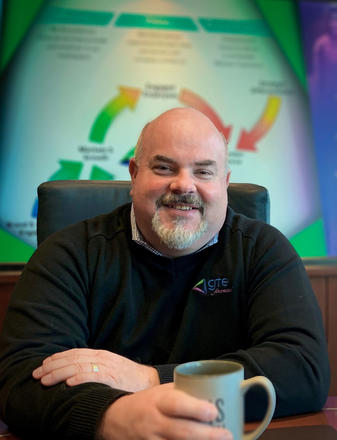
Brian Best
“It doesn’t matter what the employee uses to connect into their work desktop, because once they are connected they are literally connected to the same desktop they are normally connected to when they are at work—which is the desktop that is running on a server secured in our data center,” said Best. “So, we don’t have to worry about viruses on the employees’ home PC or laptop, because they essentially aren’t using it when they are working—they are using the secured desktop in our datacenter.”
Using Microsoft Teams
To get work done, GTE is primarily using Microsoft Teams.
“Our internal intranet site is where we post all of our updates, and newsfeeds run on Sharepoint,” he said. “The one thing that has positioned GTE very well for all of this is that we have been running in the cloud for several years now. Our Office 365, which includes Teams and Sharepoint, are all in the cloud.”
Best said the staff selected to interface with members via interactive teller machines are safely and securely taking transactions. The CEO said GTE wants to create a feeling of normalcy for the membership, too, while staff work at home.
“For members, despite not being able to come into our branches, this really is business as usual,” said Best. “There is no slowdown in delivery of our digital services. And, thankfully, we have emphasized digital delivery heavily in recent years. A lot of our members today use our remote services, which has been very helpful during this pandemic.”
Those members won’t see much of a change when they interact with ITMs, said Best. GTE sent staff who would be seen on video screens home with GTE branding to place in the background.
“These members of our team have our logo and branding they hang behind their chairs at home, or in their offices, so when members use our ITMs they see about the same things they saw before when they used an ITM and our employees were in the office,” explained Best. “We want to keep the member experience the same as we possibly can.”
An Initial Spike
Best said when GTE transitioned to a remote workforce last week, transactions initially spiked the first two days, with some of that due to panicked consumers withdrawing large amounts of cash from their financial institutions, including the credit union.
“In the last few days transactions have normalized,” said Best, who believes the rush of business initially was due to consumers hoarding supplies. “We saw some ups and downs and now things have steadied.”
Best acknowledged with the organization faced with challenges it never has never before encountered, he is calling on everyone within the organization to remain balanced and confident.
“It's a tough job, yes. You know, they only thing that might make this tougher is if we had a hurricane right now,” joked Best. “But that’s not until around September. But we have thought this situation through, and we have a very strong pandemic plan that’s working. At the end of the day, what we try to do is keep people feeling like things are as normal as possible and keep them focused on the right things. The CEO’s job is to provide clarity within the organization and to keep people calm in the face of chaos. And when you do that, I am certain things will turn out fine. Yes, there are a lot of unknowns—we don't know how long this is going to last and we don't know what it’s going to look like afterward, but what we do know is every time a new and tough situation happens, we always get past it.”