

By Ray Birch
BIRMINGHAM, Ala.—While reports this year have indicated digital wallets are finally gaining some real traction with consumers, a new study suggests those gains may be short lived if certain obstacles can’t be overcome.
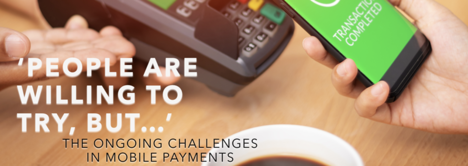
To continue to grow, payments analysts stress that still-limited numbers of NFC-ready terminals remain a barrier, and greater incentives for usage are needed, as is as consumer education around the wallets themselves.
A new study from marketing and analytics firm Adjust GmbH and App Annie reveals mobile-payments apps have a much harder time retaining users than banking apps. Globally, just 16% of users on average return to a payment app the day after install, and 30 days later that number has dipped to just under 6%, the report states.
“I believe these numbers show that people are willing to try a mobile wallet, so you see some strong initial figures,” said Bill Hardekopf, CEO of LowCards.com. “But after using a mobile wallet they just aren't completely sold on it. When it comes to convenience, it just doesn't seem that much of a time saver to have to input your credit card information to make a transaction. Then there is the security concern. Consumers may be put off by having their credit card information stored in their phone.”

Brian Scott
A Local Example
PSCU’s chief growth officer, Brian Scott, told CUToday.info the study is yet another sign mobile wallets, while attractive, still struggle with widespread usage because the ability to use a digital wallet is not ubiquitous.
“My recent example is my local convenience store,” said Scott. “I always use Apple Pay there and I recently wanted a drink while out on a run. Of course, I didn’t have my physical card with me but I did have my phone and I knew that I could use Apple Pay there. Well, that was the day their contactless reader was down and the only way for me to buy my drink was with a physical card. Until you can use a digital wallet everywhere, without fail, usage will continue to struggle.”
Some Positive Signs
But good signs have come in 2019. Mercator Advisory Group data show the use of any mobile payment has increased from 48% in 2018 to 60% in 2019. Online service providers with built-in payments such as Uber and Airbnb have also seen impressive growth in 2019 over 2018 (36% vs 28%).
“It is no doubt accurate that there are many more initial enrollments into wallets than habitual ongoing transactions within wallets,” said Amy MacMullen, senior product manager at CO-OP Financial Services. “I do think there is active interest from the younger demographic to use wallets for payments at the POS coupled with Venmo usage at a restaurant or bar. It also appears there is some adoption to use the wallet to store other things for easy access. This includes rewards cards, movie tickets, concert tickets—many of which are mobile access only—insurance cards, gym membership, etc. However, this doesn’t equate to transactions or income.”
Regarding the future of mobile payments, MacMullen said she believes there is an opportunity to use incentives to encourage usage and drive loyalty.

Lou Grilli
“Also, there needs to be better consumer education on how these transactions are more secure with tokenization,” she said, referring to the misconception held by many consumers who believe digital wallets are less secure than plastic. “Credit unions should remind their members that their card information is not being shared or stored with the merchant when transacting with a wallet. And, digital wallets continue to thrive—LG Pay has just recently entered the space and other payment wearables are on the horizon.”
Incentives Needed
Lou Grilli, AVP of product development and thought leadership at Trellance, agrees that consumer incentives are needed, noting the reports this year that mobile wallet usage has been rising.
“Now that I get 2% cash back when I pay using my phone—with the Apple Card as the tender type in Apple Pay—I’ve become a lot more cognizant of paying by mobile and now make my phone the top choice if the terminal accepts it,” said Grilli. “I’m finding more and more terminals that accept mobile payments—likely spurred by Visa and Mastercard and the large issuers who are pushing contactless cards. I’ve even spotted gas pumps being upgraded with the ability to accept contactless and mobile payments.”
What It’s Really About
In the end with all of these payment apps it’s not about users, it’s about usage, emphasized Scott.
“There is a big difference between the two,” he said, noting how mobile payments are ubiquitous in China and how that has led to usage taking off as more consumers there sign up for tap-and-go. “Look at China—a lot of people signed up for Alipay and WeChat Pay and actual usage went through the roof, so much that it has become the predominant payment type in that country.”
A Reminder
Peter Reville, director of primary data services at Mercator Advisory Group, offered a reminder on how digital wallet usage has ebbed and flowed.
“There was a lot of hype around the release of mobile wallets a few years ago and, once people started using them, they may have encountered spotty acceptance of mobile payments and app difficulties and stopped using them,” Reville stated in a report in Payments Journal.