By Ray Birch
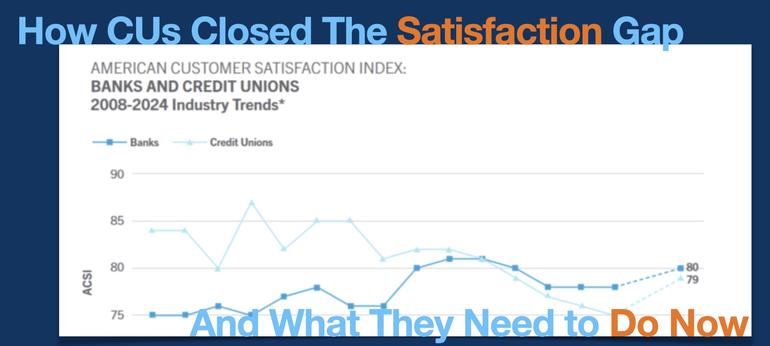
ANN ARBOR, Mich.—After a five-year slide in perception of service satisfaction by American consumers, credit unions have narrowed the gap with banks in a newly released national survey. And the big reason is consumers’ definition of good service is shifting back toward CUs’ “sweet spot,” says the report’s author.
Moreover, banks’ inability to convey a personal touch effectively via digital channels likely chipped away at their lead, as well, according to the analysis. As CUToday.info has extensively reported, banks had built their lead largely due to their investment in digital delivery.
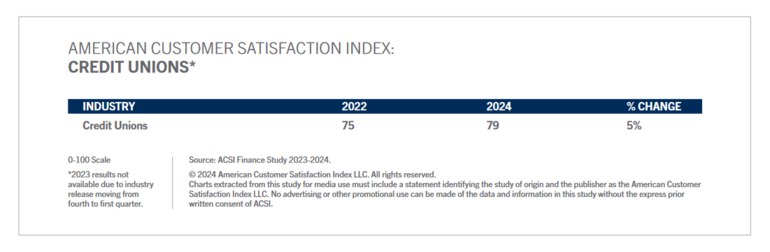
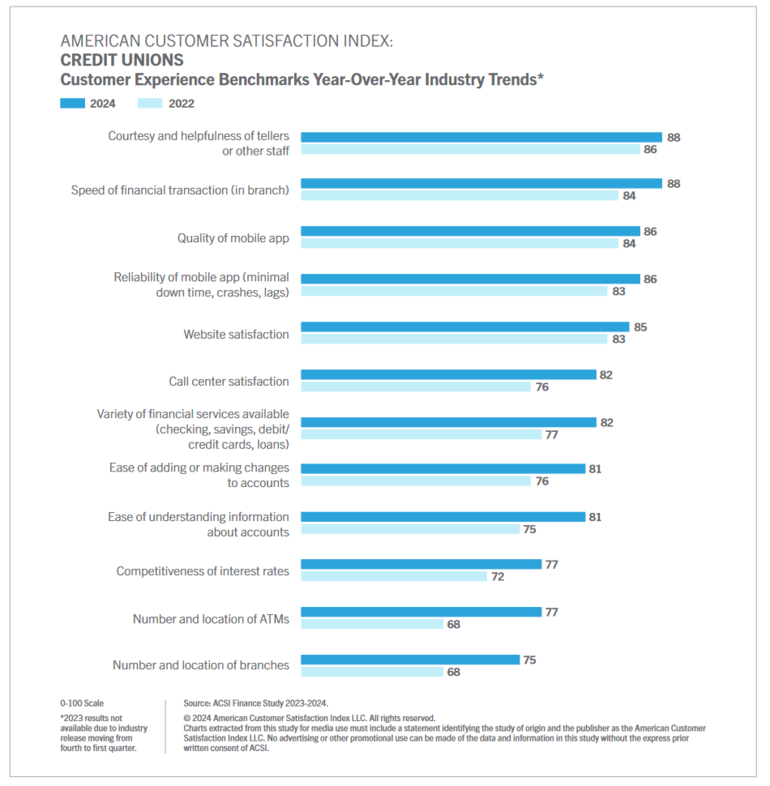
The latest American Customer Satisfaction Index (ACSI) Finance Study shows CUs jumped 5% this year and banks rose 3%—bringing CUs to within one point of banks at 79 on a 1-100 scale as rated by consumers.
Lack of Constraint
“It does appear we're getting back to the sweet spot for credit unions, where consumers aren't as confined and constrained in what they can do because of what was going on with the pandemic, and they're looking to get out in the world a little bit more. With that comes a desire to do more in-person banking,” Forrest Morgeson, associate professor of marketing at Michigan State University and director of research emeritus at the ACSI, told CUToday.info.
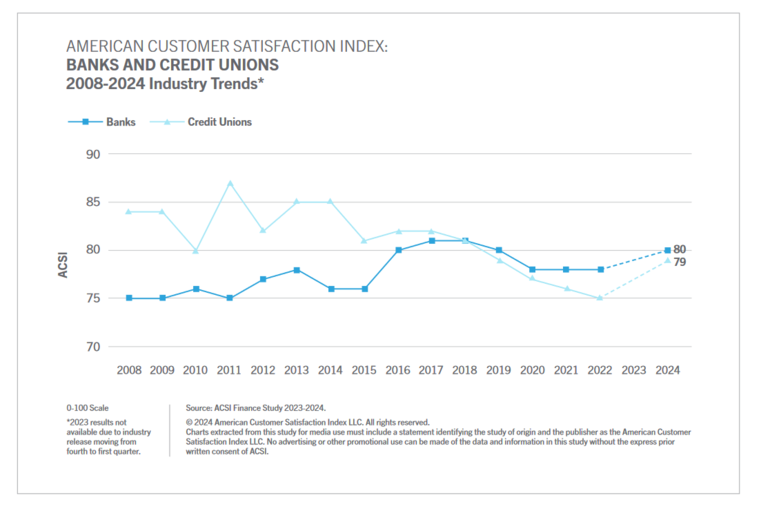
The study had shown a steady decline in overall FI industry service for the better part of the last decade, Morgeson pointed out.
“This year, we see banks going up, but somewhat marginally. Your national banks and your regional and super-regional banks improved the overall average with banks. But we saw credit unions improve—and improve more so than banks,” he said. “It really narrows the gap between the two now to just a single point, with banks at 80 and credit unions at 79.
Rebounding from COVID
Why?
“One of the things credit unions are always known for is their ability to provide stronger customer service through more localized and personalized channels,” Morgeson explained. “When COVID hit, of course, your ability to provide that kind of personalized service really got undermined. And that was more damaging for credit unions than it was for banks, given banks had already transitioned more fully to virtual banking. Now that we're essentially fully out of COVID, over the last couple of years I think that's played a pretty big role in credit unions’ rebound.”
Morgeson believes a turning of the tables is occurring even as banks have invested significant amounts in attempting to deliver a personal touch via e-channels.
“Large national companies are going to do all that they can to optimize their efficiencies and try to provide services to customers as inexpensively as they can to maximize their profit margins. And we understand that's what for-profit businesses do,” Morgeson said. “Of course, when you go too far or too fast in those directions sometimes you can alienate some of your customers by taking away services they've grown accustomed to. They may prefer branches, and at least the ability to go into a local branch and get their banking done. Interestingly, we’ve seen sort of a turning of the tables with some of the bigger national banks now focusing more on their brick-and-mortar banking.”
Getting Physical

Forrest Morgeson
As CUToday.info reported, the nation’s largest bank is all in on branches, with JPMorgan Chase recently announcing it plans to build 500 new branches in the next three years, filling out cities it has recently entered such as Boston, Philadelphia and Charlotte, N.C.
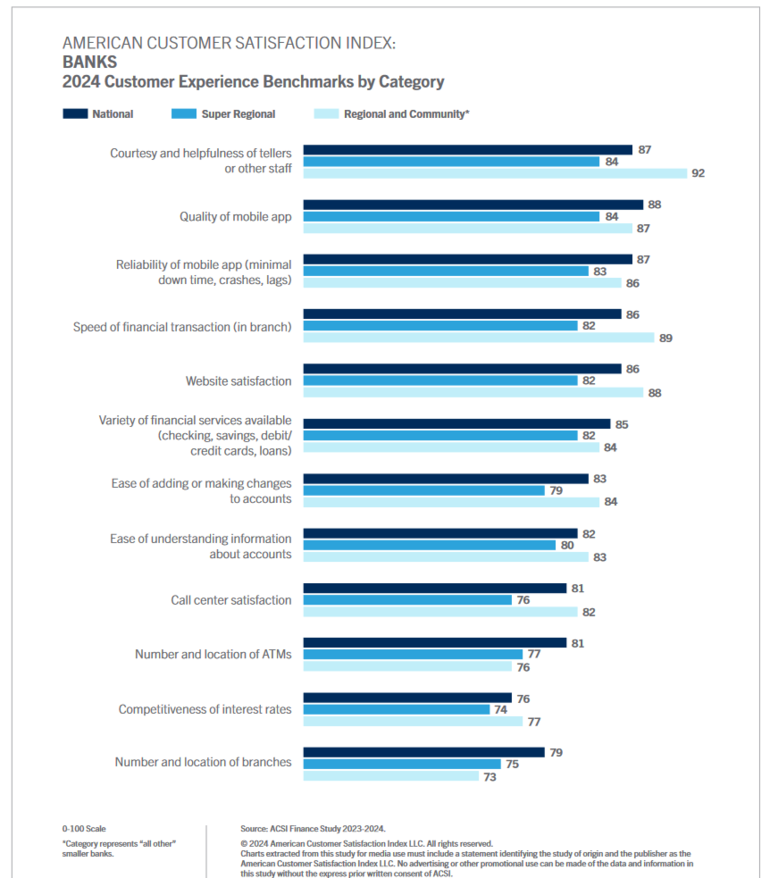
“That basically shows the national banks are saying, ‘OK, we've got digital down now and it's a vital part of our service. But we can't totally turn away from the traditional brick-and-mortar banking experience because many customers like that and need that, as well’,” Morgeson said. “It appears there's sort of a coming together, or coming back, meaning credit unions’ strength was the in-person service. That is coming back, and that's seen as needed now.”
Morgeson believes that as credit unions have raced to shore up their own digital offerings to be on par with what consumers receive from the big banks, the ability to have also maintained personalized local touches is again resonating with consumers.
“That's why the gap between credit unions and banks is narrowing and is now, essentially, a tie,” he said.
One Bank’s Example
One bank in particular illustrates the point, Morgeson said, pointing to Barclay’s which showed one of the biggest declines in overall service satisfaction among banks in the new ACSI study—falling to a satisfaction score of 67 and receiving the highest incidence of complaints.
“It’s a very good example of the phenomenon we're talking about here, in the sense they have no literal brick-and-mortar presence,” Morgeson said. “If I’m in the market just as a digital player, for some customers that will work just fine. The problem is that for many of us we still have a need, at least an occasional need, to go in and talk to someone behind the counter. That low score for the digital-only, super-regional Barclays is an interesting phenomenon that tells that story pretty clearly.”
Morgeson said the most likely scenario reflected in the new survey data is that banks raced to invest ini digital in recent years, building their lead over the country’s credit unions, and then failed to deliver a strong personal touch via electronic channels.
‘It’s Hard to Say’
“It's hard to say why that may have happened,” Morgeson said. “There's a customer learning curve with digital delivery for many of us. For those who are not from the young generations, we're not digital natives. We grew up in an age where there weren't all of these digital tools, or they were only just starting to come on the scene. For those customers there's certainly a learning curve. It takes longer to get used to these kinds of new services and satisfy ourselves with them in a way that maximizes our experience. Eventually we'll all be digital natives. Still, for a sizable chunk of the population…”
What To Do Now?
What do credit unions need to do?
“It's always very difficult to see the future. While we measure a lot of the customer experience and what goes into making customer satisfaction, there's a lot that we can't measure that’s sort of exogenous to the experience. Plus, there are things that can happen in the economy which can change consumer preferences that credit unions and banks don't really have a lot of say over,” Morgeson said. “I'm thinking of interest rates, our ability to help people save their wages, all those kinds of things.
“If credit unions can continue to maintain an industry standard they’ve set with in-person service, and mix that with sound digital technologies, that's a good combination for them moving forward. That could position credit unions nicely to again even surpass banks for the first time in quite a while,” Morgeson concluded.