

By Ray Birch
CEDAR CITY, Utah.—As the granddaughter of a credit union pioneer and the daughter of a father and mother who both ran CUs, credit unions have been with Sue Longson since a very young age. Today, Longson has concerns over where credit unions might be a generation or two from now.

Longson began running her very first credit union at the age of 19, making her in 1977 the youngest CU manager in the country. But what this credit union veteran—who has been deeply involved in the movement and who has led three CUs during her career—fears most is the face of the movement is changing. She contends CUs are getting bigger and in the process more bank-like, and she attributes the change in part to NCUA.
“What has stood out for me in the years I worked in credit unions,” said Longson, who left her final CEO role in 2012 at SONEPCO CU, “is the movement is really for the people we serve. Credit unions are created and organized by the folks and run for the benefit of these folks, and it’s been just wonderful.”
Getting Too Big?
But Longson, now a CU consultant, believes the industry is straying from those simple roots.
“You can't paint the whole movement with a broad brush, but I would say that depending on the leadership at the credit union, what I just described may not be the case anymore,” said Longson, who believes some credit unions are getting too big, capital buffers too large, and salaries often too fat. “I place a lot of the blame on NCUA.”
Longson said she takes that stance because when she first started leading a credit union more than 40 years ago, at the $3-million California Center CU in Pomona, Calif., the goal was to give back as much as possible to the membership. She recalled when NCUA came in to review the credit union 40 years ago, exams were aimed at determining how successful the CU was in achieving that objective.
“When NCUA would come in and do an examination, a credit union would be written up if your delinquency ratio was below 2%,” said Longson, explaining that while the agency was concerned when delinquencies were too high, it viewed a ratio higher than what might be considered acceptable today as a sign the credit union was taking enough risk to lend to all members. “The agency wanted to make sure you were helping everyone.”
Two Quarters’ Worth of Reserves
Similarly, she said NCUA also frowned on CUs building up large reserves.
“The agency used to say that if you had more than two quarters of reserves, you weren't paying your members back enough,” explained Longson. “Obviously, over the course of time, this philosophy at the agency has gone by the wayside.”
Longson noted that in the prepared remarks delivered by new Board Chairman Rodney Hood when he was sworn into the agency, he said his top concern was for the safety and soundness and the protection of the Share Insurance Fund.
“Well, if that’s your number-one concern, then you don't take chances on making loans to members,” she said. “I think pressure for credit unions to change, getting away from that simple focus of doing as much for members as possible, giving back as much as possible, has come from the agency itself. Some of our founding philosophy has gone away.”
The Family Business
Longson’s path to credit unions began at a very young age, having grown up in a credit union family. Her grandfather, Lance Barden, founded hundreds of CUs and was considered by many as the “organizer” of the CU movement in California, Longson explained. Longson’s father, Steve Barden, ran credit unions, as did her mother, Shirley.
It was at her mother’s CU, the $250,000 DPST FCU in La Puente, Calif., where Longson first started working within the movement in 1973. She started at the age of 15, helping out as a teller and doing filing.
“It was great to see how credit unions really helped their members and I guess that really stuck with me,” said Longson. “Credit unions were just a big part of my life.”
A Quick Return
But when Longson headed off to the University of California in 1976, she did not realize she’d be running a credit union soon.
“In fact, my mom and dad did not want me to work at all during my freshman year so I could focus on school,” recalled Longson.
But that all changed with a phone call.
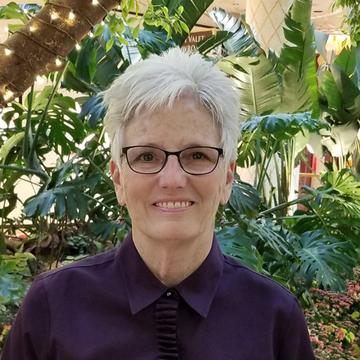
Sue Longson
“I was 19, and someone from California Center CU, which served employees of CUNA Mutual and CUMIS, called me and asked me if I wanted to come work at this one-person credit union,” recalled Longson. “I was to be the extra helper, and the request came in the summer, so I went to work at the credit union.”
When Longson arrived at the credit union she was told she would be pinch-hitting for the manager who was on leave.
“But she never returned and I became the manager,” Longson explained.
‘Loved Working There’
While her parents may have been reluctant for Longson to take the job, the 19-year-old was not.
“The credit union was very flexible with my hours at school, and I loved working there,” said Longson, who became in 1977 the youngest CU manager in the country. “I really liked that our sponsor was CUNA Mutual, because my credit union was often the first to test their new products. My credit union was the first in the nation to launch Loanliner. And that was the case with a number of other new products. We were the first in the country, as well, to have a CO-OP Financial Services ATM, which was located at the California CU League’s headquarters in Pomona.”
Longson left California Center CU in 1983 to run her own company, Sides and Longson, which specialized in auditing and records reconstruction. Longson said CUNA Mutual and NCUA would call on her company to manage a CU in which fraud was suspected, and help with the data recovery, until the CU was either liquidated or merged into another shop.
Four More Credit Unions
Longson returned to managing CUs full time in 1985, taking the helm at $12-million Pacific FCU in Pomona, where she remained for the next 10 years before leaving to lead $55-million SONEPCO FCU in Las Vegas.
In 2012 Longson joined $560-million SCE FCU in Irwindale, Calif., as VP of business development and community relations. She left for Boulder Dam CU, Boulder City, Nev., in 2014, working there as an advocacy specialist.
Longson has also been a member of the boards of the California and Nevada CU leagues prior to their merger, including two years as chairman of the Nevada league.
“I am mostly retired, but I stay involved with credit unions as an advocacy specialist, which I like a lot,” said Longson. “I have enjoyed a wonderful career in credit unions and I have seen them do so many good things for members, changed people’s lives.”
A Test Case
Today, Longson acknowledges she wonders if credit unions can ever be what they once were, a movement with a singular focus on helping members who own the cooperative.
“It just seems we are more concerned about competing with each other than helping each other anymore,” she said. “I think the latest CUNA marketing campaign, Open Your Eyes, will be indicative of the collaborative support of credit unions. Past CUNA marketing campaigns have failed because CUs have not seen value in supporting national cooperative marketing. They don’t seem to want to band together anymore. We’ll find out with this latest campaign.”