

By Frank J. Diekmann
OKLAHOMA CITY, Okla.–This weekend the calendar will say it’s been 25 years since that most terrible tragedy, but for so many here, especially at one credit union, it remains an everyday event.
On April 19, 1995, an enormous bomb inside a truck left on the street by a terrorist who has since been executed exploded and tore off most of the north face of the nine-floor Alfred P. Murrah Federal Building in downtown Oklahoma City. Located on the third floor of the building was what was then known as Federal Employees Credit Union. One floor below it, a day care center.
The bombing killed 18 of the credit union’s 33 employees and hospitalized many others, including its current CEO, who was buried for more than six hours in the rubble and who has since been part of the CU’s own heroic story of survival, not to mention her own remarkable turnaround story, as well.
A quarter-century after the tragedy the credit union has a new name, Allegiance Credit Union; a new main office to go with three new branches; nearly all new employees, and new clarity around why it exists. But 25 years later an old wound also remains very much a part of the credit union’s heart and soul.
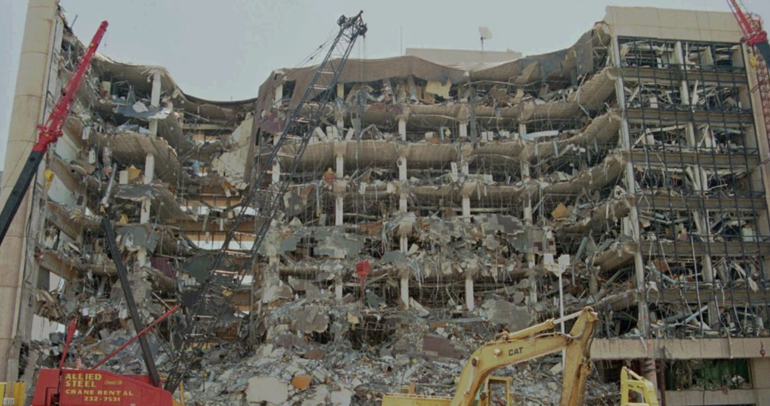
The Alfred P. Murrah Federal Building after the bombing. FECU was on the third floor.
April 19, 1995
At 9 a.m. on April 19, 1995, Federal Employees Credit Union had just opened its office doors and begun to welcome members. The CU’s field of membership was largely housed or headquartered inside the same office building, named after a federal judge and opened fewer than 20 years earlier, and included offices for 14 different federal agencies, such as the Drug Enforcement Agency, the FBI, ATF and military recruiting offices. When the building opened in 1977, FECU had been its first tenant.
Critically for the bomber, it included not just those federal government offices, but a glass front facing the street.
At the same time on that Wednesday morning when then CEO Florence Rogers was calling a management meeting to order in her third floor office, bomber Timothy McVeigh, angry over the Waco siege by the federal government two years earlier to the day, was walking away from a 1993 Ford F-700 truck he had rented from Ryder and packed with 4,800 pounds of ammonium nitrate fertilizer and other explosive materials that he had parked in a loading zone.
At 9:01 a.m. the bomb detonated.
A Simple Decision
The bomb blast destroyed not just one-third of the Murrah building, but was powerful enough to damage 324 other buildings in a four-block radius. Employees at Tinker FCU, five miles away, felt the shock waves. One-hundred sixty-eight people were killed, including 19 children, 16 of whom were in the America’s Kids Day Care Center just below the credit union. More than 680 others were injured.
For the credit union and its employees, they would become a painful and tragic example of the fickle brutality of tragedy, of how the difference in life and death can be as simple as where one was sitting, including in that management meeting.
It was Rogers first day back from vacation, having just taken a Caribbean cruise, and she was eager to share pictures. Afterward, she would recall a last-minute decision had been made to move the meeting from the board room on the north side of the building to her own office on the south.
The reason for the move? A printer wasn’t working, so Rogers said she moved the meeting in order to be able to read a checklist from the screen of the computer sitting on an office credenza.
Rogers survived; seven others in the meeting were killed.
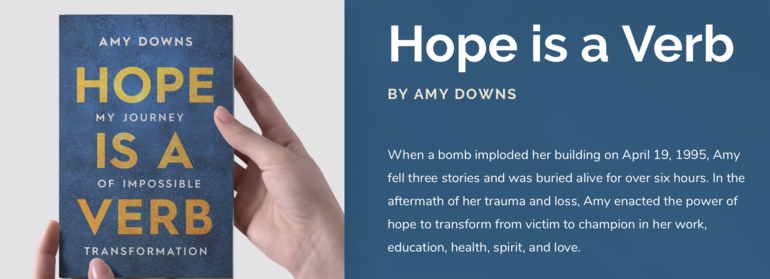
Amy Downs' new book.
Injured and Dazed
As the 25th anniversary of the bombing arrives, the credit union’s CEO is Amy Downs. Downs was an FECU employee working as a credit card loan officer and just like everyone else around her was just starting a fresh workday. A moment later, she was buried under the concrete, steel and glass debris from the six stories above the credit union’s offices, injured and shocked like so many others, dazed by the explosion, injured and unable to move.
Downs would spend six-and-a-half hours buried in the wreckage. Rescuers had just located her when a call suddenly went out that another bomb had been found and she was again left alone as emergency workers were evacuated. The other “bomb?” It would turn out to be a practice device used by other federal agencies. Downs would be among the last to be rescued and hospitalized.
Her recovery would go on to extend beyond the hospital and her physical injuries, and are now at the heart of a new book and inspirational remarks for others.
A ‘Part of My Life’
Each year at this time Downs said she and other survivors are accustomed to being reminded of the experience, often receiving phone calls, primarily from the media. This year, given the 25th anniversary of the tragedy, there have been more such reminders.
This year, however, there has been something new, an old reminder of friends and coworkers and their former workplace. A local TV station unearthed video footage shot by Rogers’ former assistant inside the credit union’s former offices. The assistant had used what at the time would have been a state-of-the-art (but now noticeably oversized) camcorder to shoot video so she could show her parents who lived out of state where she worked and with whom.
The footage had been submitted as evidence during the 1997 trial of bomber Timothy McVeigh. Downs was supposed to narrate the video, to personalize it during the sentencing phase and to bring to life for at least a little bit the real human beings McVeigh had murdered. But the judge ruled it would be too emotional for the jury.
Today, the bombing and its aftermath remain with Downs, and not just during the anniversary.
“It’s a part of my life. There is a recessive scar on my left leg that I see every day,” Downs said. “It’s there, but not in the sense of ‘I’m thinking about it today.’ At this time of year it’s a little bit more at the forefront, as it is on the anniversary of anything traumatic that happens to someone. The rest of the year it’s like an app that is running in the background on your phone. It just becomes a part of your life.”
That tragic day isn’t just part of the lives of those who were there; it’s a deep part of the credit union’s culture, Downs said.
“If you ask employees to describe what it is they like about working here, they will use the word family. You hear that again and again,” said Downs, noting Allegiance Credit Union has been named a Great Place to Work on numerous occasions. “We are more than just coworkers, but you don’t realize that until you are at the funeral of a coworker. It’s an inclusive environment. Not that we are perfect, but we strive to be a great place to work, a place where people are valued.”
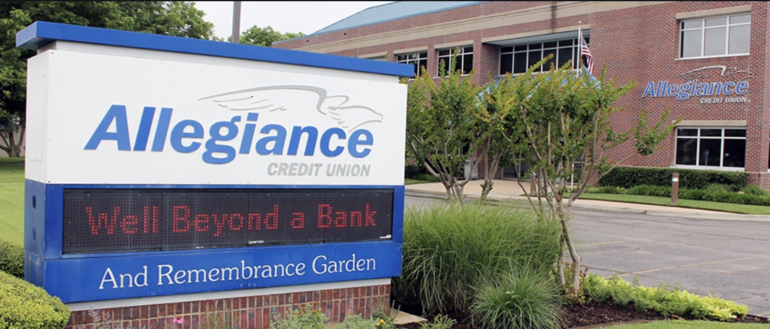
Coming ‘Full Circle’
Downs said the credit union has come “full circle” in how it approaches the bombing with its employees. During onboarding, new employees get a lesson in the CU’s history. But that doesn’t mean Allegiance Credit Union has always kept the tragic event front-and-center, with Downs conceding there was a point at which people were getting tired of hearing about it.
But as so often happens with the passage of time, circumstances inevitably evolve, and people get hired who were very young or not even born when an event took place.
“We went from where people were sick of our story to where I was walking down the hall with a new employee and the new employee said, ‘So, this was the credit union that was in the bombing?’ It’s full circle when new employees don’t realize it right away. So, now we go into it with new hires when management meets with them one on one.”
In addition to Downs, there are three other employees of Allegiance who were with FECU in 1995 and who survived the bombing. One board member also remains who was in the building at the time but who escaped without injury.

The Oklahoma City National Memorial, which features 168 empty chairs, one for each person killed.
The Memorial
This weekend there was to be commemoration marking the 25th anniversary at the Oklahoma City National Memorial downtown, which opened on April 19, 2000, the fifth-anniversary of the bombing and which is located on the former site of the Murrah building. A museum opened the following year. Due to the coronavirus pandemic and stay-at-home orders, the commemoration will take place online on Sunday beginning at 9 a.m. For more information, go here.
Downs said she would meet with many of the other survivors each year during commemoration events at the Memorial, but this year will obviously miss being able to do so.
Downs now has a commemoration of her own, a new book titled, “Hope is a Verb: My Journey of Impossible Transformation.”
The book shares her personal story of how in 1995, on the day that changed everything, Downs was a credit card loan officer who had flunked out of college and who weighed more than 355 pounds. Although it would take time, she emerged from the rubble to eventually finish her college degree, earn a master of business administration, and eventually be named to lead what is now a $248-million credit union.
A Personal Rebirth
Outside the credit union Downs went on to lose 200 pounds and even compete as a triathlete in an Ironman triathlon.
The book was a decade in the writing.
“The reason is I could not get clear on my message. I didn’t want to talk just to talk,” said Downs, who has appeared as a speaker at numerous events hosted by credit unions and other organizations. “I had been doing a lot of speaking, but the message was somewhat scattered around things I had learned. I wanted my message to be clear to the reader.”
Downs worked with her nephew, who has a master’s in creative writing and who became her ghostwriter, nearly every weekend for a year in order to complete the book.
The back cover of the book reads, “Amy’s open, vulnerable and seemingly impossible journey reveals the raw power of authentic hope. No matter how heavy our burdens may weigh—from our careers, health, addictions, insecurities, trauma or loss—Amy reminds us that hope is a verb we can enact today to transform our lives into the future of our dreams.”

Amy Downs before weight loss, and then participating in triathlon.
45 Minutes to Prepare
Although it may strike some as a cliché, Downs said there is no way one can go through what she and others experienced and not be changed by it.
After those six-plus hours in the rubble before being discovered, and then being left alone for another three-quarters of an hour after the false alarm over what was believed to be another bomb, Downs said, “That was 45 minutes during which my reality was I’m getting ready to die.”
Downs cited the book “The Top Five Regrets of the Dying” by Bronnie Ware in which the number-one regret expressed by those facing death was not having been true to one’s self during life, instead of leading the life others expected of them.
“When you are faced with death, it’s really clear,” said Downs. “I told myself it wasn’t something I would ever forget.”
While she couldn’t make changes in the immediate near term, Downs said she vowed to make the most out of the term she had left.
“Ever since then I have felt I am living on borrowed time,” Downs said.
A Hospital Visit
Downs recalled Florence Rogers visiting FECU employees in the hospital even though she was overwhelmed with work to do attempting to reopen the credit union, help members, and deal with so many other demands.
“She would always say, ‘I have this terrible injury, and then she would slip her finger into the belt of her pants and show us her black and blue butt. That always made us laugh,” recalled Downs.
Rogers herself recalled being in the 1995 meeting one moment, and then in the next knocked to the floor in her office unable to see much of anything. Steel and cement beams had missed her by inches. She couldn’t breath and called out to those who had been sitting beside her only seconds before. As the air slowly cleared, she found she was sitting on what was now a ledge. The others had not been so fortunate.
The example Rogers set, said Downs, is, “You have to be human and vulnerable and say we are going to get through it. It’s not the time to double-down and show how tough you are or say you have the answers. You have to show you don’t know it all and are vulnerable.”
Helping the People Who Help People
Downs is quick to acknowledge Federal Employees Credit Union would have never survived the bombing and go on to become Allegiance Credit Union were it not for the extraordinary response from the credit union community.
“I have to give a shout-out to our movement and its spirit of people helping people,” said Downs.
Credit unions not just in Oklahoma City but around the U.S. rushed to provide assistance. What was then called Ft. Knox FCU in Kentucky sent six staff members who volunteered to go to Oklahoma City almost immediately. Tinker FCU quickly made space available at one of its facilities. The state league helped coordinate advertising alerting members to the location of the new space. Credit unions running the same DP system pitched in help. Critically, two FECU execs in IT were out of the office at the time of the blast.
Forty-eight hours after the complete destruction of FECU’s lone office and the loss of more than half its staff, the then $72-million, 15,000-member CU was up and running.
‘Dark Years,’ But…
After the first few weeks passed, Downs recalled FECU faced existential questions around its future.
“The truth is it took us about four years to truly overcome what happened and to have a new normal,” said Downs. Allegiance Credit Union moved into its new building in 1999.
“There were a lot of things we had to overcome,” she said, acknowledging that, not surprisingly, many of the survivors were deeply traumatized. Downs said she feels the effects of PTSD herself.
“Our entire business model was serving people in that building, and then half our staff was gone. In the pandemic people are seeing a little of what we had to go through. Our building was literally gone. I use a sports analogy to describe it. It’s like we were the Dallas Cowboys, but half the players are gone, we have a completely new stadium, and now we’re playing with a basketball.”
While there were some “dark years” and “mourning” over the losses, Downs said the experience “forced us to get really clear on how can we survive? That allowed us to create action steps. We had to do the work to support a new building and overcome the turnover of the management team. We had to get clarity around who we are now.”
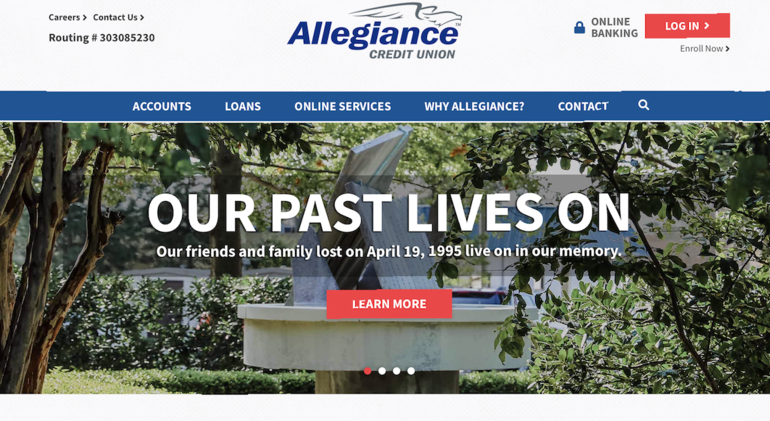
Allegiance Credit Union website includes tribute to history, employees it lost.
Lessons for Credit Unions
Downs said the credit union’s response to the bombing and its aftermath offer lessons for other credit unions, most especially now as they fight their own battles during the coronavirus pandemic.
“With all the anxiety and uncertainty in today’s environment, there are lots of questions on how do we survive and pivot and overcome,” said Downs. “There is so much we learned that is applicable now. Every crisis brings with it huge problems, but also huge opportunities. There are three things the crisis gave us the opportunity to learn.”
The first of those opportunities, she said, is clarity.
“We were able to get really clear on our strategy to identify the things we needed to fix,” said Downs.
The second is the opportunity to innovate.
“A crisis is an opportunity to try new things,” said Downs, adding that many organizations make the mistake of doing the exact opposite, hunkering down and setting innovation aside.
The third is the opportunity to create a stronger team, even if it’s the same team members.
“When you walk through something like this, you can come out stronger. You develop your soft skills, such as communication and admitting to vulnerability.”
Who Does That?
In addition to the new book, Downs continues to speak to audiences and share her story and message.
“It can be very moving. People tell me they have decided they are going to do something with their lives,” said Downs. “It’s not me. I might have been the spark or given them the nudge, but it’s something they were already thinking about. I had a branch manager at another credit union tell me she was going back to school. I hear a lot of stories like that. One woman came up to me and said she was going to open a bakery after she heard my talk. It makes me feel good if I can share my story.”
As for Downs, she sounds positive and optimistic today and said she continues to try to “level up. In 2017, when I was 50, I ran in my first triathlon. Who does that?”
For info on Downs’ book, go here.
In Memorial
The employees of Federal Employees Credit Union who lost their lives on April 19, 1995 include:
- Woodrow Clifford “Woody” Brady, 41
- Kimberly Ruth Burgess, 39
- Kathy A. Finley, 44
- Jamie (Fialkowski) Genzer, 32
- Sheila R. Gigger-Driver, 28
- Linda Colleen Housley, 53
- Robbin Ann Huff, 37
- Christi Yolanda Jenkins, 32
- Alvin J. Justes, 54
- Valerie Jo Koelsch, 33
- Kathy Cagle Leinen, 47
- Claudette (Duke) Meek, 43
- Frankie Ann Merrell, 23
- Jill Diane Randolph, 27
- Claudine Ritter, 48
- Christy Rosas, 22
- Sonja Lynn Sanders, 27
- Victoria Jeanette Texter, 37
- Virginia M. Thompson, 56
- Tresia Joe “Mathes” Worton, 28
A video tribute to those who were lost can be found here.
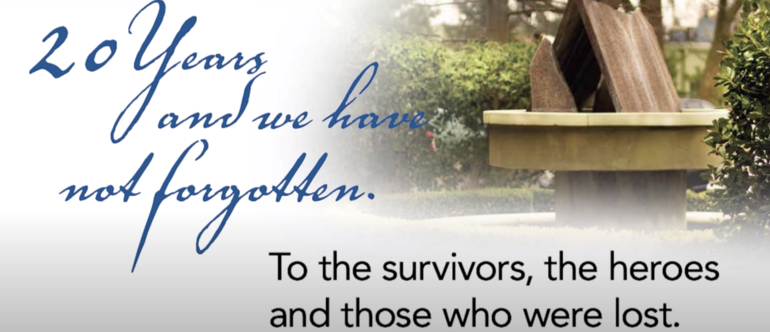
Video pays tribute to 18 employees lost on April 19, 1995