

By Ray Birch
CHICAGO—New data show a big jump in synthetic ID fraud for auto lending, and TransUnion believes the issue is lenders are moving too fast to close loans—and crooks know it.
“Synthetic IDs are continuing to be a menace, and they're not going away anytime soon,” said Steven Yin, global head of fraud at TransUnion.
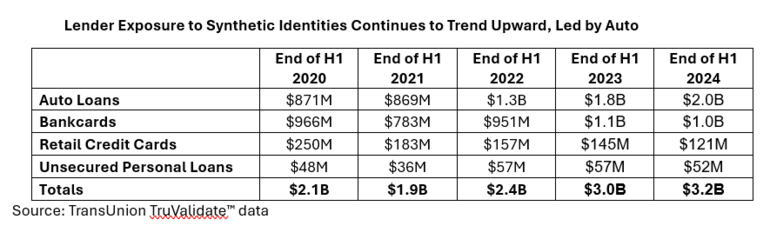
TransUnion data show the wealth of stolen identities acquired via data breaches and accounts opened using synthetic identities continue to put lenders at risk. In fact, the increases among overall lender exposure to synthetic identities for U.S. auto loans, bank credit cards, retail credit cards and unsecured personal loans continued in the first half of 2024.

TransUnion data show the exposure rising from $3 billion in the first half of 2023 to $3.2 billion in the first half of 2024, an all-time high and growth of 7% year over year. The share of accounts opened for the four tradelines by synthetic identities rose 18% YoY, also reaching an all-time high.
Yin said the auto loan industry continued to be the most impacted by lender exposure to synthetic identities among the four tradelines, accounting for $2 billion of the total in the first half of 2024, the fourth consecutive first half of the year in which auto has seen the greatest exposure.
“There are several things happening,” Yin told CUToday.info. “One is the value of the loss, the risk exposure, it has increased. We have seen an increase in the actual average loss associated with synthetic ID fraud.”
Verification And Documentation
Yin pointed out there's a fair amount of verification and documentation required with auto loans, compared with credit cards, for example.
“But borrowers want their loans faster and faster,” he said. “Auto lending customers want the same experience as they’re getting when they apply for a credit card online.”

Steven Yin
Lenders are realizing that and are speeding up the approval and closing processes on auto loans—including the registration of the vehicle at the local Department of Motor vehicles, Yin said.
“The lenders are moving too fast here and the crooks know it, and they're taking advantage of it. They see the opportunity,” he said. “Unfortunately, this warrants attention, as the market is now facing a rising threat of charge-offs.”
Many credit unions use indirect lending. And, with indirect, there are not the same types of checks and balances with direct auto lending, Yin asserted.
“Protecting customers and their businesses from fraud is essential to enabling safe and tailored consumer experiences. These findings reveal that despite the good-faith efforts that are being undertaken by global organizations to identify and prevent fraud to date, fraudsters continue to evolve and it’s vital that fraud prevention methods keep up with the changing times,” said Yin. “Businesses that aren’t already doing so should ensure they are taking advantage of fraud prevention technologies—such as identity verification, IP intelligence, device reputation and synthetic identity detection—as critical components of their fraud prevention programs.”
According to TransUnion data, the global rate of suspected digital fraud remained stubbornly high in the first half of 2024 at 5.2% of all transactions. For transactions where the consumer was located in the U.S., 4.6% of digital transactions were suspected to be fraudulent over the period.
Yin added that TransUnion is coming out soon with even more aggressive capabilities in the synthetic space.