

By Ray Birch
WASHINGTON—The recent passage of the 2020 National Defense Authorization Act (NDAA) was not only a victory for CUs on military bases, many may not realize it has the potential to be a victory for all credit unions, asserts Tony Hernandez.

As CUToday.info reported, the Senate version of the National Defense Authorization Act would have provided banks with the same type of free leases on military bases currently in place for many credit unions. But that language was cut when the final version of the NDAA was sent to the president for his signature. As CUToday.info also reported, passage of the bill came at the same time the banking lobby has been turning up the heat on credit unions and especially the industry’s federal tax exemption.
Hernandez, CEO of the Defense Credit Union Council (DCUC), contends if that language had not been removed from the legislation, banks would have been given the same access to military bases as credit unions and would have gained a much stronger foothold from which to make their anti-CU arguments in 2020.
Hard-Fought Win
“It was a hard-fought win, starting last April and requiring the continuous efforts of all credit union system partners,” said Hernandez. “Unity, persistence, and message consistency were crucial.”
Hernandez said credit unions won something more than just another NDAA battle, which seems to come around every year with each budget bill.
“Given the structure of the bank lobby’s argument, coupled with coordinating their public messaging campaign and use of various veteran service organizations, the bankers would have established an important anchor point for everything else they seek to accomplish to the detriment of credit unions nationwide,” said Hernandez.
Hernandez contends that the military often are the nation’s “laboratory” for advancing large-scale changes.
“Everything from social, technological, medical and even financial experimentation in the military goes on to affect our general population and the way we live,” according to Hernandez.
It’s a claim for which Hernandez said there is much academic, historical and public research as support.
Beginning With George Washington
“For example, our nation’s very first social experiments were conducted by General George Washington when he removed elected officers and hand-picked his own officers in the Continental Army,” said Hernandez. “During the Civil War, early technological effects were studied starting with the introduction of mass transportation—by rail—along with the use of telegraph communications. Finally, ongoing medical research initiatives in the name of increasing battlefield effectiveness have a long history in our military. The advances made in each of these areas were subsequently transferred to society at large. And the list goes on and on.”
Hernandez said using the military to reform the financial services sector is no different.
“The idea of changing people’s financial habits, their access to credit, and how to protect their savings has enormous appeal. As such, there are many examples where the financial services industry was significantly changed as a result of military experimentation. The results have shaped credit union operations in many ways,” he said.
Sometimes, Hernandez said, the result from the experimentation on the military is positive, such as the ability for credit unions to provide demand deposits and checking accounts.
A Crucial Role
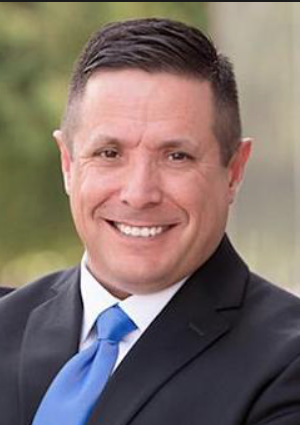
Anthony Hernandez
“The military played a crucial role in this debate,” recalled Hernandez. “It was in 1974 when U.S. Forces Korea suggested that defense credit unions be permitted to compete and operate exactly as overseas military bank facilities. This meant changing the law to allow credit unions to provide these types of accounts. DoD’s involvement and support served as an important catalyst in winning the argument on Capitol Hill. As a result, the Federal Credit Union Act was amended a few years later. The experiment was a success.”
Sometimes the result is mixed, Hernandez said.
“The Military Lending Act is a perfect example,” suggested Hernandez. “While the intent behind the Act is primarily to prevent predatory lending, the law continues to yield many unintended consequences. Despite these flaws, the Military Lending Act is now being used as model for the rest of our society. As such, H.R. 5050 was introduced in the current Congress, which will extend the same loan restrictions to each borrower—military-connected or not. The experiment continues.”
Sometimes the result can be catastrophic.
“Which brings us back to last year’s Senate provision in the 2020 National Defense Authorization Act,” said Hernandez. “While we prevailed, it is important for all credit union advocates to understand how this was more than just winning another NDAA battle.”
Critical Wording
Hernandez pointed to the exact language in the defeated Senate version of the bill, which read: “Each covered insured depository institution, credit union organized under state law, and federal credit union operating on a military installation within the continental United States shall be treated equally (italics added) with respect to policies of the Department of Defense governing the financial terms of leases, logistical support, services, and utilities.”
“This construction is both contradictory and revealing in understanding the bank lobby’s true motives,” claimed Hernandez. “Remember, the Senate language did not stipulate any predisposed outcome. Under ‘equal’ treatment, if the banks did not get free rent, the Department of Defense (DoD) could have been forced to start charging credit unions rent and logistical costs despite language in the Federal Credit Union Act that allows for discretionary exemptions. How many credit unions could continue to afford to remain on the installation without changing their relationship to their members? In effect, credit unions would be no better off than banks.
“Plus, if the equal treatment argument can be made on military installations, where does this equal treatment stop? Think credit union taxation, Community Reinvestment Act restrictions, along with other banking restrictions,” asserted Hernandez. “This is one reason why winning the NDAA battle matters for all credit unions.”
Not An ‘Accident’
Hernandez pointed out that while the NDAA battle was underway, the bank lobby launched a steady campaign against credit unions on Capitol Hill.
“For example, it is no secret the bank lobby has dedicated entire task forces designed to combat credit union acquisitions of community banks,” Hernandez said. “There was also a new consumer blog that was discovered to be backed by the bank lobby. In addition, the bank lobby purchased and released an exhaustive study on credit unions that argues for our industry to return to its original 1934 box or regulate us out of existence. This overall messaging campaign was not coincidental.”
Hernandez said congressional and DoD support for credit unions in the NDAA act was not an “accident.”
“That is why we do what we do,” said Hernandez. “Once Congress learned the facts, they made the right decision. Winning the NDAA argument was a team effort by DCUC, NAFCU, CUNA, the leagues and many credit unions. I hope we can continue to advocate in this unified manner.”
Info On Meeting
Separately, the Defense Credit Union Council is holding its Defense Matters, one-day meeting Feb. 23. The event is hosted in conjunction with CUNA’s GAC. For more information go here.
CUToday.info will share more details on the meeting in the coming weeks, including the meeting agenda and speakers.