

By Ray Birch
LINCOLN, Neb.—One attorney believes the decision by the Nebraska Department of Banking and Finance to block the sale of Premier Bank to GreenState CU will be overturned in district court here, and that the original decision “only shoots Nebraska state-chartered banks in the foot.”
The same attorney and others say pressure from the state’s influential banking industry influenced the decision.
As CUToday.info reported, Premier Bank, based in Omaha, Neb., is asking the District Court of Lancaster County to overturn the recent decision by the Banking Department that blocked its sale to the $7.8-billion GreenState Credit Union, based in North Liberty, Iowa-based.
In the original order the Department stated Premier Bank lacked legal standing to sell its assets to GreenState, since it is a credit union organized under Iowa laws and is not qualified to purchase Premier Bank under Nebraska statutes.
Precedent ‘Long Established’
But in its petition, Premier Bank is arguing precedent for such a sale has long been established by the Office of the Comptroller of the Currency.
“National Banks have long been authorized to engage in purchase and assumption transactions both as seller and buyer as part of their general banking powers…,” the petition states. “Such purchase and assumption transactions are commonplace in the banking industry.”
The petition further notes the OCC has approved many such transactions, including transactions in which a national bank sold substantially all its business.”
“Premier Bank is saying the Banking Department has made a mistake, and is now appealing the Department’s decision,” said Michael Bell, a partner and co-chair of the Financial Institutions Practice Group at Honigman, LLP, and the pioneer of CU/bank buys. “The Nebraska Department of Banking order ignored 90 years of precedent and practice. Their order completely ignores the rights banks have to enter into these deals—flipping 90 years of precedent and practice on its head. That’s how bad this decision is. I expect it to be overturned.”
The ’Wild Card’
Bell explained a “wild card” statute in Nebraska was written into state law to give state banks national bank powers.
“Essentially giving them parity,” stated Bell, who has been involved in more than 40 CU whole-bank agreements, plus additional bank branch purchases. “But the issue in this ruling from the Department of Banking misinterprets the powers of national banks, incorrectly stating that national banks can't sell to a CU, and other entities. That is their key mistake.”
Premier Bank’s petition also alleges that both the hearing officer who handed down the ruling and the Banking Department “effectively ignored over 90 years of OCC precedent and practice under 12 U.S.C. § 24 (Seventh) that authorizes whole-bank purchase and assumption transactions. In those transactions, national banks have been permitted to sell their assets and transfer their deposit liabilities to other financial institutions regardless of whether the selling national bank is solvent or insolvent, and regardless of whether the national bank will ‘go out of business’ or ‘terminate business’ as a result of the transaction.”
The OCC’s Emphasis
The bank’s attorneys wrote that it made clear to the Banking Department in the initial court proceedings that the Office of the Comptroller of the Currency (OCC) precedent had been clearly established.
“The OCC’s precedent was emphasized repeatedly by Premier in these proceedings, including by citation to OCC conditional approval #1244, 2020 WL 8176052 (May 19, 2020) (‘OCC #1244’). OCC #1244 involves the OCC’s approval under 12 U.S.C. § 24 (Seventh) of a transaction that is identical in all relevant respects to the transaction proposed by Premier and GreenState in the Application,” the petition states. “In OCC #1244, the OCC states unequivocally that: ‘National Banks have long been authorized to engage in purchase an assumption transactions, both as seller and buyer, as part of their general banking powers under 12 U.S.C. 24 (7)...Such purchase and assumption transactions are commonplace in the banking industry. The OCC has approved many such transactions, including transactions in which a national bank sold substantially all its business.’”
Challenging the Logic
Bell challenged the logic behind the decision.
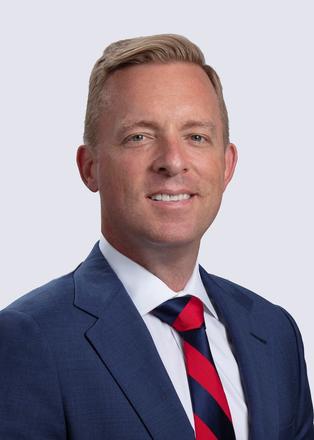
Michael Bell
“In this decision the banking department essentially found that nationally chartered banks apparently don't have the power to sell to credit unions, which is absurd, or to engage in any purchase and assumption transaction,” said Bell, who represents GreenState. “The Banking Department somehow found a way to ignore black-letter, explicit precedent regarding national bank powers that exist today, and then saying their state banks don't have those powers.”
David Routh, an attorney at Cline Williams, which represents Premier Bank, agreed with Bell.
“The Nebraska Department of Banking’s decision is bad for Nebraska state-chartered banks, regardless of one’s opinion about the Premier/GreenState transaction itself,” he said. “It calls into question the parity between state banks and national banks operating in Nebraska. It allows the department to second guess the OCC’s decisions and, by doing so, to deny Nebraska state banks the same rights, powers and privileges that are possessed by national banks in the state. The implications of the decision on the parity intended by the Nebraska wildcard statute are potentially vast, and we will work with Premier to get the decision reversed on appeal.”
Hurting the Value of Banks
Bell is hopeful banks in the Cornhusker State pay attention to the case and learn the decision sharply limits their ability to sell and also reduces their bank’s value.
“I do have some faith that state banks in Nebraska are now going to pay attention and realize what happened and hopefully come around, because any sort of rights they've had to sell have been excoriated,” said Bell. “And, the value of banks in Nebraska has gone down materially based on their now limited ability to sell. The bank trade associations are playing politics and they have literally shot Nebraska state-chartered banks in the foot.”
Chris Maher, chairman and CEO of Premier Bank, said his organization worked with the Nebraska Department of Banking leading up to the signing of the GreenState deal.
“Premier Bank, throughout its history, has demonstrated compliance with all regulatory requirements and has maintained a professional relationship with all government regulators,” Maher said. “Prior to signing the agreement, legal counsel for both Premier Bank and GreenState Credit Union consulted with the Nebraska Department of Banking, which did not raise any objections to the authority of a Nebraska bank to engage in the transaction at that time.”
‘Bowing to Pressure’
Maher added Premier Bank believes the ruling is an example of the Nebraska Department of Banking “bowing to the political pressure of the Nebraska Bankers Association and therefore not allowing Nebraskans free and unlimited access to all financial institutions. As noted in our Petition for Review, the Department’s ruling disregards OCC precedent and relies on a legal analysis that has been rejected by a unanimous U.S. Supreme Court. By filing the Petition for Review, Premier Bank has taken the first step in correcting this improper ruling. Premier Bank is committed to seeing the appeals process through to its rightful conclusion, which we believe will be a reversal of the Department’s flawed decision.”
Bell estimates the current case will take six to eight months to be decided.
A call by CUToday.info to the Nebraska Department of Banking was not returned by press time.