

By Ray Birch
PLANO, Texas—Has the white stuff exposed a silver lining in the pandemic? A number of CU leaders say the answer is yes.

For credit unions in many parts of the country over the past week, it has meant facing their first real “snow days” of the winter and, for some, their first significant winter threat in years. In years past, the critical questions would have been how does the credit union get staff safely to the office? And will it be able to open for business?
But as a result of the pandemic and staff working remotely, the questions are being asked less frequently. And the old “we’re closed today due to inclement weather signs” on the office and on the website aren’t being dusted off as frequently.
“I think the pandemic has helped credit unions regarding snow days,” Cornerstone CU League President and CEO Caroline Willard told CUToday.info, as the league and credit unions in her state faced major issues with massive amounts of snow and artic temperatures in a state known for much warmer weather, at least in its southern half.
“About six months ago I said I bet we never have another snow day because we have all learned how to work remotely. The pandemic has been good training for this.”
But Willard acknowledged, and as CUToday.info reported here, the widespread power outages caused by the record cold temperatures in Texas led to a significant number of credit union office closings across the state.
“We called this storm snowdemic,” said Willard. “Take the pandemic and add a 100-year ice storm on top of it.”
Drive-Thru Gets Popular

Caroline Willard
But outside of Texas and the Central Plains, so far this winter dealing with snow and cold has been a lot easier for credit unions in Pennsylvania and New Jersey, said Mike Wishnow, SVP at the CrossState CU Association, which represents CUs in both states.
“Credit unions have found ways to operate with minimal staff and reliance on a branch presence due to COVID-19,” Wishnow said. “And, thanks to the pandemic, more of a credit unions’ transaction volume is coming in via digital channels and through the drive-thru.”
Wishnow said credit unions and members have become more accustomed to new ways of doing business during the health crisis, with drive-thrus become especially popular.
“If it’s a bad snow day and the credit union can just get a few members of its team to the branch they can run business through the drive-thru,” noted Wishnow.
But the biggest benefit of the pandemic may be the ability to keep the office open when piles of snow are on the ground, as most staff members no longer need to drive to the office to keep the credit union running.
“The good, old-fashioned snow day just doesn’t happen as much anymore,” said Wishnow.
Wishnow said members of all ages, too, have become so comfortable with using their mobile devices to do their banking that it is far less of an impact on their lives if the credit union has to close the office.
Secondary Benefit

Michael Wishnow
A secondary benefit: members have become accustomed to branches being closed during the health crisis.
Wishnow said credit unions have done a great deal of cross training during the pandemic so each employee has the ability to do more jobs and be of service in case staff shortages happen.
“Cross-training staff has not only helped during the pandemic, it is helping now as the really bad winter weather is hitting the country,” said Wishnow. “More credit unions are cross-training more staff, especially the larger credit unions.”
Call centers were often overwhelmed with incoming calls in years past when winter led to a closure of branches and main offices. But Wishnow pointed out most call center staffing has been beefed up during the COVID-19 crisis and handling snow day volume has become just another day at the office—even when no one is there.
“Thanks to the pandemic, a lot of credit unions have been looking at alternative communication channels, like chat,” said Wishnow. “Chat is quickly becoming a way credit unions are efficiently serving members.”
The White Stuff & GreenState
In North Liberty, Iowa, GreenState CU CEO Jeff Disterhoft acknowledged remote work has been a silver lining from the pandemic.
“There’s no doubt that inclement weather has less of an impact on us today than it would have pre-COVID, particularly for our back-office operations, as roughly 70% of our staff are working from home today,” Disterhoft said. “Once everyone is vaccinated we still expect a number of those staff to remain working from home on either a part- or full-time basis to help us save on office space.”
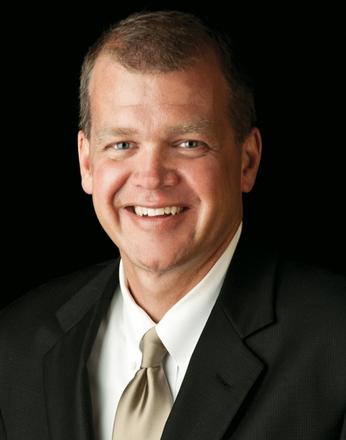
Jeff Disterhoft
But trudging through the snow to get to work remains an issue for a limited number of staff who work in the branches, noted Disterhoft.
“That said, we’ve also developed work-from-home routines during those times in which our lobbies were closed,” Disterhoft. “So, even these employees are better prepared to serve the membership remotely when needed…I’m not sure there have been many silver linings to COVID, but the ability to adjust on the fly in the face of inclement weather is perhaps one of them.”
Safety First
In Washington, D.C., Department of Commerce FCU CEO Evan Clark emphasized that during severe winter weather the safety of his staff is his top concern.
“My employees’ safety is what’s most important to me,” Clark said, who added the majority of his team works remotely. “We still have some employees that go to the post office for the mail and then process it at the Commerce building.”
With more snow expected Friday in D.C., Clark on Thursday said he already decided employees who process the mail will not be going into the office.
“We’ve had quite a few dry runs this winter here in D.C. But the last thing I want is my employees driving on icy, snowy roads,” said Clark.

Evan Clark
One Final Benefit
There’s been another benefit from the pandemic, according to the CrossState association’s Wishnow, and that is it has helped the country slow down and realize not every issue is critical.
“I think we have all become a little more patient because of COVID,” he said. “We have learned we can wait a day or two for a transaction, and we don't go to the store as frequently as we used, and that we can do things on off hours more often. We don’t see that lunch rush anymore.”