

LAS VEGAS–Paul Kesserwani said he first became aware of just what kind of financial trouble people are getting into one small purchase at a time when he was alerted to a transaction by one person who had used buy now, pay later (BNPL) financing for a $6 hamburger.
It made for four small payments of $1.50 each, but Kesserwani said the new reality of BNPL is that people are getting “trigger happy” at checkout and “making a mess of their finances.”
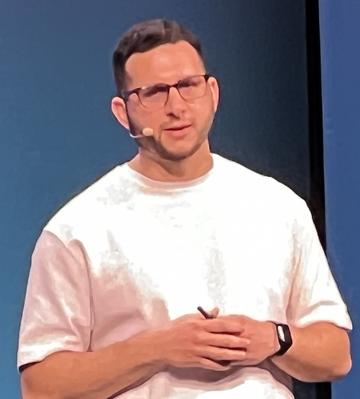
Paul Kesserwani speaking to Money 20/20 Conference.
Kesserwani is CEO of Cushion, an app that aggregates a person’s BNPL activity and loans, as well as other payments, into one place. The company is a fintech that has raised $21 million in Series A funding to date.
In remarks to the Money 20/20 conference titled “Buy Now, Pay Later: Well, It’s Later. What Now?” Kesserwani warned that consumers are in getting into big holes as a result of small purchases.
Personal Experience
In 2020, at the same time Cushion had approximately 100,000 paying customers and was working to become profitable, Kesserwani said he experienced the challenging times of a startup when it came to his own salary, and as a result experienced what many of his customers were going through, when he financed some furniture and an engagement ring, among other things.
“I couldn’t for the life of me stay on top of my payments,” he told the meeting. “And I found many of our customers were like me and were leaning on BNPL for things like DoorDash meals, Uber rides” and other small purchases.
A Wake-Up Call
“I came here to issue a wake-up call,” Kesserwani announced from the largest of the multiple stages at the Money 20/20 meeting. “BNPL has had explosive growth over the last few years, but what most don’t know is it has evolved and transformed into something unrecognizable today. It has started to have a deep ripple effect on consumers. It started as something simple: a short-term loan. It was pay-in-four. No fees. But it’s transformed into something much different.”
To make that point, he shared the slide, below.
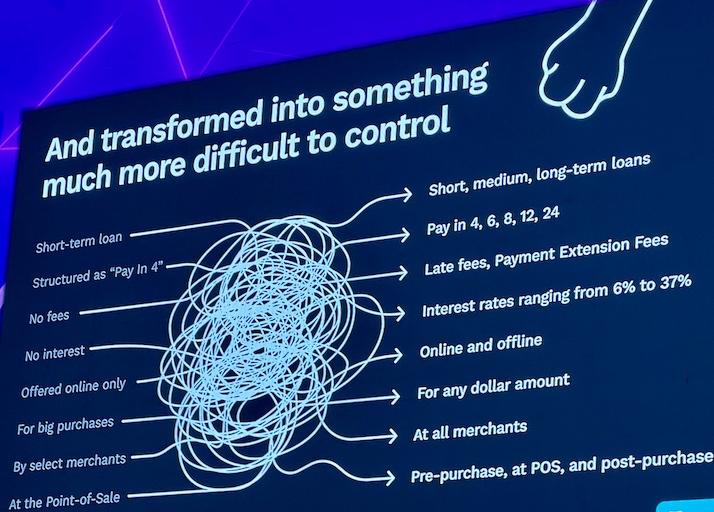
What was intended to be a way to finance the occasional purchase has turned into “financing every product and service you can imagine…The risky part is that it isn’t just stacking these BNPLs on top of each other, it’s on top of their rent, their food, their utilities, subscriptions. Bills have become unmanageable.”
Filling a Niche
That is the niche Cushion is seeking to fill, according to Kesserwani: to help people “manage all of these loans and factor then into their monthly budgets.”
After discovering several years ago there was no one aggregated data set around BNPL financing, Kesserwani said his company hired a group of Ph.D’s wo spent two years building just that.
Now, when customers of Cushion log into their dashboard, they see how they are doing by BNPL lender and their own progress. They can click on any individual loan to see the details, such as payoff, while a calendar offers an overview of each payment due that month, when it will be paid off company and their progress. Trends data is also available.
Two Takeaways, One Request
Kesserwani said he wanted to leave his audience with two key takeaways and one request.
“BNPL is here to stay,” he said. “It’s not a fad and it’s not going anywhere. The change is it’s gone from one thing you did for a big purchase to a payment method people expect online or in person and it’s now a staple people expect.
“The world of bills has changed forever. People are juggling 15-20 payments a month. Utilities, rent, BNPL loans, subscriptions.
“I am a BNPL user. I know how easy it is to get trigger happy at checkout and make a mess of your finances,” Kesserwani continued. “So, I am championing for the consumer who needs our help and collective support. We want everyone else to act now. We need regulation for BNPL for clearer loan terms and fee schedules and reporting. We need more education for the consumer. We need better tooling for this new world of payments they are trying to manage. If we don’t continue to make some moves, consumers are going to continue to dig themselves deeper into the hole they are in right now. Let’s make sure people understand they shouldn’t be financing their basic needs. They should be able to buy now without paying later with stress.”