

ALEXANDRIA, Va.–Saying his “whole heart is in NCUA, its vital work and its mission,” new NCUA Chairman Todd Harper used an introductory webinar to outline his regulatory philosophy and more, while other senior agency officials also touched on issues ranging from examination priorities to concentration risk to liquidity ratios.
The webinar also included a Q&A with credit unions, which is reported below.
Harper, who was elevated by President Biden to the chairmanship after serving on the NCUA board, said credit unions now sit “at the intersection of several crossroads,” noting on one of those roads are credit unions that are prospering, but on another are many CUs that are struggling with earnings.
Harper said when he first joined the NCUA board he established several priorities for the agency, including capital and liquidity, consumer financial education, and diversity, equity and economic inclusion. “In the many months ahead these priorities will guide our agency’s decisions.”
Harper encouraged everyone to work together to promote innovation with an emphasis on security and equity.
“As I begin my chairmanship, I want to share my regulatory philosophy, which can be summed up with the acronym FIRE: Fair and forward-looking; innovating, inclusive and independent; risk focused and ready to act expeditiously when necessary at credit unions, and engaged appropriately with all stakeholders to develop effective and efficient regulation. This FIRE philosophy has been and will continue to be the North star for me and the NCUA.”
Guidance…From Bruce Hornsby
Harper, who praised the state system and dual chartering, noted he came of age during the 1970s and 1980s and that music from the era, along with music from Motown, often “strikes a chord with me and I find inspiration in their lyrics.”
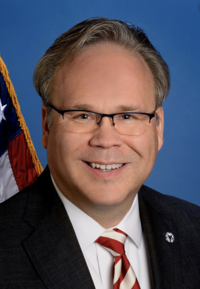
Todd Harper
He cited Bruce Hornby’s “That Just the Way It Is” to sum up the “core” of the credit union movement and its commitment to providing cooperative credit, including to those of modest means.
Harper said the agency should also consider future challenges, such as climate change, which he said disproportionately affect underserved communities.
Insights from NCUA Senior Staff,
Big Challenges Ahead
NCUA Chief Economist Andrew Leventis said there are “big challenges ahead” for the economy, as there are 10-million fewer Americans currently working than there were a year ago. In addition, another 17 million are on some type of unemployment benefits, with the those working in the leisure and hospitality industries hit particularly hard and unlikely to see a recovery until COVID-19 is brought under control.
Leventis said the agency recognizes many CUs are still working through loan forbearances and that it is likely loan losses will be experienced.
“Regardless of how strong the credit union’s underwriting has been it would be unrealistic to expect that the loss of 10-million jobs and the pandemic-related onset of new financial strains would not take some financial toll,” said Leventis.
Leventis said he expects deposit growth to remain “elevated” but is not yet sure of the forecast, and that net interest margins will continue to be an issue and “significant threat.”
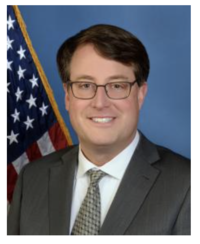
Andrew Leventis
“Over the longer horizon, there are two strategic challenges,” Leventis said. “First, over the last several quarters credit unions have been losing market share in auto lending markets. Second, and relatedly, recent survey data suggest that 2020 saw a further decline in credit union member satisfaction…Given that member satisfaction has traditionally been an area of competitive advantage, and that is another area that is still worth monitoring.”
Concentration Risk
NCUA’s director of the Office of Examination and Insurance, Myra Toeppe, said the agency’s focus in 2021 will remain on those areas of elevated risk to the industry and share insurance fund, many of which reflect challenges from the COVID-19 pandemic.
Toeppe said the Small Credit Union Examination program will remain in place for CUs of less than $50 million in assets. For all credit unions, she said primary areas of focus during exams will include a closer look at risk-management reviews, attention to allowances for loan losses, especially as the agency’s assessments of credit unions’ preparation for the shift away from CECL remain suspended.
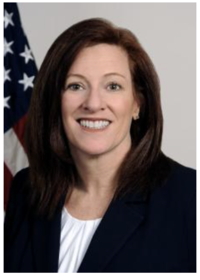
Myra Toeppe
She said examiners will also be looking at reviewing the risks related to the effects of the CARES Act, including loan forbearances.
Another supervisory priority, she added, will be a focus on compliance with financial protection reviews, which has been a priority of new NCUA Chairman Harper.
Toeppe noted cybersecurity exams will also be ongoing as the agency moves away from its Facilitated Automated Cybersecurity Evaluation Toolbox (FACET) to piloting the new Information Risk Examination for Credit Unions program, known as INTREX.
Toeppe further said supervisory priorities will include looking at the volatility of share deposits and ensuring CUs have robust liquidity plans in place, and a continuation of 2020 priorities around focusing on BSA/AML, the transition away from LIBOR, and the servicing of hemp-related businesses.
Other Issues
Other points touched upon by Toeppe:
- The rollout of MERIT and NCUA Connect will be delayed until the second half of 2021 due to COVID.
- NCUA will be incorporating its Exam Planning Questionnaire into its processes in order to refine the scope of exams, increase offsite monitoring capabilities, and incorporate efficiencies into the exam. CUs can expect to receive the questionnaire four to six weeks ahead of their scheduled exam.
- Toeppe said since 2000 concentration risk has been a contributing factor in more than 50% of CU failures, and the agency remains concerned with concentrations, singular or in the aggregate, especially those with the potential to be large enough to threaten the CU’s health or ability to maintain core operations. “NCUA recognizes the credit union’s business model or FOM may involve taking on relatively large concentration of loans,” said Toeppe. “The purpose of the procedures is not to preclude concentrations.”
- Toeppe said examinations of the depth and sophistication of credit union management will increase if initial review shows significant exposure to concentration risk, including whether the CU has developed appropriate policies and procedures. NCUA will want to know whether the board and senior management receive regular reports on the individual and aggregate risks, and whether a sound risk management program is in place, as well as whether the CU can demonstrate the rationale for change, among other questions.
Questions from Credit Unions
Harper and the NCUA senior staff also took questions from CUs on the webinar. Here’s a look at some of the questions asked and the answers provided:
Q: Credit unions are continuing to experience rapid deposit growth and a historic liquidity boom, putting downward pressure on ratios across the country. What steps is NCUA considering to provide some relief?
Harper: I appreciate the fact we live in very unusual times in terms of what’s happening in the economy, and I support prudent relief for credit unions consistent with safety and soundness.
Last year the NCUA board took a number of steps. The board acted to ease capital requirements with respect to PPP loans. We also worked quickly to adopt the community FOM rule to provide credit unions flexibility in how they go about assembling their fields of membership. And we moved very quickly to adapt to the CLF reforms Congress provided us.
With respect to the future, I see several things. One rule staff is working on relates to the capitalization of interest. This rule makes it easier for credit unions to work with members on restructuring loans. We’re also working on rules to make it easier to phase in CECL.
Q: What is the likelihood of an NCUSIF premium assessment in 2021?
Toeppe: Right now, we are looking at finalizing the (NCUSIF) equity ratio first. We will be presenting on that next week at the board meeting. As for a premium assessment, we need to get the calculations finalized and then move from there.
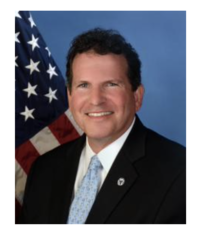
Matthew J. Biliouris
Q: Consumer financial protection is a very broad category. Over next year, what do you anticipate will be the area of focus?
Matthew J. Biliouris, director, Office of Consumer Protection: We haven’t yet identified what the scope will be for the next year. Like spokes on a wheel, we are looking at trends, the results from fair lending examinations that help suggest some things to look at, we talk to our experts in regions, and another touchpoint is working with our sister agencies to see if collectively we are identifying some issues we should all be looking at. We also look at changes to laws and regulations and how credit unions are adjusting.
Q: What can a credit union do to combat climate change?
Harper: In recent years we’ve seen an increase in hurricanes, flooding and fires around the country—all are being pushed by climate change. What NCUA can do is work with credit unions on how they can protect against those risks and consider those risks on their books.