

By Ray Birch
WASHINGTON— The Jan. 20 10% credit card interest rate cap deadline came and went, but the chain of events President Trump set in motion is far from over. If anything, the passing of the date has sharpened the central question facing the credit card industry, regulators, and lawmakers alike: Was the deadline meant to trigger action—or merely to apply pressure ahead of something still taking shape?
Trump’s message leading up to the date was unmistakable. In a Truth Social post and comments to reporters, he called for a one-year cap on credit card interest rates at 10% beginning Jan. 20, warning that companies failing to comply by Jan. 20 would be “in violation of the law.” Yet when the deadline arrived, there was no executive order, no enforcement guidance, and no announcement of penalties. What remained was a policy demand with no clear legal footing, leaving the industry to sort out what, if anything, had changed.
What is known is largely negative space. There is no federal law that caps credit card interest rates at 10%, and experts across the financial-services spectrum say there is no immediate authority for regulators to enforce such a limit absent congressional action. The White House has not disputed that reality. Instead, it has framed the cap as a firm expectation rather than a formal mandate.
White House Press Secretary Karoline Leavitt, in comments reported by ABC News, captured that posture.
“I don’t have a specific consequence to outline for you, but certainly this is an expectation — and frankly a demand — that the president has made,” she said.
Touchstone Statement

Ann Petros
That statement has become a touchstone for how the Administration is approaching the issue: assertive in tone, sparse on mechanics. Beyond Leavitt’s remarks, the White House has provided no detail on how noncompliance would be handled, whether through regulation, legislation, or informal pressure. As ABC reported, consumer advocates, bankers, and lawmakers alike remain unclear on what the White House ultimately intends to do—or whether the President plans to escalate the issue further.
The legal constraints are well understood inside Washington. Even an executive order would face limits. Ann Petros, vice president, policy engagement and credit union operations at America’s Credit Unions, in a previous CUToday.info report, underscored that executive orders implement existing law rather than create new authority.
“There are decades of case law and legal analysis on the scope of presidential and executive-branch authority,” Petros said. “While not focused specifically on credit card interest rates, that body of law offers little support for the idea that the President has the authority to impose a cap unilaterally. We’ll continue to evaluate the issue, but at this point, that authority does not appear to exist.”
That reality has left financial institutions preparing for pressure without a rulebook. Anthony Hernandez, president and CEO of the Defense Credit Union Council, said the Administration has yet to answer even the most basic implementation questions.
“We haven’t seen any guidance or insight from the regulators,” Hernandez said. “Things remain very quiet.”
Hernandez noted that unresolved issues—such as whether a cap would apply only to new balances or also to existing debt—are not technical footnotes but foundational questions that would determine whether compliance is even possible. As the days passed without clarification, he said, the industry was left waiting for a signal that explains what, if anything, has changed.
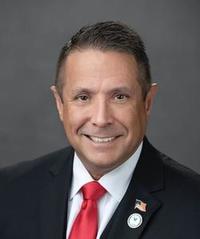
Anthony Hernandez
DCUC Ready To Move
“The good news is that DCUC is ready to act, just as we always have been,” Hernandez said, while characterizing the proposal as politically attractive but operationally thin. “It has a great populist ring to it, but the devil is more than in the details — and that’s what we’re waiting to see right now.”
For America’s Credit Unions, the Jan. 20 date became less of an endpoint than a catalyst for broader engagement. Scott Simpson, ACU president and CEO, said the past week has been marked by intense outreach across Washington.
“Everyone was watching closely to see what Jan. 20 would bring, since that date was specifically referenced by the president,” Simpson said. Over the past week, he said, the organization engaged with other trade associations, administration agencies, and policymakers to better understand what might come next while continuing to advise members amid ongoing uncertainty.

Scott Simpson
At the same time, Simpson said the focus has shifted toward legislative terrain that already exists. America’s Credit Unions has leaned heavily into Capitol Hill engagement around interchange issues and the Credit Card Competition Act, launching a grassroots campaign that has drawn strong participation from credit unions contacting lawmakers.
“That’s an existing legislative vehicle where we know the process, we know the players, and lawmakers’ positions have been clear for years,” Simpson said, even as he acknowledged that the broader political calculus may be changing.
Importantly, Simpson argued that credit unions are entering the debate from a fundamentally different position than large banks.
“Many credit unions already offer credit cards well below a 10% rate,” he said. “And our average pricing is far closer to the President’s target than what you see at for-profit institutions.”
Because of that, Simpson said, he feels better about where credit unions are positioned today than where banks may be. Still, he stressed the need for clarity.
More Needs To Be Known

Tim Kolk
“We need to understand exactly what the expectations are and get more guidance on the process from the White House,” he said, adding that the industry is anticipating further signals as the president engages in broader economic discussions.
Others watching the deadline see it less as a policy turning point than as a familiar political maneuver. Tim Kolk, a credit card portfolio expert and principal of TRK Advisors, was blunt.
“Trump confuses his will with the law,” Kolk said. “There are important historical lessons around this belief. But there is nothing happening on the 10% cap.”
That assessment captures the paradox of the moment. The Jan. 20 deadline was real, publicly stated, and closely watched. But what followed was silence—not enforcement. The Administration has made clear what it wants, but not how it intends to get there. In the absence of legislation or formal regulatory action, the proposal now sits in a gray zone defined by political pressure rather than legal mandate, analysts stated.

Greg Mesack
Greg Mesack, senior vice president for advocacy at America’s Credit Unions, said uncertainty continues to cloud how a 10% cap proposal would take shape.
“Right now, it’s all speculation—no one truly knows how this would be implemented,” he said. “Whether this comes out as an Executive Order, a policy statement, or something else entirely remains unclear at this point.”
The White House on Tuesday posted a list titled “365 Wins in 365 Days,” highlighting what it described as President Trump’s accomplishments during the first year of his second term. One entry — Win No. 88 — pointed to the administration’s push for a 10% credit card interest-rate cap, stating that Trump “directed credit card companies to cap interest rates at 10% to provide Americans needed relief.”
A Broader Threat
DCUC warns that the proposed 10% interest rate cap represents a broader threat to the cooperative model, not a standalone consumer protection measure.
“The push to impose a 10% interest rate cap is not an isolated policy proposal—it is part of a broader, effort to strip credit unions of the revenue needed to serve their members and sustain their mission,” stated DCUC Chief Advocacy Officer Jason Stverak. “Equally concerning is the growing suggestion that reducing the current 18% federal credit union loan rate cap is acceptable simply because some credit unions may already price below that threshold.”
Stverak said that argument “fundamentally misunderstands” both how credit unions operate and how Congress works.

Jason Stverak
“Accepting the premise that a lower cap is ‘reasonable’ because some institutions fall beneath it only emboldens elected officials to push the cap even lower over time. History shows that once Congress intervenes in pricing, the pressure never stops—it ratchets downward,” Stverak said. “Whether it is legislation to cap overdraft fees at $8, efforts to fundamentally alter the credit card interchange system through the Marshall-Durbin bill, or arbitrary interest rate caps disconnected from risk, cost, and market realities, the cumulative impact is the same.
“The passage of any one of these proposals would materially weaken credit unions,” continued Stverak. "Taken together, they threaten to put many credit unions out of business and severely limit access to affordable financial services in the communities that rely on them most.”
The problem in the equation is not credit unions, stressed Stverak.
“Credit unions are member-owned, not-for-profit cooperatives that exist to serve people—not shareholders,” he said. “They already offer lower rates, fewer fees, and safer alternatives than banks, fintechs, and predatory lenders. Stripping away the financial tools that allow credit unions to manage risk and serve higher-need members does not protect consumers—it reduces choice, pushes borrowers toward higher-cost and less-regulated options, and undermines financial resilience in local communities.”
Stverak concluded, saying, DCUC will “continue to aggressively advocate for policies that ensure all credit unions—large and small—have the resources and flexibility they need to serve their members, support military and veteran families, and remain strong, resilient pillars of their communities. We will oppose any effort that weakens that mission under the guise of consumer protection while producing the opposite result.”