

By Ray Birch
SAN DIEGO—When branch traffic fell off 40% in the early months of the pandemic, California Coast CU quickly realized it needed to develop new ways of selling if it wanted generate growth at least close to what it had been projecting pre-pandemic.
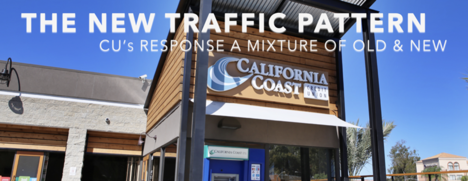
It’s a challenge CEO Todd Lane acknowledges the $3-billion credit union has yet to solve, but it has begun working hard to develop new selling methods and business approaches that address the greater emphasis on digital, especially with the decreased traffic walking into the CU’s offices.
“We're not completely there yet,” Lane told CUToday.info. “It's a challenge that we are still adapting to. Our growth has begun picking up as the pandemic persists, but still we're missing that strong new membership growth. We're doing what everybody else is doing—we're pushing consumers to electronic channels or to use our call center.”
Traffic Decline
Lane said branch traffic remains off by about 20%, which is about the same decline California Coast has seen in membership growth.
“Every year we expect to grow about 22,000 new members outside of the indirect channel,” he said, adding of the latter, “We really don’t count those members as core members.”
Lane said CCCU has assembled a team of specialists from each of its business areas to address the issues created by the pandemic.
“We have a tiger team basically looking at all of our front offices processes, all of our retail processes, all of our branch processes…” he explained.
One of the major considerations for California Coast now, said Lane, is going 100% paperless. The CEO said such a move will improve numerous processes and make it much easier to work with members remotely on new accounts. He also stressed the importance of paperless for new sign-ups.
One New Process
Among the specific changes to which the credit union has had to respond, according to Lane, have been marked changes in the new member enrollment process.
“In the beginning of the pandemic, if somebody came in and wanted to join the credit union we were handing them a paper document and then asking them to exit the branch, go home and fill it out, and return it to us, and very few of those were returned,” Lane explained. “Normally, we would sit down with that person, help them fill out the form, usually on an iPad, and answer their questions face to face.”
Now, operating under the conditions created by the pandemic, the goal with in-branch visits is to meet members’ needs as quickly and politely as possible, get them to complete their transaction and move on.

Todd Lane
The result: “That direct, face-to-face consultation and face-to-face selling is not happening,” said Lane.
One response from California Coast has been to explore new ways of working with its select employer groups.
“We have very deep and strong relationships with our preferred partners, or SEGs,” said Lane. “We have some very strong ties with large employers in San Diego County, like San Diego Gas & Electric.”
But much like everyone else, representatives of California Coast cannot currently travel to those companies with which it has close ties, set up a table in the cafeterias, and talk with workers.
“We can’t hold health fairs and other types of on-site events throughout the year,” explained Lane. “The pandemic is forcing us to change how we work with our preferred partner groups.”
An Old School Tactic
Lane said the credit union has taken a page out of its old SEG playbook during the pandemic.
“It’s sort of going back to how things used to be with credit unions and their SEGs,” said Lane. “We used to have very strong ties with HR departments, and we are getting back to that. We have had to go back and ask these experts to integrate the credit union back into their communication flow, like their electronic communications, to talk about the credit union, let employees know about our products and services and how they can join. And with this pandemic, we know employers’ communications with their workers has been elevated.”
But even with the improved communication by sponsor companies, California Coast is still feeling a big hit from being unable to cross-sell in person to members.
“Like I said, when members come into the branch, our goal is to nicely get them in and out as fast as we can,” said Lane, who noted the approach addresses maximum occupancy concerns as well as staff safety.
Leaning Into AI
Lane explained that just as many credit unions do, California Coast uses a PC-based tool branch staff access that immediately lets them know what products and services the member standing in front of them has, and recommends other services that could be a good fit.
“But we are not using that today, given the limited time we have with each member,” Lane said. “Cross sales are critically important. And we are not there yet with a solution to replace this face-to-face selling. But we are looking at ways we can possibly do more cross selling through electronic communications. And we are not talking about email blasts, but communications customized for each member. We will be leaning much more on artificial intelligence and data warehouses. With all that is happening, selling has taken a back seat during the pandemic, and we have to turn that around.”