

By Ray Birch
JACKSON, Miss.—African-American small businesses in impoverished regions of the South are dying in large numbers—in much bigger numbers than white-owned businesses. One significant effort involving a credit union is working to change that.
The challenge has been made worse by the pandemic, which is why Hope Credit Union is leading a $130-million lending effort to address the issue.
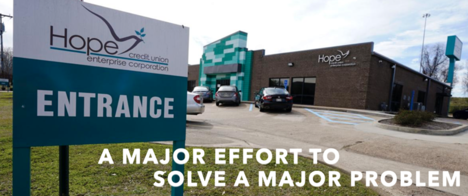
Hope CU’s Hope Enterprise Corporation is partnering with Goldman Sachs, seven U.S. cities, and nine historically Black colleges and universities to spearhead a major initiative—the Deep South Economic Mobility Collaborative (DSEMC).
Formed to stabilize and strengthen businesses and communities hit hard by the pandemic-driven economic crisis, DSEMC is providing funding for small businesses and entrepreneurs in the Deep South, particularly those from underserved and under-resourced communities.
Katrina Malone, EVP and chief program officer for Hope FCU and Hope Enterprise Corporation, spoke with CUToday.info about the effort that’s expected to reach 5,000 businesses and 30,000 employees, and shared one of the early success stories from the program.
“A New Orleans-based business applied for its first PPP loan from one of the largest banks in the country. The application was rejected,” explained Malone, who emphasized the DSEMC is focused, in part, on problems small, African-American businesses are facing in receiving Paycheck Protection Program funds during the health crisis, an issue CUToday.info has previously reported.
Malone said the small New Orleans business was encouraged by the bank to re-apply.
“However, they were told that it may take a while, given all of the applications the bank needed to process first,” said Malone.
The business then learned of HOPE CU and its effort with Goldman Sachs.
“HOPE made the loan within a few days,” said Malone. “And to quote the owner, ‘That loan is the only reason my business was able to keep the doors open, as well as the reason that my eight employees were able to keep their families fed and roofs over their heads.”
What’s Included
The DSEMC includes:
- Goldman Sachs: $130 million in lending capital, philanthropic support and business education classes
- Partner cities and historically Black colleges and universities in Alabama, Arkansas, Louisiana, Mississippi and Tennessee: technical assistance (business plan development, financial statement compilation, marketing assistance) and procurement opportunities
- HOPE CU, which is processing the small business loans
The effort also is supported by the Charles and Lynn Schusterman Family Philanthropies and the Ford Foundation.
Malone said the program targets more than small businesses.
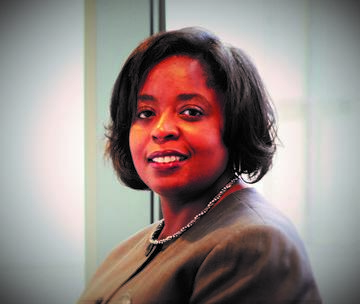
Katrina Malone
“The employees of these businesses are who we are also helping,” explained Malone, who said African-American small businesses are much more likely to hire Black employees than are white businesses.
“This will help us further improve conditions in Deep South communities to further Black economic mobility,” Malone said.
Why Project is Needed
The project is much needed, according to Malone, due the effects of the pandemic and its impact on the economy has had a much greater detrimental effect on Black-run businesses than those owned by white entrepreneurs.
“The impact of the pandemic and economic crisis has disproportionately harmed communities of color,” said Malone. “Research shows that between February and mid-April of 2020, 41% of Black businesses had permanently closed due to the impact of COVID-19, compared to 17% of white-owned businesses. Furthermore, the value of Black businesses in the Deep South is lower than in any other part of the country, underscoring the urgent need for solutions in a region with the highest percentage of Black residents.”
Malone said it is important for people to know that in the Deep South, 90% of the region’s majority Black counties are considered persistently poor.
“That has constrained the ability of Black entrepreneurs to start grow and sustain businesses,” she said.
The Emphasis
The program’s emphasis will be on Black- and female-owned businesses with fewer than 10 employees.
As important as the money will be in keeping small, minority-owned businesses going, is the training and education DSMEC provides, said Malone.
“These businesses will receive assistance with business plan development, financial statement compilation, marketing, contracting, procurement and more,” said Malone. “These are all things Black businesses need.”
Support for Black small business in the Deep South is an urgent need, said Malone.
“If we don't step in and do something now we'll continue to see Black businesses folding, widening the racial wealth gap,” she said.