

LOMBARD, Ill.—Expect economic growth to be stronger in 2017 than in any year since 2005—but also expect that good news to be tempered by some fundamental problems that will still plague the economy.
That is one prediction from Bill Handel, VP of research and product development at Raddon Financial Group. In a recent edition of the Raddon Report, Handel outlined his forecast for 2017. His predictions are below:
Prediction: Short-term optimism will be tempered by the long-term reality of our environment
Handel: It is important to recognize that many of the burdens that have hung over consumers and businesses for the last nine years have not been magically lifted. There remains work to be done.
For example, there remains too much debt in the U.S., both public (government) debt and personal debt. Consumers are cognizant that their levels of debt remain far too high, especially in the face of relatively slow income growth. And 2017 is likely to bring into renewed focus the issue of government debt – now $20 trillion – or $62,000 per individual in the United States. This tends to happen when a new party moves into power.
The regulatory state has grown too burdensome and is limiting growth. Innovators consider the regulatory gauntlet they must contend with and decide that “their new idea” really isn’t worth the effort after all. This is one reason we have seen the rate of business formation in the United States fall for the last thirty years. This is a trend that needs reversing.
In other words, the optimism that many in the country feel today is likely to ebb somewhat as the year progresses, and only real progress in both the economic and regulatory environments will sustain this optimism.
Prediction: Economic growth will improve in 2017
Handel: Regardless of the long-term issues that need to be addressed, we expect economic growth in 2017 to be stronger than it was in 2016. In fact, economic growth is likely to be stronger than in any year since 2005. Several factors are likely to propel this growth. First, the optimism previously cited will be a tailwind. Second, changes in the tax code, especially in the corporate tax rate but also possibly in personal tax rates, will be a stimulant. Finally, a reduction in the regulatory strangulation that has impacted many sectors of the economy will result in accelerated growth. All of these may not happen in 2017, but the expectation that these changes will occur will buoy growth.
Prediction: Housing markets will continue to show improvement
Handel: Home prices have shown steady improvement since 2012, while still not reaching their pre-recession peaks nationally. In 2016 home prices increased nationally at a 7% pace, according to CoreLogic. Expectations for 2017 are a 5% increase in home prices. Home sales, both new homes and existing homes, have exhibited similar patterns. The critical factor behind this positive trend is demography. The migration of the Millennial generation into home ownership has begun, and is likely to be an important factor in real estate markets for the next several years.
One important issue to keep in mind, however, is that not all real estate is equal. While we have Millennials moving into home ownership, we also have Baby Boomers downsizing. As this trend accelerates, expect downward price pressure to be exerted on larger homes. There are not enough Gen X-ers to buy the Baby Boomer luxury homes that are likely to enter the market over the next several years.
Prediction: Interest rates will move to “normal” levels
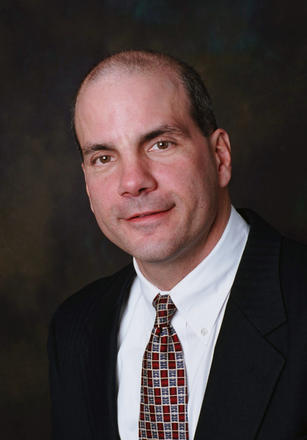
Bill Handel, Raddon
Handel: The question is, what constitutes normal? We anticipate two interest rate hikes by the Federal Reserve in 2017. Expect the Fed Funds rate to reach 1.25% by year end. While still low by historical standards, this will be as high as this rate has been since 2008.
One of the paradoxes that the Fed may have realized is that in an aging population, low interest rates do not necessarily result in demand stimulation. The reason is that older segments of the population in or nearing retirement see a reduction in the return on their savings, which causes them to have to save more and spend less.
Prediction: The financial regulatory environment will improve markedly
Handel: We anticipate that the CFPB will be defanged. The agency is likely to be restructured, moving from a single director to a three- or five-person board. For credit unions, the NCUA board is likely to be restructured with Mark McWatters installed as board chair. We may also see some movement around the edges on Dodd-Frank. However, we do not expect the repeal of either Dodd-Frank or the elimination of the CFPB. These entities are too deeply insinuated into the fabric of the industry to be easily removed. Moreover, few members of Congress are likely to comfortable eliminating an agency with the words “consumer protection” in its name.
Prediction: Deposit competition will increase significantly
Handel: Commensurate with the upward movement in rates, we expect to see the awakening of the slumbering depositor. Interest rates have been so low for so long that depositors have simply resigned themselves to low returns on their savings balances, and the competition for deposits in most markets has been relatively muted. We expect this to change in 2017. Out-of-market deposit forays utilizing the Internet will become more commonplace, and deposit competition will intensify dramatically in many markets, especially those where loan demand has been robust. Have you seen those Internet calculators that encourage the consumer to break their low rate CD contract and move the funds to a different financial institution? You will.
Prediction: Technological innovation will continue to impact the industry in interesting ways
Handel: This is a truism rather than a prediction. And while this discussion could rightly focus on things like mobile banking and mobile payments and the impact on industry revenue streams, it has even larger implications. For example, what impact will the TrueCar model have on the indirect lending model that has driven loan growth so dramatically for many banks and credit unions? Longer term, what will be the impact of driverless vehicles, such as driverless Uber taxis in Pittsburgh, have on car ownership? Innovation is not slowing, and its impact will continue to be strong in 2017.