

The eyes cannot see clearly if the imagination is out of focus. –Mark Twain
PARADISE ISLAND, Bahamas–Credit union executives are frequently challenged to ask themselves how they might start their own CU were they launching it today. One person here also posed that question, but then offered an answer.
Speaking to the World Credit Union Conference here, Dr. Pippa Malmgren, an author, economic trends forecaster who was an advisor to President George W. Bush and owner of a robotics company, recommended credit unions must get comfortable with some radical changes, while better leveraging an old advantage. It’s why she said she is a fan of Mark Twain’s observation, above.
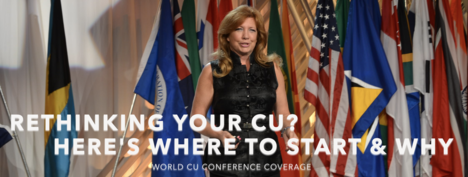
First, Malmgren’s views on what’s coming. Malmgren believes apps such as WeChat in China and WhatsApp/ Facebook in other parts of the world are going to be the future of money storage–although ultimately she expects the western companies, at least, will be disrupted. “(Facebook) Libra may never be allowed by regulators, but it’s effectively creating a new type of money,” she told the meeting. “There is an incredible breadth and range of organizations supporting Libra. I think this is something that you as people in finance cannot ignore. It’s about moving away from paper money and even electronic money to the idea of truly, truly digital money. And truly digital money necessarily involves having a blockchain discussion.
‘No One Understands Blockchain’
“By the way, no one understands blockchain. No one,” continued Malmgren, drawing some appreciative laughs from the crowd. “As I understand it, it’s a timestamp and it permits you to know exactly when a transaction occurred, and to mix it with a GPS location finder. It may sound so simple that who cares? But stop to think about this–this is going to radically transform how the taxation system works. It means the end of filling out tax returns. It will be known exactly what you purchased, what financial transactions you engaged in, and taxes can be deducted at the point of transaction in a blockchain world. It is truly revolutionary in the sense it transforms how the taxation system works.”
While private markets have driven the development of blockchain and cryptocurrencies, Malmgren said it will be governments that are ultimately going to “disrupt” the disruptors, and potentially disrupt finance in an extraordinary way.
Governments like cryptocurrencies for many reasons, said Malmgren, not the least of which is the debt burden being carried by the United States, Europe and China. Governments in those countries are carrying debts “bigger than can be paid off,” said Malmgren. That leaves them a few options: simply opt to never pay it back and default, or inflate their currencies.
“There is another option, and it’s shocking. You can destroy the entire system of money and accounting and start again,” said Malmgren. “This happened in Britain in the early 1830s, when tally sticks were replaced by paper money. What happened was the Industrial Revolution, and people forgot about the tally sticks. To go from paper money to a digital money, I think, is quite possible, and this time you won’t even notice the transition.”
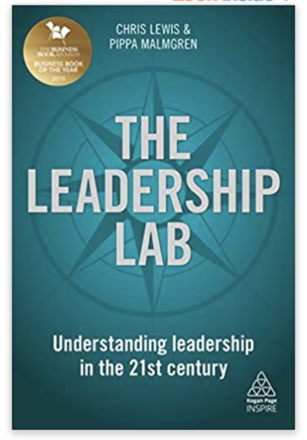
One of Pippa Malmgren's books.
Preparing to See the World
Data, noted Malmgren, is changing the world, with people giving off and collecting it all the time. “The data is a better indicator these days of who you are than your thumbprint,” said Malmgren. “I want you to start thinking about this data issue as purely privacy. It’s much more than that.”
Malmgren cited the social credit scoring system now evolving in China in which an individual is rated individually and ranked in society due to a number of factors, including the people to whom they are related and their social credit scores.
“But the business of scoring means we spend less time and energy doing things that don’t score well,” said Malmgren. “Frank Zappa said, ‘Deviation from the norm is necessary for progress. You need people to take risks.’ Maybe in this new scoring world we decrease the likelihood of this kind of creativity.”
A CU Advantage
After outlining numerous other radical changes being driven by data and broader technology developments, many in credit unions are concerned over their ability to compete and remain viable in the future. But Malmgren offered some reassurances that there is a timeless value in credit unions that is being enhanced by that pace of change.
“The thing that drives the public interest in credit unions is the sense of trust,” she said. “There is trust with banks as well, but I think particularly for you and the work you do there is an understanding that in this new world there are going to be lots of questions around trust and this is where you can play an incredibly strong role. Trust underpins who wins and losses. If you can focus on that trust, money will follow.”
Like other presenters to credit unions, Malmgren urged her audience to think like a fintech that’s preparing to launch a new market entry.
“You should think about, if I could start my credit union from scratch, how would I do it? You should think about that, because people are starting from scratch in the finance business, and the way they are doing it is starting with data. How are you dealing with this new environment? The most valuable skill set you have is imagination.”
Other Observations
Other observations made by Malmgren included:
The World of Data
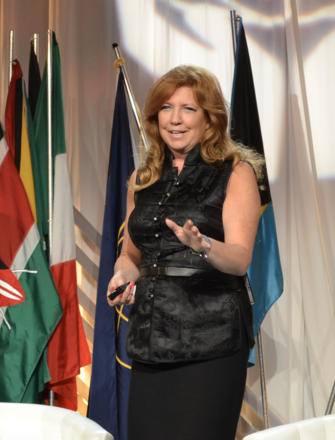
Pippa Malmgren speaking to World CU Conference.
- “In a bigger context, what we are doing with data today is as important as what Christopher Columbus and previous explorers did. We are mapping the world now with data, including your emotions.”
- “Your digital twin now knows more about you than you do. We have to accept it’s a place of radical transparency, transparency we haven’t experienced before as individuals, as a society.”
Changing Geopolitics
- Malmgren noted Russian President Vladimir Putin has said artificial intelligence is the new frontier of geopolitics. “It’s not physical, it has to do with data. The stress between the U.S. and China is not just about the most obvious things in the press, it’s also about who wins in the data race.”
- Malmgren, who has worked for several U.S. presidents and British prime ministers, said those leaders share one thing in common: they are worried what their legacy might be on their Wikipedia entry.
- China’s Belt and Road initiative is not just about physical projects, but also about capturing digital assets.
- “Saudi Arabia has said data is the new oil.”
Bank Attacks On CUs
- “I think banks are much more worried about Facebook and Libra than they are about credit unions.”
Embracing Change
- “If you don’t do tech, tech is going to do you. How many of you read the Economist? How many read Wired? You need to read Wired. It will help you get comfortable with the speed of change.”
The Future
- “Instead of thinking of the future in a negative way, we may be on the brink of something that’s bigger than the Industrial Revolution and the Scientific Revolution. Because we are rooted to the past we are somewhat blinded toward the future. It’s becomes easy to think ‘I don’t understand it, therefore it must be bad.’ I disagree. My horizon scanning of the world today shows me historic innovation. I am in robotics. It used to be to build sophisticated scientific equipment you had to have a lab, and big team of graduates from a major school, and you had to have a lot of money. That’s no longer true. You can now build highly sophisticated data gathering assets in a small space with a few people.”