

ALEXANDRIA, Va.–Rick Metsger says his priorities at NCUA will not change now that he has been elevated to chairman, and stressed that overarching everything will be a Continual Quality Improvement process.
The agency has a number of initiatives underway right now that are being closely watched by credit unions–including potential changes to 5300 forms and the exam cycle, as well as a review of the overhead transfer rate methodology–and Metsger told CUToday.info he will be announcing other initiatives in the next 30 days.
All of that will be deployed under the umbrella of what Metsger calls the Continual Quality Improvement (CGI) process, which he had previously announced during CUNA’s GAC earlier this year and which is about exactly what the name implies.
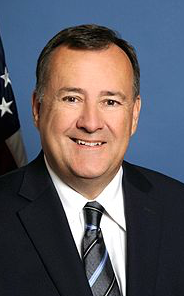
Rick Metsger, NCUA Chairman
“This is a complete review of all of the agency’s processes in order to be more effective and efficient,” said Metsger, as well as a structure for future initiatives. CGI includes specific guidelines timelines and deliverables, all of which will be transparent and available to all parties, according to Metsger, who addressed CGI during the recent board meeting, which was his first as chairman.
“I want to hear people’s ideas, but I also want to give everything time to work,” said Metsger. “Stakeholders, of course, all want this done yesterday. So it is a process with a sense of urgency.
“I think it is really important is to deliver on the promises you make,” he continued. “I think what I bring is honesty and clarity around what I want to do. It’s not good leadership to bounce around from idea to idea.”
As was discussed during its May 19 board meeting here, the agency is moving forward with plans to streamline 5300 forms and potentially the exam cycle for well-managed credit unions, both of which have been priorities for the trade associations.
Metsger said the goal is to identify what is material and most germane to the regulator as it pertains to safety and soundness. He further noted that those two issues are interwoven, with progress needing to be made on both in order for progress to occur with either. During the board meeting Metsger called NCUA’s AIRES and other data systems “antiquated.” The agency board had previously OK’d a significant upgrade for both.
Starting with this year’s second quarter call report, NCUA said it expects to provide some relief on the number of days needed to file a call report. This will be done with an eye toward moving the call report deadline to the end of the month for first quarter 2017 call reports, making the deadline similar to other banking agencies.
Metsger has reassigned Keith Morton, director of the agency’s Region IV office, to its Alexandria, Va., headquarters to lead a working group on the extended examination cycle. Metsger said he wants the report from the working group by September.
During the board meeting Metsger described the many initiatives underway at the agency as being “transformational.”
Here are some of the other issues discussed by Metsger in an interview with CUToday.info:
On Relations With Fellow Board Member Mark McWatters
“I think we work well with Mr. McWatters’ office,” said Metsger, who has not disagreed with McWatters at previous board meetings to the tension-filled level that former Chairman Debbie Matz did, but who has had a few open disagreements. “I believe you are most effective when you are tracking the same information and have an opportunity to share ideas and thoughts early in the process. My policy has always been to be very transparent. All information is to be shared with both of us at the same time. The sooner they have information the sooner and better the quality of feedback. I think this is the way we function best. We want to talk about issues early, rather than when we’re getting ready to put pen to paper.”
Prior to the most recent board meeting, the first with just Metsger, the Democratic appointee, and McWatters, the Republican appointee, as participants, Metsger introduced what he called “Board Briefings,” which allow system stakeholders an opportunity to hear NCUA board members discussing issues prior to taking action under a new procedural direction.
On His Experience As a Credit Union Board Member
Metsger served for eight years in his home state of Oregon as a board member of what was once Portland Teachers Credit Union and is today OnPoint Community Credit Union.
“That gave me a lot of insight into the process of how a credit union interacts with a regulator,” said Metsger, noting as a state charter it interacted with both the state regulator and NCUA. “It also really helped me to understand our role as directors. I’ve taken that here where our role is to supervise and to provide clarity” and not to get involved in day-to-day activities, said Metsger, adding he further learned the importance of ensuring there is no ambiguity in direction.
On The Overhead Transfer Rate
The most controversial issue that is likely to come up for board consideration is the Overhead Transfer Rate, the amount transferred from the insurance fund to cover expenses NCUA says are represented by state-chartered CUs. It has been a hot button issue with state charters, as well as NASCUS; the comment period has just closed. Metsger said he has read all of the comment letters that were filed, many of them similar.
“From the agency standpoint it’s a no-win situation. Our responsibility is to make sure (the transfer) is properly allocated. I will be talking about this more over the next month.”
On Staying In Touch With Credit Unions
“I have made it a point since joining the board to talk to stakeholders across the country, spending about a third of my month on the road, and I will continue to do that,” Metsger said. “That’s not going to change, it’s just that the travel will need to be condensed. I’m not going to slow down one bit with interacting. A lot of the initiatives have come out of these discussions.”
Small Vs. Large Credit Unions
Metsger acknowledged the challenges in front of small CUs, and pointed to the programs, such as the agency’s Office of Small Credit Union Initiatives, and exemptions from certain of its rules that are applied to small CUs.
“It’s always going to be a struggle in every marketplace,” Metsger said. “What is important to us is we provide for safety and soundness and be less burdensome.”
On What’s Different As Chairman Vs. Being Vice Chairman
One adjustment Metsger said he has had to learn to make since becoming chairman: time management. “I don’t feel a particular change in terms of what I do, but there are a lot of competing demands for time and things that need my attention,” Metsger told CUToday.info. “So managing time is the biggest difference that I have seen. I didn’t fully appreciate all the reports there are to deal with.”
Compounding the time demands beyond just those of the NCUA chair are other boards on which he serves, including NeighborWorks and the Financial Stability Oversight Council.