

By Ray Birch
LOMBARD, Ill.—With delinquencies in mortgage loans and home equity products becoming a concern among some credit union leaders, Bill Handel contends the problems will largely be isolated to lower-credit-tier borrowers, and suggested CEOs pay attention to a number of details.
“I think you will find there will be some (growth in delinquencies), but I don't think it will be anything close to what we experienced around 2006 to 2008,” said the SVP of research at Raddon, a Fiserv company. “We won't experience that same type of pain.”

Handel contended the problems will be very much “bifurcated.”
“It's going to be in the lower end of the marketplace, which is again feeling more and more of that type of economic pain right now, that the issues may arise,” Handel said. “There will be pain in any type of recessionary environment. Again, I you know recession is a technical definition. It's just a board of economists who decide after the fact—we started the recession here and we ended here.”
While Handel said a crystal ball is what’s really needed to predict whether or not the country will be in a “technical recession” in 2024, he repeated that consumers will feel more pain this year economically.
Advice Shared
Handel shared some advice for credit unions when it comes to being smart about first mortgage and HELOC lending.
“Being prudent in terms of what you do is always important,” he said. “As far as the focus on mortgages and HELOCs this year, it’s not time to be exuberant. I think steady is the most critical word for organizations. Set good lending policies, good standards. I don't think you have to deviate much from those at all right now.”
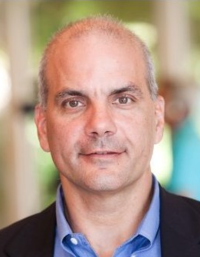
Bill Handel
Watch That Aggressiveness
Handel further advised that credit unions not be overly aggressive in terms of what they write.
“Which I know most organizations have been,” he said. “If you are doing that, I think you're going to be fine. You may take more losses just because that's just the nature of what happens in a slowing economy. You'll face little pain, but I don't think it's going to be widespread.
“Now having said that, I will acknowledge that certain markets were impacted by things like Vrbo,” Handel continued. “For example, down in Austin (Texas), in a couple of markets in California, or a couple markets in Florida, what's happened there is that a lot of people—when everybody went remote— they went down and bought properties.”
‘They’re Going to Take a Bath’
Handel reminded that the move to remote work has allowed people to not only work from home but now work in other parts of the country, far from their a former residence and office.
“Many people said this is where I want to live and I can do my job now by working out of my home,” Handel said. “But, now, as you know, many corporations are forcing people back into the office and people are trying to sell these new properties they bought. In some of these markets that were highly desirable from a remote perspective, they're trying to sell these properties and they're going to take a bath. The Vrbo mortgage has taken a real hit, and so a lot of these properties are distressed.
A Repeat is Unlikely
“So, those types of things are out there,” concluded Handel. “But I think, in general, the residential real estate markets are going to be reasonably solid simply because demography favors it. You still have the back end of Millennials who are still buying, and you have Gen Z coming up, which is a very big generation, as well. So, I don't think we're going to see big mortgage delinquency issues. Unless something catastrophic happens you're not going to see a repeat of what we saw in 2006 in the residential markets.”