

PORTLAND, Ore.–What may be the strongest corporate brand statement in the world–“Just Do It”—doesn’t mean the same thing it did when it was introduced. And in that evolution from a “better shoe to a better you” there’s a lesson for credit union leaders, according to one person
Stefan Olander, former vice president of Global Digital Innovation with Nike and co-author of the book, “Velocity: The Seven New Laws for a World Gone Digital,” shared with PSCU’s Virtual Member Forum his views on how “human-centric brands win a tech-dominated world.”
“This is something I am incredibly passionate about; this balance between technology and humanity to create something truly unique,” said Olander.
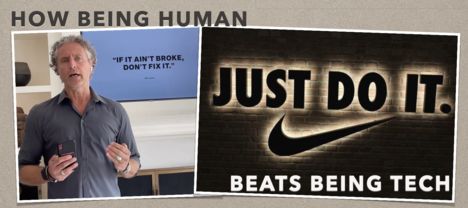
But it’s a balance that continues to need to be recalibrated, according to Olander.
“Our expectations have changed so dramatically because of all the technology around us,” he said “It’s called transference, the notion that when some technological advancement has happened in a certain industry you expect the same thing to happen somewhere else. Everyone is expecting more than they ever expected before. There is a good reason for it. It’s removing friction from our lives and we’ve come to expect it.”
As an example, Olander shared his recent experience in buying a car for his daughter. He used Shift.com to search for a vehicle according to his criteria, and within three hours someone was pulling up to his house with the vehicle. He did the paperwork via an iPad and bought the car. The person who delivered it left via Uber.
“After that experience I will never go back to the old car-buying experience,” he related.
The Downside
But all of this change, the technology and the demands have a downside, and that is stress, said Olander. Organizational leaders are constantly having to ask themselves questions, such as should they be using AI, AR and/or blockchain, he said.
“Then, if that’s not enough, you layer on what’s going on with COVID and many organizations ask, ‘How do I deal with this?’ That’s where you step back and figure out either this stress will crush me or I’m going to find a way to surf this wave. The way to do that is in figuring out how to leverage it in the smartest way and by removing the things that are irrelevant. You can try to do it all, but that won’t work.”
What’s A CU Leader to Do?
So, how do credit unions turn all that’s taking place in the world into an opportunity?
“For me, a lot of it is how we approach it, how we think about it,” he said. “’If it ain’t broke, don’t fix it.’ That’s the notion many established organizations lean back on. Or they say, ‘I don’t think this is really going to impact us,’ which is one of the scariest things you can hear.”
As an example, Olander recalled participating in a product launch by Nokia in 2007.
“They were adamant it wasn’t a phone but a personal handheld computer. They said, ‘We sell 100 million phones per year and no one will disrupt us.’ Four years later they were gone,” he recalled. “I went to an iPhone launch and it was very different. They took a much more human approach. They didn’t lean back and say ‘There is nothing we need to do that is different.’”
Fixing the Roof
Olander said that among his favorite quotes is this from John F. Kennedy: “Fix your roof when the sun is shining.”
“Take care of things when you don’t have to,” he advised. “It’s an attitude, an organizational attitude. How do we think ahead and never assume, never get complacent? Complacency will kill you.”
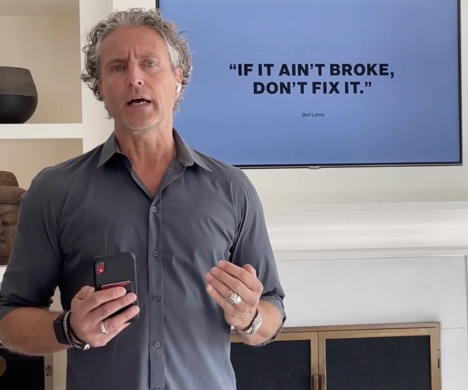
Stefan Olander speaking to PSCU event.
When it comes to viewing the world through the technology lens vs. the human-centric lens, Olander said the view often depends on the organization.
“For organizations brought up as digital natives this is a no-brainer,” he said. “But in organizations in which technology wasn’t inherent in what we are doing and was added on later, this can feel harder to apply.
This is where we need to step back, discuss what needs we’re serving, what friction are we removing, and then add the technology later. Then it’s layered on with creativity and imagination to find a way to make your offering more valuable, and it’s more valuable because it’s easier to use and it simplifies someone life or business.”
Better or Worse?
For a the right question credit unions should be asking themselves, Olander cited an experience shared by most: a visit to the optometrist, who, when testing various lens prescriptions, always asks, “Is it better or worse?”
“It’s interesting how such a simple question can have such a profound impact if we ask it through the lens of the people we serve,” he said. “Not only does it make things better for ourselves, but for them.”
The Footpod
While at Nike Olander said he ran a group called Digital Sport as part of a partnership with Apple. The companies were involved in a new project to remove friction for runners, which led to a little “footpod” that went into a shoe that linked to an iPod (in the days prior to the iPhone) to provide various data updates to the runner. The new offering was called NikePlus.
“It wasn’t about the technology, it was about the user experience,” said Olander.
That user experience has also played a role in another evolution, he said.
“‘Just Do It’ is arguably the strongest brand statement in the world,” said Olander. “But what was interesting was when our consumers started talking about ‘Just Do It’ in a different way because Nike Plus was a service. Now it became, ‘How are you going to help me to ‘Just Do It?’ We leveraged digital tools to create a different type of relationship with our consumers.
“One of the biggest changes was to move from being a product company to a product and service company, from a better shoe, to a better you,” he continued. “You need tools to do that. One way to do that is to have tracking for the user.”
Five Keys
Olander offered five key questions credit unions should be asking themselves about every new product or service. Those questions include:
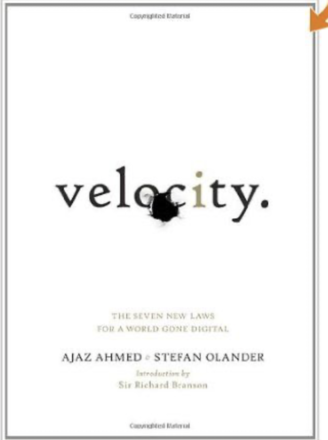
Stefan Olander's book.
- Does it make people’s lives better. “If not, why bother?”
- Can it be explained in two sentences? “Keep it simple,” he urged.
- Would you use it yourself?
- Is it indispensable? “If it’s not, it may not be good enough,” Olander said.
- Does it make people feel? Is there an emotional connection?
Behaviors & Attitudes
Finally, Olander encouraged credit union leaders to pursue three other behaviors in order to succeed
- Be a Firestarter. “This to me is not about organizational hierarchy. It’s just people who have this energy and a burning desire to create things, and it’s key to listen to them.”
- Be Ceaselessly Curious. This includes learning outside of one’s field, such as marketing or finance.
- Imagine Better. There are two parts: having better imagination and imagining better things, he said.
“The greatest force in the universe isn’t technology, it’s imagination,” said Olander, quoting from the co-author to his book, Ajaz Ahmed.