WASHINGTON–Thousands of credit union reps will head to Capitol Hill this week for an annual celebration of democracy—and frustration. Gridlock in Washington has made it nearly impossible to get any legislation through Congress, and there is no better example than CUs, which combine a grassroots army with large political action committee funds. What can be done?
With CUs meeting for CUNA’s GAC this week, including the Hike the Hill effort, CUToday.info’s The Corner features books that look at the issue of partisanship in Congress, what has occurred and what can be done.
- Common Ground: How to Stop the Partisan War That Is Destroying America, by Cal Thomas and Bob Beckel.
This book, written by two USA Today columnists, conservative Cal Thomas and liberal Bob Beckel, offers suggestions to politicians of both stripes how to get beyond partisanship, restore civility, and move our country forward. “Common Ground unmasks the hypocrisy of many of the issues, organizations, and individuals who created and deepened the partisan divide at the center of American politics, and makes a strategic case for why this bickering must stop,” the authors state.

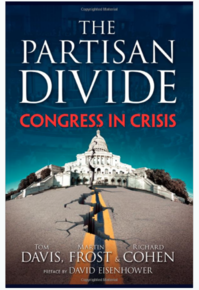
- Partisan Divide: Congress in Crisis.
This book, by former Democratic Rep. Martin Frost, former GOP Rep Tom Davis, along with Richard Cohen, examines how constant conflict in Washington keeps too many good things from happening. Each served as the respective chairs of their party's campaign committee, and have “joined forces — along with columnist Richard Cohen — in an effort to save Congress from itself.”
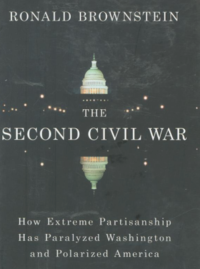
- The Second Civil War, by Ronald Brownstein.
In this book, the author diagnoses the electoral, demographic, and institutional forces that have wreaked such change over the American political landscape, pulling politics into the margins and leaving precious little common ground for agreement.
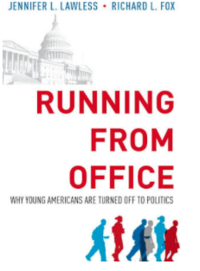
- Running From Office: Why Young Americans Are Turned Off to Politics, by Jennifer Lawless and Richard Fox.
“For today’s teenagers and young adults, years of ineffective and inefficient political leadership have completely eroded any sense that politicians or government have the ability to do good or effect positive change,” the authors say. “Worse, the mean-spirited, dysfunctional political system that has come to characterize American politics has turned young people off to the idea of running for office. With more than 500,000 elected positions in the United States, what will happen when this generation is expected to take the reins of political power?” Using answered drawn from an original, national survey of more than 4,000 high school and college students, as well as more than 100 in-depth interviews, the authors offer their insights.