

ARLINGTON, Texas--Jim Minge is CEO and President of Texas Trust Credit Union in Arlington, Texas. Below, Mr. Minge shares his thoughts on leadership, management and lessons learned as part of CUToday.info’s “The Corner.”
CUToday.info: What intangible of leadership is most difficult to convey or prepare for?
Minge: For me it’s been the burden of how my decisions, and those of the executive management team, might impact our 270 employees and their families. The decisions we make in regards to how we operate Texas Trust affects their lives more so than it does our members. As leaders we have to be good stewards for their benefit. This issue alone is more of a weight than I ever anticipated. I take the livelihood of every employee and their family seriously. When I go to bed I say a prayer for all of them and work to make wise decisions that will positively benefit everyone that Texas Trust touches.
CUToday.info: Are you a fan of a management book or books? If not, why not. If so, which have resonated with you and why?
Minge: I enjoy reading and typically have a fiction book and management book going at the same time. Reading challenges how you think. There isn’t any one particular management book or author that I have found to be the “end-all” authority.
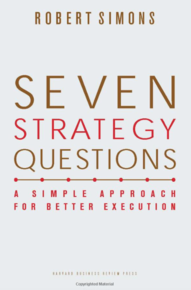
I read management books as a way to glean new ideas. There is almost always one kernel of wisdom in every book I’ve read that helps me think differently or gives me a new perspective.
The most recent management book I’ve read is Seven Strategy Questions by Robert Simons. He presents an interesting approach as to how you go through strategic planning and the questions you should ask – such as whether you are focusing on members enough.
CUToday.info: Innovation: four syllables getting all the attention. Deservedly so? If so, can you really drive innovation inside a credit union? Or is it coming at the cost of implementation and delivery?
Minge: I see innovation from two angles. The first is the technology side, which right now is focused on remote delivery and convenience. For credit unions, it’s hard to be innovative in this area because there are so many huge companies and banks spending lots of money on technology. Where credit unions can excel at innovation is around products and the ways we offer our services. Credit unions should be nimble in how they meet members’ needs and expectations. We should be focused on the members that want to do business with us and make it easy for them to do that. Too often we build systems to protect us from the very small percentage of members that might burn us, making it difficult for the vast majority of members to do business with us. If we make it easy for those good members to do business with us, that can drive innovation in a different way.
We’re working through some of these things now. For example, if a member wants to get an indirect loan from us today, or set up an eStatement or ACH payment, we don’t really make it easy. We’re looking at how we can do things differently to make it easier for those good members to do business with us, and save everyone time and money along the way. We need to be innovative by delivering a quick and hassle-free way for members to do this, and hopefully along the way earn more of their business and make the process better for us as well.
CUToday.info: If you could go back and talk to You On The First Day On The Job, what advice do you share?
Minge: I’d remind myself to never assume anything. To always be ready to ask one more question or probe deeper and never be satisfied or think that we know where we're going. I’d also have to remember that what worked at my last employer may not work here. When it comes to changing a culture, it takes a long time. It’s not something you can do in a year or two. I joined Texas Trust in 2011 and we are still in the process of changing. Although we have made significant changes, it is a continual process. It just doesn’t end, so I can’t sit back and say I’ve figured it all out and I’m done.
For me, being in a leadership role means getting out of my office and talking to employees. Our employees are the ones who are talking to members and have their finger on the pulse of what’s really going on. I have to be willing to listen to what they say and consider their opinions. I also have to use what they say as a gauge to how well I’m communicating and whether it is resonating. I’ve learned that one email, one video, or one town hall meeting is never enough. I have to be relentless about communicating with employees. I want every employee to know that they are helping us build something great. Everyone is an owner of the business and has a seat at the table.
CUToday.inifo: My Keeps-Me-Up-At-Night concern is? Why? And My-Lets-Me-Sleep-At-Night optimism is?
Minge: The well-being of our employees and members is always on my mind. We have to make decisions every day that will impact someone’s livelihood. We live in interesting times. Everyone is in our business – regulators are continuously looking at significant pieces of our business. They could make a rule that could vastly change how we make money. Our members aren’t just random people. We try to do what is in their best interest, but sometimes we get swept under the rug with everyone when it comes to regulators.
My glass is always half full. I’m going to give it my best regardless of what comes up. I have a good team of people and work in a great industry. There is nothing better than working at a credit union, so I don’t let these things worry me. Most nights I don’t have trouble sleeping.