

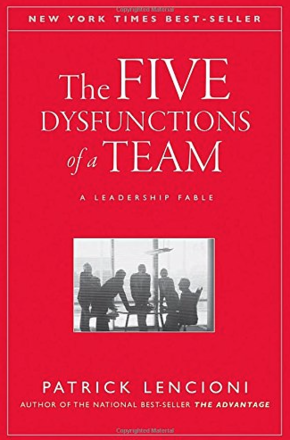
In “The Five Dysfunctions of a Team,” author Patrick Lencioni examines all the issues that interfere with teamwork. Below is an excerpt from the book, featured here as part of CUToday.info’s The Corner series, which focuses on leadership and management.
Not finance. Not strategy. Not technology. It is teamwork that remains the ultimate competitive advantage, both because it is powerful and so rare.
A friend of mine, the founder of a company that grew to a billion dollars in annual revenue, best expressed the power of teamwork when he once told me, "If you could get all the people in an organization rowing in the same direction, you could dominate any industry, in any market, against any competition, at any time."
Whenever I repeat that saying to a group of leaders, they immediately nod their heads, but in a desperate sort of way. They seem to grasp the truth of it while simultaneously surrendering to the impossibility of actually making it happen.
And that is where the rarity of teamwork comes into play. For all the attention that it has received over the years from scholars, coaches, teachers, and the media, teamwork is as elusive as it has ever been within most organizations. The fact remains that teams, because they are made up of imperfect human beings, are inherently dysfunctional.
But that is not to say that teamwork is doomed. Far from it. In fact, building a strong team is both possible, and remarkably simple. But it is painfully difficult.
That's right. Like so many other aspects of life, teamwork comes down to mastering a set of behaviors that are at once theoretically uncomplicated, but extremely difficult to put into practice day after day. Success comes for those organizations that overcome the all-too-human behavioral tendencies that corrupt teams and breed dysfunctional politics within them.

Patrick Lencioni
As it turns out, these principles apply to more than just teamwork. In fact, I stumbled upon them somewhat by accident in my pursuit of a theory about leadership.
A few years ago I wrote my first book, The Five Temptations of a CEO, about the behavioral pitfalls that plague leaders. In the course of working with my clients, I began to notice that some of them were "misusing" my theories in an effort to assess and improve the performance of their leadership teams — and with success!
And so it became apparent to me that the five temptations applied not only to individual leaders, but with a few modifications, to groups as well. And not just within corporations. Ministers, coaches, teachers and others found that these principles applied in their worlds as much as they did in the executive suite of a multinational company.
The five dysfunctions of a team:
- Absence of trust—unwilling to be vulnerable within the group
- Fear of conflict—seeking artificial harmony over constructive passionate debate
- Lack of commitment—feigning buy-in for group decisions creates ambiguity throughout the organization
- Avoidance of accountability—ducking the responsibility to call peers on counterproductive behavior which sets low standards
Inattention to results—focusing on personal success, status and ego before team success.