

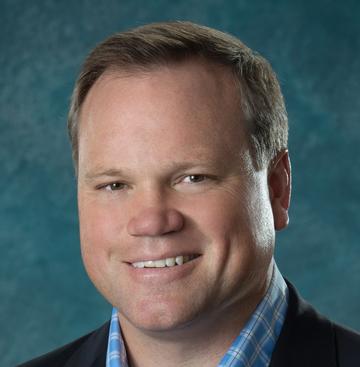
LOMBARD, Ill.–David Irwin, the new president of Raddon, has led organizations across a spectrum of industries and roles, and in several countries. Drawing upon those diverse experiences, below Irwin shares with CUToday.info readers his insights on how CU leaders can better absorb the torrent of information around them, what they should really make of the fintech “threat," and what he sees looking forward. His complete bio is also below.
CUToday.info: Given the breadth—and pace—of information available to credit union decision-makers, can you offer some direction on how they might try to at least get at least on arm around all of it?
Irwin: Well, information comes in many forms, and I would recommend starting with the basics of listening to what members, employees, and the market are saying. Of course, we live in an age of computing. So, listening now includes gathering a lot of digital data. Get all you can, but remember that separating the signal from the noise is hard. People who are educated to do this are in high demand. If you can hire them, great. If you cannot, then collaborate with other credit unions and firms that specialize in these skills.
CUToday.info: You’ve worked across a number of industries and countries—what do you believe you have most taken away from those experiences that guide you today?
Irwin: There are many. But the one I’ll highlight for industries is that regardless of what make, you are managing tradeoffs among owners, customers, and employees. I put owners first, because management exists as their agent. However, you cannot create sustainable value for owners without loyal customers, and those come from engaged employees. For credit unions, as for other cooperatives, the first two constituencies are the same people. That gives rise to many interesting implications that are probably too numerous for today’s discussion.
Regarding countries, I am continually guided by how great it is to live and do business in America. We have the largest domestic market in the world, and our culture embraces entrepreneurialism like no other. Whether a country is highly developed or not, I’m most interested in whether the trend is up. An entrepreneurial culture is the key to rising, and I always want for my business and my country to have that.
CUToday.info: You have been involved in tech start-ups. With many CUs concerned over fintech “disruption” of their business models, how legitimate are those fears, how should CUs be responding, and should they be looking at partnerships?
Irwin: I start with the premise that the credit union is its members. Borrowers and lenders come together for mutual gain, and they put in place the buildings, employees, and systems to make it all work. Could those things change a lot? They already are. For example, some of the fastest-growing credit unions we work with have no branches, but great member technology. They appeal to a certain market segment but they’re not for everyone. Their efficiency ratios are extremely good.
Could a startup go to IPO by creating a better version of the credit union? I doubt it. Where would the market capitalization come from? It could only come from the profits earned from the current and future customers…and since they are also the owners (members), those profits belong to them, not the would-be buyers of the stock. Might we see more unions of borrowers and lenders that are analogous to say, what Wikipedia is for readers and writers? In a way, that is what the blockchain story is about.
I can’t predict where it will all go, but the fundamental concept of a credit union is very much in tune with these sorts of organic, bottoms-up phenomena.
For credit union leadership teams, you can’t go wrong by doing what’s in the best interest of the members. Sometimes that will involve working with technology companies, perhaps including startups, but start with the members’ interests and work back from there.
CUToday.info: It’s accepted that technology will be a driver and the playing field in financial services is moving forward. But technology, or IT, often remains a separate “department” inside many credit unions. How can a CU (or an IT exec) ensure that technology is better integrated into a CU’s management and strategic planning?
Irwin: It differs a lot from one credit union to the next, and for many it is quite integrated into strategic planning. Having at least one board member who is equipped to ask the right questions can help. Also, many credit unions bring in outside facilitation for their annual planning. Raddon, for example, does this. Part of that process should include preparatory interviewing of leaders from all the functional areas, including IT. This can help get the issues on the table.
Q: It may be belated, but Analytics is getting increasing attention within credit unions, but for many smaller CUs even knowing where to start remains a challenge. What can they do?
Irwin: Pardon the plug, but one thing they can do is call us. Our programs are largely about doing analytics on a scale that is hard for individual institutions to achieve on their own, and we bring peer groups together to discuss their learnings. A great aspect of the industry its collaborative nature. We work with many smaller CU’s that understand the terrain.
CUToday.info: Looking forward, the challenge credit unions are most under-estimating and the threat they are most over-estimating are?
Irwin: It depends on the time horizon, but in the near to mid-term, the most underestimated threat could be dependence on indirect lending. It may be masking a fundamental struggle with acquiring new members that buy into the full value of belonging. Most overestimated? Merging into a larger credit union. If it’s in the best interest of the members, then management has done its job.
About David Irwin
David Irwin joined Raddon in 2017, following a succession of experiences in business strategy and leadership. After earning a bachelor’s degree in Economics at Dartmouth College and an MBA at the Wharton School, Irwin joined the Boston Consulting Group (BCG), helping clients in financial services and other industries to build strategies based on data and analysis. He became involved in financial technology through co-founding Span2, a venture-funded insurance processing business (now part of FIS). In 2002, Irwin joined Fiserv in strategic planning and acquisitions. Working on the Company’s first small acquisition in India, he went on to co-lead Fiserv’s operations there, and later in Costa Rica (now 6,000 employees collectively). Just prior to Raddon, he started and led a Fiserv business unit that serves large financial institutions in data management and systems integration.
Irwin has served in leadership roles with several organizations that promote learning and innovation. He is a former Term Member (Co-Chair of Giving) of the New York Council on Foreign Relations and a former member of the Investment Committee for Green D Ventures, focused on Dartmouth-connected startups. He currently serves as Chairman of the non-profit Elm Grove School for Lifelong Learning (senior enrichment), an advisor to two VC-funded fintech ventures (portfolio analytics, school payments), and a business plan coach to students at the University of Wisconsin, Milwaukee. In everything, David enjoys working with smart people to solve problems by framing questions well and answering them with data, analysis, and creativity.