

BOSTON–Jack Welch, tabbed by Fortune Magazine as the “Manager of the Century” for his leadership while at General Electric, recently died. Welch was frequently cited by authors, analysts and speakers at credit union events, for the way in which he grew GE from a company with a $14 billion market cap when he took over as CEO to a behemoth with a $410 billion market cap when he retired.
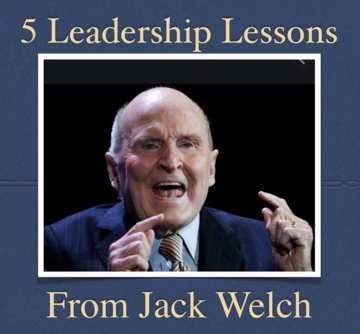
Welch offered five “unforgettable leadership lessons,” according to Thomas Koulopoulos, writing on Inc.com.
“What isn't as widely known is that Welch credited much of his success at GE to some utterly basic management principles which he learned from someone I did work with closely for over a decade, Peter Drucker, the 20th century's most widely cited and respected management guru,” wrote Koulopoulos. “In fact Welch's most famous tag line of ‘fix it, close it or sell it,’ is one he attributed directly to Drucker:
The five lessons Welch offered in leadership, according to Koulopoulos, are:
Ask the Important Questions
Much of Welch's management philosophy was built on two fundamental questions he learned from Drucker, said Koulopoulos.
“First, if GE wasn't already in a particular business, would you enter it today? Second, if the answer is no, what are you going to do about it?" wrote Koulopoulos. “That approach is what earned Welch the moniker ‘Neutron Jack’ as he abandoned every aspect of GE that was either underperforming or taking resources away from areas that were GE's best performers.
“Stop and ask yourself those same two questions. If you are riding your current wave because that's just the one you caught but it's not the wave that you want to be on then why the hell aren't you switching waves?”
Inspire Followers Not Workers
“In one conversation I had with Drucker I asked him to tell me what it was about Welch and other great leaders he'd worked with that made them such great leaders,” shared Koulopoulos . “Drucker looked at me and with a thick Austrian accent that made everything he said sound profound, he said that Welch had the ability to do what all great leaders do: inspire followers.
“Welch was obsessive about transparency and honesty, some would say brutally so. But at the same time he was just as obsessive about pumping up his people and instilling confidence in them. He once quipped, ‘One of the jobs you have as a manager is to pump everyday self-confidence into your team to make them feel great, to make people like me feel like I've got a full head of hair and I'm six-foot-10.’ Welch was 5' 7" and bald.
“You may not see your role as that of a cheerleader and it may be hard to picture Welch in that role but he took that responsibility as seriously as anything else he did.”
Set Priorities and Then Reset Them
According to Koulopoulos, Drucker went on to talk about how Welch would reevaluate his priorities every five years by asking himself “What needs to be done now?"
“It was what Drucker had termed organized abandonment--letting go of the past by using a very conscious and deliberate assessment of the business based on shifting markets and an outlook for the future rather than being bound by the anchors that may tie us to the past,” wrote Koulopoulos. “In short don't be afraid to let go of the future you'd planned for one that you hadn't planned for.”
Take Personal Responsibility
Koulopoulos noted Welch also wasn't afraid to stay in the game.
“Along with each five-year planning process he would look at his top three priorities and ask himself which one he was best suited for and then focus on that task while delegating the others to members of his leadership team,” said Koulopoulos. “Welch saw that as his way of staying in the trenches and staying sharp. All too often we see management as something above the work that needs to be done; that distances you as a leader and dulls your sense of the business.”
Love 'em to Death
In the end, wrote Koulopoulos, what “defined Welch's philosophy best was a quote from him which I believe set the bar every leader should aspire to:
"Get the hell out of the office. Get out and touch the people. Listen, Listen, Listen. Love ’em to death and touch them, get inside their skin. Excite them about what they're doing. Give purpose to their jobs and their lives. That's what this is all about. We spend most of our waking hours on these jobs. Make them fun, make them exciting, and reward the hell out of the ones who do the job you ask them to do."
That, said Koulopoulos, “summarizes the man and the sort of leader that we should all hope to emulate because it illustrates what may be the most important leadership lesson of all, the responsibility to create organizations that give people worth, dignity, and recognition.”