

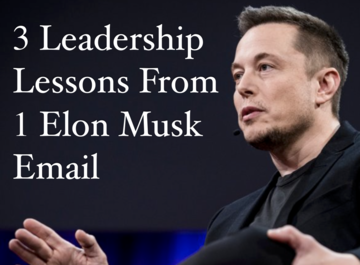
CHICAGO–Elon Musk has been recognized as one of the world’s most popular and successful entrepreneurs. And according to one person, a recent email Musk sent to employees sums up why he is successful leader.
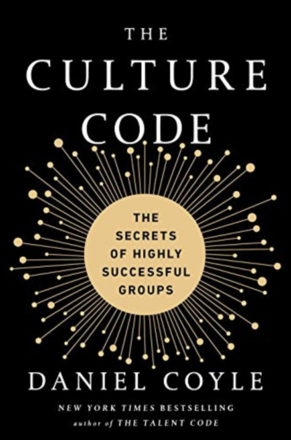
Writing on Inc.com, contributing editor Jeff Haden had positive reviews for a new work by Daniel Coyne, author of the upcoming book The Culture Code: The Secrets of Highly Successful Groups, which examines a number of successful organizations such as Pixar, the San Antonio Spurs, and SEAL Team Six to uncover how diverse groups learn to function with a single mind.
“Good leadership is about having good reflexes, especially in moments of crisis," wrote Haden. "When there's a problem in a group, most leaders tend to respond by protecting the group: Letting people know it's going to be okay, and putting problem in wider perspective. They strive send a signal of reassurance: This isn't a big deal; we can get past it.”
Haden then cites an email sent to employees Tesla after data showed that injury rates in the company’s Fremont, Calif. factory were dangerously high.
The email states in part: “No words can express how much I care about your safety and wellbeing. It breaks my heart when someone is injured building cars and trying their best to make Tesla successful.
“Going forward, I've asked that every injury be reported directly to me, without exception. I'm meeting with the safety team every week and would like to meet every injured person as soon as they are well, so that I can understand from them exactly what we need to do to make it better. I will then go down to the production line and perform the same task that they perform.
“This is what all managers at Tesla should do as a matter of course. At Tesla, we lead from the front line, not from some safe and comfortable ivory tower. Managers must always put their team's safety above their own.”
What’s important to note, said Haden, isn’t as much what Musk wrote as what he “doesn’t do.”
“He doesn't protect the group or minimize the problem. Instead, he connects with the group through three signals,” observed Haden.
Those three signals:
- Musk expresses intense personal regret ("It breaks my heart…")
- Musk demonstrates caring action ("I've asked that every injury be reported to me... I would like to meet with every injured person... I will work on the production line…")
- Musk defines the culture's identity ("At Tesla, we lead from the front line, not from some safe and comfortable ivory tower…")
“In a few dozen words, Musk proves that cultural leadership is not about protection -- it's about connection,” wrote Haden.