

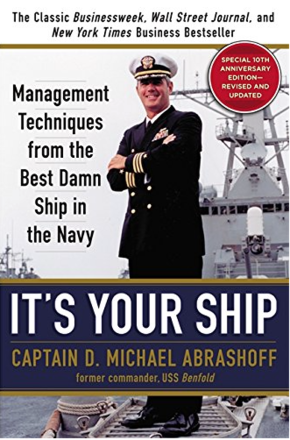
Is your ship in shape? Below, Naval Captain D. Michael Abrashoff reveals the management principles that shaped his ship, the U.S.S. Benfold, into a model of leadership in this excerpt from “It’s Your Ship: Management Techniques From the Best Damn Ship in the Navy.”
By Michael Abrashoff
My first inkling of the size of the job came at 1:21 in the afternoon on June 20, 1997, after I formally assumed command of USS Benfold.
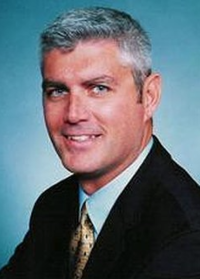
Michael Abrashoff
When a Navy ship changes hands, all routine work stops two weeks prior to the event. The crew paints the ship from top to bottom, sets up a big tent on the flight deck, arranges chairs for dignitaries, and unrolls a red carpet for the obligatory admiral, who delivers a speech on the outstanding performance of the ship's departing skipper. A reception follows. Waves of good feeling saturate the event as the former commanding officer is piped ashore.
My predecessor was accompanied by his family as he left the ship. And when the public-address system announced his final departure, much of the crew was not disappointed to see him go. I can still feel my face flushing with embarrassment when I remember how some didn't give him a respectful send-off.
Truthfully, my first thought as I watched this spectacle was about myself. How could I ensure that my eventual departure wouldn't be met with relief when I left the ship in two years? I was taking over a very tough crew who didn't exactly adore their captain.
The crew would probably dislike me, I thought, if for no other reason than that I represented old-fashioned and perhaps obsolete authority. That was okay; being likable is not high among a ship captain's job requirements. What is essential is to be respected, trusted, and effective. Listening to those raucous jeers, I realized that I had a long way to go before I really took command of Benfold.
A New Leadership Model
I knew that I would have to come up with a new leadership model, geared to a new era. And this awkward reception underlined for me just how much the workplace had changed in military as well as in civilian life.
Never before had employees felt so free to tell their bosses what they thought of them. In the long economic boom, people were not afraid of losing their jobs. Other jobs awaited them; even modestly qualified people moved from one company to another in a quest for the perfect position they believed they richly deserved.
However the economy is doing, a challenge for leaders in the twenty-first century is attracting and retaining not just employees, but the best employees—and more important, how to motivate them so that they work with passion, energy, and enthusiasm. But very few people with brains, skills, and initiative appear. The timeless challenge in the real world is to help less-talented people transcend their limitations.
Pondering all this in the context of my post as the new captain of Benfold, I read some exit surveys, interviews conducted by the military to find out why people are leaving. I assumed that low pay would be the first reason, but in fact it was fifth. The top reason was not being treated with respect or dignity; second was being prevented from making an impact on the organization; third, not being listened to; and fourth, not being rewarded with more responsibility. Talk about an eye-opener.
Further research disclosed an unexpected parallel with civilian life. According to a recent survey, low pay is also number five on the list of reasons why private employees jump from one company to another. And the top four reasons are virtually the same as in the military. The inescapable conclusion is that, as leaders, we are all doing the same wrong things.
Since a ship's captain can't hand out pay raises, much less stock options, I decided that during my two years commanding Benfold, I would concentrate on dealing with the unhappy sailors' top four gripes. My organizing principle was simple: The key to being a successful skipper is to see the ship through the eyes of the crew. Only then can you find out what's really wrong and, in so doing, help the sailors empower themselves to fix it.
A simple principle, yes, but one the Navy applauds in theory and rejects in practice. Officers are told to delegate authority and empower subordinates, but in reality they are expected never to utter the words "I don't know." So they are on constant alert, riding herd on every detail. In short, the system rewards micromanagement by superiors—at the cost of disempowering those below. This is understandable, given the military's ancient insistence on obedience in the face of chaos, which is essential in battle. Moreover, subordinates may sidestep responsibility by reasoning that their managers are paid to take the rap.
Becoming Top Rated
A ship commanded by a micromanager and his or her hierarchy of sub-micromanagers is no breeding ground for individual initiative. And I was aiming for 310 initiative-takers-a crew ready, able, and willing to make Benfold the top-rated ship in the fleet.
At first, my unconventional approach to the job evoked fear and undermined the authoritarian personality that had been imprinted on the ship. But instead of constantly scrutinizing the members of my crew with the presumption that they would screw up, I assumed that they wanted to do well and be the best. I wanted everyone to be involved in the common cause of creating the best ship in the Pacific Fleet. And why stop there? Let's shoot for the best damn ship in the whole damn Navy!
I began with the idea that there is always a better way to do things, and that, contrary to tradition, the crew's insights might be more profound than even the captain's. Accordingly, we spent several months analyzing every process on the ship. I asked everyone, "Is there a better way to do what you do?" Time after time, the answer was yes, and many of the answers were revelations to me.
My second assumption was that the secret to lasting change is to implement processes that people will enjoy carrying out. To that end, I focused my leadership efforts on encouraging people not only to find better ways to do their jobs, but also to have fun as they did them. And sometimes—actually, a lot of times—I encouraged them to have fun for fun's sake.
(It wasn’t long before) Benfold's "readiness indicators" soared. For the hundred days we served in the Persian Gulf during the Iraqi crisis of 1997, we were the go-to ship of the Gulf Fleet, and we got the toughest assignments. We made the highest gunnery score in the Pacific Fleet. We set a new record for the Navy's predeployment training cycle (preparing for our next assignment), which usually requires fifty-two days—twenty-two in port and thirty at sea. We did it in nineteen days-five in port and fourteen at sea—and earned ourselves thirty-three precious days of shore leave.
How did our approach affect Benfold's retention rate? Even I find this startling, but the numbers don't lie. The ship's retention rate for the two most critical categories jumped from 28 percent to 100 percent, and stayed there. All of Benfold's career sailors reenlisted for an additional tour. If we had to replace them, we would spend about $100,000 per new recruit for her or his training. And the considerable dollar savings are only the beginning. The ultimate benefit-retaining highly skilled employees-is incalculable.
How Free is Free?
When I took command of Benfold, I realized that no one, including me, is capable of making every decision. I would have to train my people to think and make judgments on their own. Empowering means defining the parameters in which people are allowed to operate, and then setting them free.
But how free was free? What were the limits?
I chose my line in the sand. Whenever the consequences of a decision had the potential to kill or injure someone, waste taxpayers' money, or damage the ship, I had to be consulted. Short of those contingencies, the crew was authorized to make their own decisions. Even if the decisions were wrong, I would stand by my crew. Hopefully, they would learn from their mistakes. And the more responsibility they were given, the more they learned.
By trading pageantry for performance, we created learning experiences at every turn. We made sure that every sailor had time and was motivated to master his or her job; getting by wasn't good enough.
As a result, we had a promotion rate that was over the top. In the Navy, promotions depend on how well you perform on standardized tests. Everyone ready for advancement takes them at the same time, and those with the highest scores are promoted. When I took command in 1997, my new crew was advancing less than the Navy average. In 1998, I promoted eighty-six sailors, a big leap in self-esteem for roughly one-third of the ship's crew. Now Benfold sailors were getting promoted at a rate twice the Navy average.
The fact is that the new environment aboard Benfold created a company of collaborators who were flourishing in a spirit of relaxed discipline, creativity, humor, and pride. The Navy noticed: Just seven months after I took the helm, Benfold earned the Spokane Trophy, an award established in 1908 by that famous Navy buff President Theodore Roosevelt. It is given each year to the most combat-ready ship in the Pacific Fleet.
Benfold went on to beat nearly every metric in the Pacific Fleet, and frequently the crew broke the existing record. Directly, I had nothing to do with these triumphs. As I saw it, my job was to create the climate that enabled people to unleash their potential. Given the right environment, there are few limits to what people can achieve.