

CHARLOTTE, N.C.–A new survey reveals the extent to which consumers have turned to peer-to-peer (P2P) payment solutions, as well as the risks many have also encountered in doing so.
According to the survey by LendingTree, more than eight in 10 consumers say they’ve used a P2P service.
“But P2P apps don’t come without risks. Some users are losing money through mistakes and scams — and the most frequent users are at an increased risk,” according to the latest LendingTree survey of nearly 1,200 U.S. consumers.
Key Findings
Among the key findings:
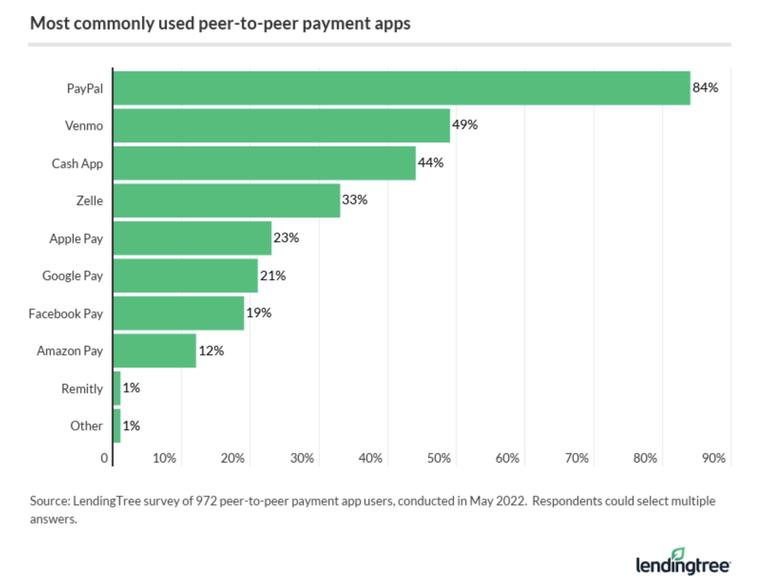
- Consumers are increasingly turning to peer-to-peer payment (P2P) service apps. As noted, 84% of consumers have used P2P services; among users, 44% utilize P2P services at least once a week. PayPal is the most popular service among consumers (84%), followed by Venmo (49%).
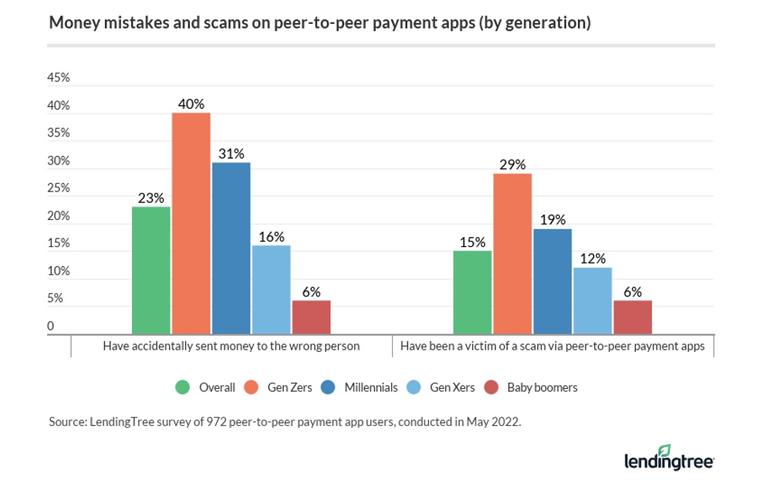
- Amid a jump in popularity, security and fraud concerns put P2P users at risk of losing money. Nearly a quarter (23%) of P2P users have sent money to the wrong person, and 15% have been victims of scams, according to the LendingTree survey. For those who use P2P services several times a week, those percentages jump to 42% and 22%, respectively.
- Most consumers know users are liable for P2P fraud, even if they disagree. 69% of Americans correctly identify users as liable for losing money in a scam, but only 44% believe they should.
- Though P2P services are growing, they’re not FDIC insured. 62% of consumers knew FDIC doesn’t insure P2P balances. However, 49% of those who keep a balance wrongly believe their money is protected, LendingTree reported.
- Consumers think other payment methods are more secure. 31% of consumers believe bank transfers are the most secure payment method — ranking highest overall. Comparatively, just over 1 in 10 (11%) believe P2P services are the most secure. Among the 16% of consumers who say they don’t use P2P service apps, 18% say security is their top concern.
Additional Findings
According to the survey, those who’ve used P2P services typically make frequent transactions — 44% complete one at least once weekly. And among younger users, that’s particularly true: In fact, 37% of Gen Zers and 36% of millennials use P2P services multiple times a week. While Gen Xers (ages 42 to 56) aren’t far behind (28%), just 7% of baby boomers (ages 57 to 76) report using P2P services as frequently.
Lending Tree said it found that the most common reasons people utilize P2P services, users are most likely to pay their loved ones (58%) or gift money (43%). Other common P2P transactions include:
- Food and dining (41%)
- Clothing (33%)
- Groceries (28%)
- Entertainment (27%)
- Gas (26%)
- Living expenses, such as rent or utilities (21%)
- Other (13%)
- Charitable donations (10%)
- Rideshare services (10%)
- Travel (10%)
- School or work-related events/activities (8%)
For Gen Z users, however, food and dining (70%) is the No. 1 reason for utilizing P2P services; they’re also most likely to use it for purchasing clothing (50%). And while Millennials are pretty in line with the averages for P2P payment uses, they’re most likely to utilize the services to make charitable donations (14%), LendingTree said.
Fraud Experiences
While P2P services have jumped in popularity, most consumers (48%) say they haven’t heard of P2P service fraud, including 56% of baby boomers. But among other security concerns, scammers put P2P users at risk of losing money — particularly those who use these services several times a week, LendingTree reported.
Overall, 15% of those on a P2P platform have been a victim of a scam; for those who use these apps multiple times a week, that jumps to 22%. And for Gen Zers — the age group most likely to be frequent P2P users — the likelihood of having fallen for a scam is even higher at 29%.
That’s not the only risk P2P services pose, as users are likely to make mistakes while completing transactions,” LendingTree stated. “In fact, nearly a quarter (23%) have sent money to the wrong person, which jumps to 40% among Gen Zers and 42% among the most frequent users. While a person is slightly more likely to get their money back than not (13% versus 10%), those who use P2P services multiple times a week aren’t so lucky. Just 19% of these frequent users say they got their money back, compared with 23% who say they didn’t.”
The full results and additional analysis can be found here.