

BOULDER CITY, Nev.–The challenge of emotional intelligence, what a child's poem can teach, and the lessons of a pick-up artist all offer guidance in their own ways for credit union leaders. Below, Dr. Brandi Stankovic, organizational change consultant and motivational speaker, Mitchell Stankovic and Associates, shares her insights in CUToday.info's The Corner.
CUToday.info: What intangible of leadership is most difficult to convey or prepare for?
Stankovic: The most challenging leadership intangible is Emotional Intelligence in a world of digital communication.
I was sitting at a gala event last week with close colleagues and friends. My phone died (sigh), and thus I was forced to interact and converse solely in human form. But to my dismay, my colleagues were happily distracted with their devices and ongoing electronic and social media communications. I actually felt left-out and lonely, yet here I was less than two feet from them in the flesh.
Electronic digital media is not only an essential form of communication for a leader, in some cases it is the only form. The challenge of leaders is two-fold. First, how can we effectively articulate, manage, and express our thoughts, needs, desires, and demands through electronic channels? But also, how can we ensure that we are heard when the receiver is so desperately distracted?
Unfortunately, emojis aren’t enough.
Emotional intelligence in the future is going to require leaders to manage, sort, and apprehend emotions through digital cues and coding. Gone are the days that we rely on a puffy chest and clenched fist as cues someone is angry. Now we must translate responsiveness, diction, punctuation and hesitations. The opposite is also true. We are challenged as leaders to express our gratitude and appreciation of our teams, loved ones, and children in a genuine and authentic way….. via text.
The good news is we respond to electronic communication as the new norm. And depending on the sender, the emoji heart-eye can leave me feeling…. Well, emoji-heart-eyed.
CUToday.info: Are you a fan of a management books? If not, why not. If so, which have resonated with you and why?
Stankovic: Absolutely. I am an avid reader and cannot pass an airport bookstore without purchasing the latest and greatest. It does, however, take a lot to impress me. In fact, I can be quite the critic in regards to management books. I think what is missing is a call to action. Many times a book will tell a beautiful story… OK, now what?
But here are a few all-time favorites:
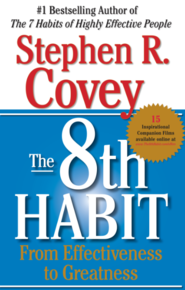
The 8Th Habit by Stephen R. Covey: One of the most powerful books about making a difference. Turn thoughts and knowledge into action. To know and not to do, is really not to know. It is in the doing that knowledge is internalized.
A Light in the Attic (or anything) by Shel Silverstein: Not only do I love to read to my beefcakes (ages 2 and 5) but I love the complexity in his poetry. My favorite poem is Moon Catchin’ Net… and it really sums up my leadership journey. “Made me a moon-catchin net and I’m goin huntin tonight. I’ll run along swingin it over my head and grab for that big ball of light…”
Blink by Malcolm Gladwell: The power of thinking, intuition, and emotional contagion.
Owning Your Own Shadow by Robert Johnson: Psyche, life balance, discovering yourself through darkness. Not a management book, but delicious in its exploration of personal accountability and development.
Recent favorite, The Game by Neil Strauss: There is nothing like learning about human dynamics from master pick up artists. Ha!

CUToday.info: Innovation: four syllables getting all the attention. Deservedly so? If so, can you really drive innovation? Or is it coming at the cost of implementation and delivery?
Stankovic: Innovation is in the eye of the beholder. I recently spent a weekend at Burning Man, renowned for its artistic liberation and bohemianism. Perfect place for bourgeoning innovative and expressive ideas to flourish. Although I enjoyed the self-expression and being unconnected to the digital, and um, lucid world, I did observe the conformity in non-conformity. Long story short, the best innovations are usually freaky. And freaky doesn’t pay the bills. There are thousands of wrinkled shirted Harvard drop-outs who didn’t change the world with their social networking software. Not every freaky idea is a good idea. Innovation for the sake of innovating is a waste of time.
On the contrary, the banking system need not be a grumpy old man in its approach to evolution. We must in fact, transform. We must collaborate and cooperate and work together to change the world. Focus on results. Instead of seeing what my credit union can do (in its existing form) to make a difference. Start with the results. What difference do we want to make? Then, build an innovative institution that will create those results. Continuously. Collaboratively.
CUToday.info: If you could go back and talk to You On The First Day of Your Career, what advice do you share?
Stankovic: When I started in credit union land it wasn’t “cool” to be young. Although I finished my MBA with a hefty-sized chip on my shoulder, it didn’t last long. My elder cohorts kicked my @ss. I spoke when was spoken to. I carried the weight. I shoveled the poop. I attended every meeting. I volunteered at every turn. I said yes to every request. There were no networks that solicited my voice or paths that secured my involvement. I had to earn it. And, I am indebted for every tongue-lashing, cold-shoulder and slap in the face I got.
So, advice to young me?
Rock on. Work hard. Enjoy every moment. Listen to the universe. Keep traveling and learning. Celebrate accomplishments. Love unconditionally. Hug your friends and family extra tight. Let your creativity flow. Keep aiming up. Know that strength comes from scars. And, chill out.
CUToday.info: My Keeps-Me-Up-At-Night concern is? Why? And My-Let’s-Me-Sleep-At-Night optimism is?
Stankovic: I was at a league meeting recently with a youngish executive friend. I mentioned a certain infamous retired CEO would be joining us for dinner. He said, who? My jaw hit the ground. This notorious CEO won every industry award, was the epitome of the CU philosophy, and lives in the hearts of so many people. She retired like five years ago. And he said, who?
So my keep-me-up-at-night? The leadership transition. Will the next level executive have the maturity and experience to rock this industry? Will the industry be able to withstand a major transition?
Another example, there are a few CEOs in Nevada who recently retired who have incredibly strong relationships with our regulators and private insurance companies. What happens when they leave? Where does that history go?
It is going to be the challenge of this C-Suite virgin to be a catalyst to our industry momentum on all fronts. Not just innovative service channels and technology, but the regulatory environment, the financial asset liability management, the acquisition and consolidation front, and the real core philosophy that is our existence. People helping people.
I believe in fresh energy and insights that new leaders bring. I also can be exhausted by the immaturity of nouveau riche. There is power in the legacy of those transitioning. I hope I am able to siphon from this experience and absorb all that they have to offer.
And my let-me-sleep at night? Zzyquil.