

CHICAGO–How does an enterprise the size and scope of Amazon continue to grow and innovate? It’s a deliberate process that involved the complete rethinking of processes and hiring, doing things “backward,” and even requiring leaders who have an idea/initiative to pitch to first write a “press release,” according to one person with first-hand knowledge.
Those practices and others were shared with Co-op Solutions’ THINK 22 Conference by Colin Bryar, who was with Amazon and worked as founder Jeff Bezos’ right-hand man as the company was expanding far beyond its book-selling roots in the early part of this century.
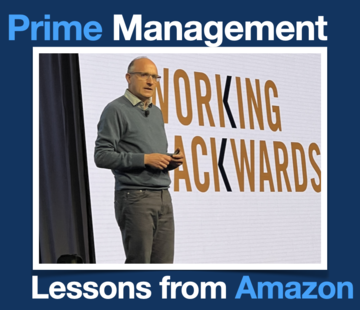
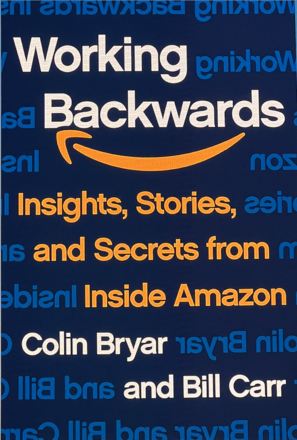
Bryar co-authored the book “Working Backwards: Insights, Stories and Secrets from Inside Amazon” along with former Amazon executive Bill Carr, said he had been fortunate enough to be in the “catbird’s seat” as the company was laying the groundwork—and quickly learning from its mistakes- it is today. Bryar joined the company in 1998 in software development when there were approximately 100 people in its corporate offices and it was still selling books only in the United States.
He would go on to become technical advisor and chief of staff to Amazon founder Jeff Bezos from 2003-05, a time when the company was in various stages of developing Amazon Prime, Amazon Web Services, and the Kindle e-reader.
He said the book had the support of Bezos who wanted to see it “done right.”
The Secret Sauce
Amazon has obviously grown rapidly into the global operation it is today, and Bryar said it’s a mistake to look at all of the company’s different business lines. Instead, he said the “secret sauce” can be found in what they all have in common.
And what they have in common is a set of core processes surrounded by five leadership principles: Hiring, Organizing, Communicating, Working Backwards and Metrics.
“These are questions most organization face,” said Bryar. “But we came up with dramatically different answers than other organizations. The other thing we have noticed is that in working with other companies these principles are pretty universal in large and small organizations, for-profit and non-profits.”
Bryar said he often gets pushback from other companies and organizations that say the princip;es are easy to implement at a company the size of Amazon, but he said they were actually developed when it was much smaller. “When I started resources were hard to get. The processes allowed us to scale,” he explained.
The Leadership Principles
Amazon has 16 leadership principles, with Bryar readily acknowleding that is a unusually large number of principles for any organization to have. The principles, first created in 2002, are available here.
“We wanted to create an actionable framework to make consistent decisions,” Bryar explained. “We rely on the leadership principles when we need to make decisions fast, have less data than we’d like, and senior executives not in the room. There is a saying at Amazon that ‘Good intentions don’t work, mechanisms do.’ And we didn’t want posters on the wall; we wanted to weave the principles into every major process.”
Bryar said Amazon management isn’t required to memorize the principles, but are expected to live and embody them through their everyday actions.
The principles were developed out of necessity in 1999 when it was hiring waves of new employees as it struggled to keep up with its own growth.
“We had a saying that we had new people hiring new people hiring new people and when you have that, what hiring managers do is bring in their principles from their last job and bring in people they know,” Bryar said. “We realized they didn’t always make a good Amazon employee.”
Raising the Bar
As part of that process, Bryar, explained the company created what it calls Amazon Bar Raisers, the authority given to certain people in its personnel area, who then followed what he called a “scalable, repeatable, formal process. We were looking to consistently make appropriate and successful hiring decisions.
“We realized the best way if to make it repeatable was to make it objective. And the primary goal is to determine how does the candidate embody the Amazon leadership principles,” he explained. “We found the best predictor of future success was to use behavior interviews. For instance, ‘Tell me about a time when you had to do X.’ The candidate then shares an experience and you try to mount that to the Amazon Principles.”
The process, said Bryar, also reduces bias.
Organizing
Another process put in place by Amazon was and is known as Separable Single-Threaded Leadership,” or STT.
“We realized we had a lot of redundances and it was hard to figure out what to do next,” said Bryar, explaining Bezos was seeking to eliminate all the excessive coordination and communication with other groups necessary to get any work done.
the coordination and communication and eliminate need to talk to other groups to get their work done.
STT delivers speed, innovation and ownership, according to Bryar. To know if a project had STT in place, three questions have to be asked:
- Who is the most senior leader working full time on this initiative and no other.
- Does this leader have the organizational skills and capabilities to make this initiative a reality?[
- Does this leader sha ve control over the resources necessary to achieve the desired results?
“So, if you have a name and a yes and a yes, you have single-threaded leadership,” Bryar told the THINK meeting. “We realized this was really the differentiator to decide if something was going to be successful.”
How to Get to STT
How does a credit union or any organization know if it has STT? According to Bryar, it’s necessary to:
- Identify the right leader
- Create a plan and get aligned with exec team. “It’s not enough to say get the right leader and give that person autonomy. For the leader, what is the plan and do we know exactly where we want to end up, even if not know how going to get there.”
- Decide on control and audit processes in order to measure success. “Teams are built for speed so you want to make sure you have the direction right and then measurements in place.”
- Establish functional countermeasures. “No organizational structure is perfect, so one risk of STT is you get knowledge accrued in a silo and you want to share valuable lessons with the company. So, you have to make sure to share information across groups.”
- Staff the team
- Remove dependences and instrument systems so you can measure progress. “What slows down teams is identifying and removing dependencies. We looked at dependencies, like talking to another team or technical dependencies--we looked at those skeptically and try to figure out how to remove.”
Bryar quoted former Amazon SVP-Devices Dave Limp as observing, “The best way to fail at inventing something is by making it somebody’s part-time job
Communicating & Decision Making:
As Amazon grew at a rapid pace in the early 21st century it followed the management meeting path of many companies with meetings dominated by PowerPoint presentations. It didn’t take long for Bezos to conclude there was little power to be found and the point was often lost in PowerPoint presentations, according to Bryar. It eventually developed a process it calls “Narratives and the Six Pager.”
Bryar said the process is an “information-multiplier that provides 20x more info than traditional slide presentations.”
Instead of a PowerPoint, those making presentations to the management team now write a six-page narrative of the idea. The management team spends 20 minutes reading the proposal and 40 minutes in what Bryar called “high-quality” discussion.
The Ideas Matter
In addition, because it’s the ideas that matter, there is no presentation bias, according to Bryar.
“The format also conveys multi-causal ideas better versus a linear format,” said Bryar. “Narratives are unambiguous, bullet points and sentence fragments are not…What you will see is a massive amount of information being transferred. What we found is we just made better decisions as we had a deeper understanding. And a second effect that was just as powerful, is it lets leaders stay connected with important details of the business. It’s how Amazon stays consistent across all these disparate businesses.”
Working Backwards
Bryar said most companies approach projects and initiatives in the wrong order. Amazon sarts with what he called the “desired customer experience.”
“Start with the customer and work backward,” Bryar recommended. “Jeff said, ‘We want to make sure the customer is with us from the very beginning of the idea.”
Among the most unique practices at Amazon involves requiring those who want to bring an idea before management to begin by writing a press release. That press release must answer four questions in the narrative:
If you have an idea at Amazon the first thing you do is write a press release. It has to do several things within the narrative:
- Clearly definescustomer problem
- Clearly define the solution and compelling reasons why customers will buy it.
Get Me Rewrite
Bryar said that in cases where the case made in the release isn’t sufficiently compelling the Amazon employee championing the idea is urged to go back and re-write and rewrite it again. With the “press release” written, the next step is the FAQs, including the external FAWs, which include what customers and the press will ask, and the internal FAQ, which are all about consumer needs, economics and the P&L, dependencies, feasibility and resource requirements, conditions required for success.
“This is a customer obsessed process, which is the first principle at Amazon,” Bryar said. “The process is also values truth seeking over selling, prioritizes velocity over speed, and is a continuous process throughout the year.”
Metrics
Bryar, who credit union leaders to manage their inputs and not their outputs, said that is exactly what the retailing/data giant is all about.
“In a small organization the data finds you. As you grow you need a formal data process,” he said. “We rejected the premise that as you progress in the company you only focus on strategic issues. Jeff wanted everyone to have a deep idea of what was taking place in the company. Eighty percent of the metrics used in Amazon are about the customer experience,
How does an organization measure inputs? Bryar recommended:
- Start with outputs and known inputs and drill down
- Map the end to end customer experience
- Post-mortem for errors and defects
- Uncover and establish your flywheel.