

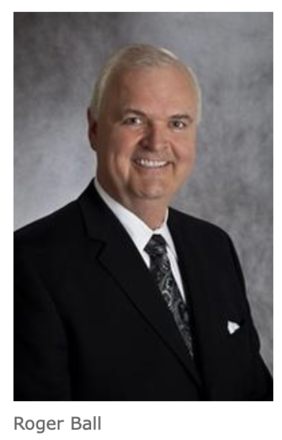
RICHMOND, Va.–Roger Ball, the long-time CEO of Call Federal Credit Union, has announced his retirement–and is sharing a career’s worth of accumulated wisdom with other credit union leaders before he steps down.
Ball began his Call Federal career in May 1983, when he was hired as assistant general manager and the 12th employee of the credit union, which was founded in 1962 to serve members working at Philip Morris USA. At that time, the credit union had one branch in the main office and assets of $12 million; today it has assets of $410 million, 89 employees and more than 30,000 members.

Call Federal has selected John West to succeed Ball.
Below, Ball offers his responses in this CUToday.info Q&A:
CUToday.info: How did you come to be involved in credit unions?
Ball: During college I earned my tuition and living expenses by working as a teller at a local bank. The bank would close at 2:00 p.m. and reopen at 4:00 p.m. and remain open until 8:00 p.m. A very forward-thinking bank manager convinced the hierarchy to hire college students for evening hours. It worked well.
I graduated from college in 1975 during a very hard time for employment opportunities, but due to my banking experience, I was hired by a local savings and loan institution. It was a mutual organization and I soon learned the benefits of a member-owned organization. This was one of the first institutions in Virginia to convert from a mutual to a stock company. I was abruptly make aware of the difference–in management, in purpose and motivation, in the shift to being profit centered for stockholders, and the diminishing benefits to the other non-stock-holding customers. This was difficult for me since I enjoyed being part of a shared partnership with the account holders.
I left the savings and loan; was hired by a local credit union, and quickly realized I had returned to an organization that cherished the owners and adopted practices and policies that benefited the total membership. This was my introduction to credit unions, and the satisfaction in working in an industry that met my expectations of purpose.
CUToday.info: What have you learned about driving and managing growth in your career?
Ball: Driving and managing growth are two different talents. I have learned that driving growth takes a vision for the future, an understanding of the economy in our area and knowing the talents and capabilities of our staff. Managing growth is knowing how to travel in the safe lanes and keep the modulation of growth within a prescribed deviations.
Driving growth requires the CEO to be motivating, a good communicator, and able to articulate the value proposition without fault or hesitation. Managing growth requires balance sheet and income statement knowledge along with strong analytics that defines the opportunities and a marketing department that knows when to push.
CUToday.info: What have you learned about hiring and managing people, and has that evolved?
Ball: In the early years, most hiring was done for clerical positions. At that time, the amount of diversity among credit unions and their complexity of products and services was minimal. It was a challenge to keep up with paperwork and make sure all forms were completed correctly. Over the years, as credit unions began to expand their product line and the many variations of terms, both in deposit accounts and loans, the need for more academic talent was needed. Regulations and compliance issues became more complex and strategic initiatives changed from one credit union to another.
A main concern in the most recent hiring practices is finding those with the talent and academic background, but also the personal and people talents that make a cohesive and collaborative team. It has become evident that people skills for credit unions are just as important as technical skills. It has become common to state we hire the right people and can train them to handle the jobs. Additionally, there seems to be a need for a combination of talents within credit unions where having a diverse skillset is very important for promotional talent.
CUToday.info: If you could go back and offer yourself some advice on the day you became CEO, what would it be, and what would you advise others?
Ball: I would offer the advice that the honor of holding the CEO position is very special, but the responsibility to the membership is amplified for the person holding this position. I believe heavily in the cooperative principles and the stewardship needed to be a good leader of a credit union. You realize that you work for the members as their major advocate, but you need to create a working relationship with your board members. You answer to many people now, and it is important to realize that each individual relationship with board members is different than relating to them as a board.
The CEO needs to gain trust and respect with their Board as quickly as possible, and understanding their beliefs in the credit union help both the CEO and board to grow together. I will pass this information to my successor.
CUToday.info: What is your view on the future of credit unions, if there is to be one?
Ball: I believe credit unions will remain as a viable financial institution in the future. There will be fewer credit unions due to mergers and acquisitions, but the fewer but larger credit unions will play a major role in offering financial services to the “average” person.
I think credit unions can lose their way if they try and be all things to their communities, but those that clearly identify their market, develop products and services that accommodate those communities, and promote these differences will survive. The need to display and present the value proposition of credit unions is monumental for success.
As long as credit unions operate as cooperatives, there needs to be explicit and visible actions that demonstrate the values.